• Fri frakt över 249 kr
  • •
  • Snabba leveranser
  • •
  • Billiga böcker
Kundservice

Du är på sajten för privatpersoner.

Företag, bibliotek eller offentlig verksamhet?

Du handlar på classic.bokus.com, där alla dina funktioner finns intakta.
Till classic.bokus.com
Bokus logotyp. Gå till startsidan.
  • Erbjudanden
  • Nyheter
  • Student
  • Topplistor
  • Barn & ungdom
  • Bokus Play
  • E-böcker
  • Pocketböcker
  • Spel & pussel

10% rabatt på allt med kod NYSTART10 →

Sidfot

Mina sidor

    Hjälp

    • Kundservice
    • Vanliga frågor och svar
    • Frakt och leverans
    • Retur vid ångerrätt
    • Reklamera vara
    • Betalning
    • Köpvillkor
    • Allmänna villkor
    • Information om webbplatsens tillgänglighet

    Om Bokus

    • Om oss
    • Pressrum
    • För studenter
    • För företag
    • För bibliotek och offentlig verksamhet
    • För leverantörer
    • Hållbarhet

    Populärt

    • Aktuella erbjudanden
    • Presentkort
    • Studentlitteratur
    • Nya böcker
    • Topplistor
    • Signerade böcker
    • Engelska böcker

    Inspiration

    • Boktips
    • BookTok
    • Populära bokserier
    • Barnbokskaraktärer
    • Populära författare
    Logotyp för Bokus
    Följ oss på Facebook (extern länk)Följ oss på Instagram (extern länk)Följ oss på YouTube (extern länk)Följ oss på TikTok (extern länk)
    bokus @ CookiesAnpassa cookiesIntegritetspolicyKöpvillkor
    Till Citymail hemsida (extern länk)Till Budbee hemsida (extern länk)Till Postnord hemsida (extern länk)Till Schenker hemsida (extern länk)Till Early Bird hemsida (extern länk)Till Walleys hemsida (extern länk)
    1. Samhälle och politik
    2. Samhälle och kultur
    3. Kultur och medier
    4. Referensverk och tvärvetenskap

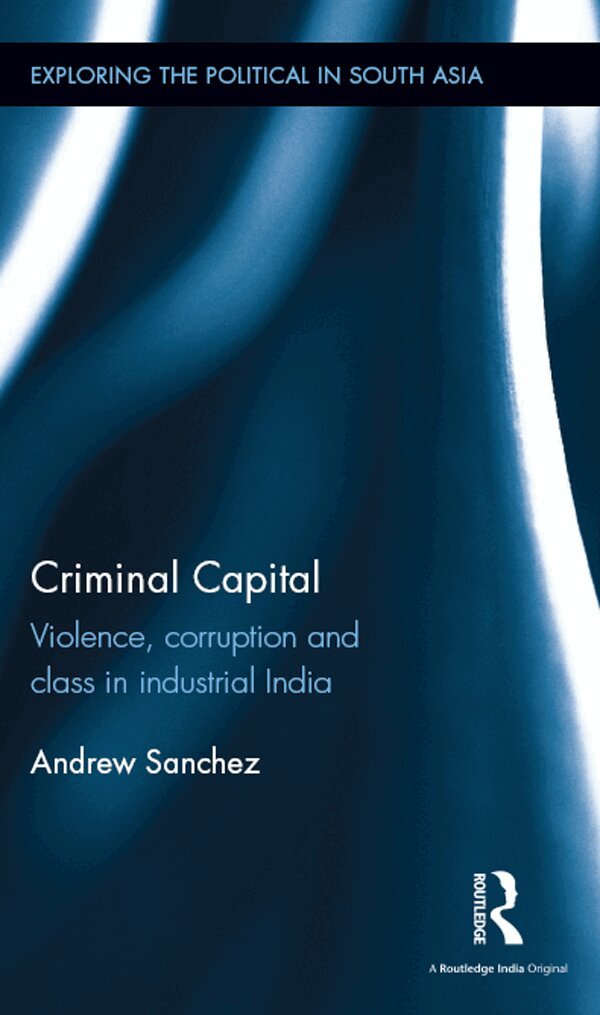
    Criminal Capital

    Violence, Corruption and Class in Industrial India

    AvAndrew Sanchez

    E-bok
    PDF, Engelska, 2016

    Del i serien Exploring the Political in South Asia

    939 kr

    Läs direkt i Bokus Reader – eller ladda ned till din enhet (PDF kräver ofta zoom och scroll på små skärmar).

    Fler format och utgåvor

    Häftad

    793 kr

    Inbunden

    2 422 kr

    E-bok

    939 kr

    Beskrivning

    Criminal Capital explores the relationship between neoliberalism, criminality and the reshaping of class in modern India. It discusses how the political vocabularies of urban industrial workers reflect the processes by which power is distributed across the region. Based upon field research among a ‘casualised’ workforce in the industrial city of Jamshedpur, the book examines the links between the decline of employment security, and criminality in trade unions, corporations and the state.The volume compares popular discourses of corruption against the ethnography of local labour politics, business enterprise and debt collection, and shows how corruption and criminality consolidate class power in industrial environments. Using an interdisciplinary ethnographic approach, this study interrogates the relationship between capitalism, corruption, violence and labour politics in contemporary Indian society. An important intervention in the study of Indian political economy, this work will be of interest to scholars and researchers of Indian politics, social anthropology, economics, labour relations and criminology.

    Produktinformation

    • Utgivningsdatum:2016-04-14
    • Språk:Engelska
    • Filformat:PDF
    • Kopieringsskydd:LCP
    • ISBN:9781315466606
    • Förlag:Taylor & Francis Ltd
    • Serie:Exploring the Political in South Asia

    Utforska kategorier

    • Referensverk och tvärvetenskap inom Samhälle och politik
    • Samhälle och kultur inom Samhälle och politik
    • Brottslighet och kriminologi inom Samhälle och politik

    Mer om författaren

    Andrew Sanchez is Lecturer in Social Anthropology at the University of Kent, UK. After completing his PhD in Anthropology at the London School of Economics and Political Science in 2009, he was LSE Fellow from 2009 to 2012, and Research Fellow at the Max Planck Institute for Social Anthropology from 2012 to 2014. His writings on class, labour and corruption have been published in the Journal of the Royal Anthropological Institute, Critique of Anthropology, Modern Asian Studies and a number of reports and edited volumes. He is currently conducting an ethnographic study of the Indian scrap metal trade.

    Recensioner i media

    ‘Criminalisation of politics and corruption are by far the most discussed, but least understood, topics in India. Andrew Sanchez has achieved a remarkable analytical tour de force in this masterfully researched and sharply insightful study that convincingly alters the way in which we conceive of the role of crime and the meanings of corruption in India's contemporary capitalism and democracy.’ — Nandini Gooptu, Associate Professor of South Asian Studies, University of Oxford‘Criminal Capital tells an Indian tale of global relevance — what happens when economic liberalisation encourages firms to focus on profit in an era of global competition. The result is workers with little hope of security, and unions, companies and politicians with little sense of obligation to anyone but themselves.’ — James Carrier, Research Associate, Oxford Brookes University‘Class and labour are back in vogue. Andrew Sanchez’s rich local ethnography of Jamshedpur, the quintessential company town around the Tata corporation, India, is shot through with global comparison and universalising insight. He shows how an ever more casualised local working class explains its condition with ideas of systemic corruption, and why those ideas make sense. A fantastic contribution to Indian labour ethnography as well as to global comparative class analysis.’ — Don Kalb, Professor of Social Anthropology, Central European University

    Innehållsförteckning

    • Part I: Class & Capitalism 1. Criminal Capital 2. Dispossession and the Class Concept in Industrial India Part II: Power & Enterprise 3. The Political Economy of Criminal Enterprise 4. The Decline of Collective Action Part III: Division and Change 5. Ethnic Violence and the Daily Politics of Labour 6. Continuity and the Casualisation of Labour Conclusion