• Fri frakt över 249 kr
  • •
  • Snabba leveranser
  • •
  • Billiga böcker
Kundservice

Du är på sajten för privatpersoner.

Företag, bibliotek eller offentlig verksamhet?

Du handlar på classic.bokus.com, där alla dina funktioner finns intakta.
Till classic.bokus.com
Bokus logotyp. Gå till startsidan.
  • Erbjudanden
  • Nyheter
  • Student
  • Topplistor
  • Barn & ungdom
  • Bokus Play
  • E-böcker
  • Pocketböcker
  • Spel & pussel

10% rabatt på allt med kod: NYSTART10 →

Sidfot

Mina sidor

    Hjälp

    • Kundservice
    • Vanliga frågor och svar
    • Frakt och leverans
    • Retur vid ångerrätt
    • Reklamera vara
    • Betalning
    • Köpvillkor
    • Allmänna villkor
    • Information om webbplatsens tillgänglighet

    Om Bokus

    • Om oss
    • Pressrum
    • För studenter
    • För företag
    • För bibliotek och offentlig verksamhet
    • För leverantörer
    • Hållbarhet

    Populärt

    • Aktuella erbjudanden
    • Presentkort
    • Studentlitteratur
    • Nya böcker
    • Topplistor
    • Signerade böcker
    • Engelska böcker

    Inspiration

    • Boktips
    • BookTok
    • Populära bokserier
    • Barnbokskaraktärer
    • Populära författare
    Logotyp för Bokus
    Följ oss på Facebook (extern länk)Följ oss på Instagram (extern länk)Följ oss på YouTube (extern länk)Följ oss på TikTok (extern länk)
    bokus @ CookiesAnpassa cookiesIntegritetspolicyKöpvillkor
    Till Citymail hemsida (extern länk)Till Budbee hemsida (extern länk)Till Postnord hemsida (extern länk)Till Schenker hemsida (extern länk)Till Early Bird hemsida (extern länk)Till Walleys hemsida (extern länk)
    1. Samhälle och politik
    2. Sociologi och antropologi
    3. Sociologi

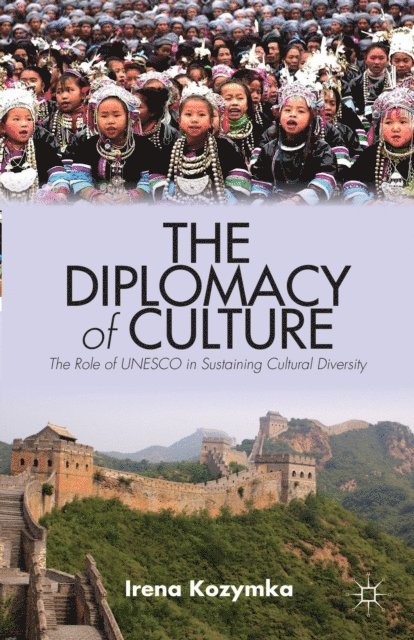
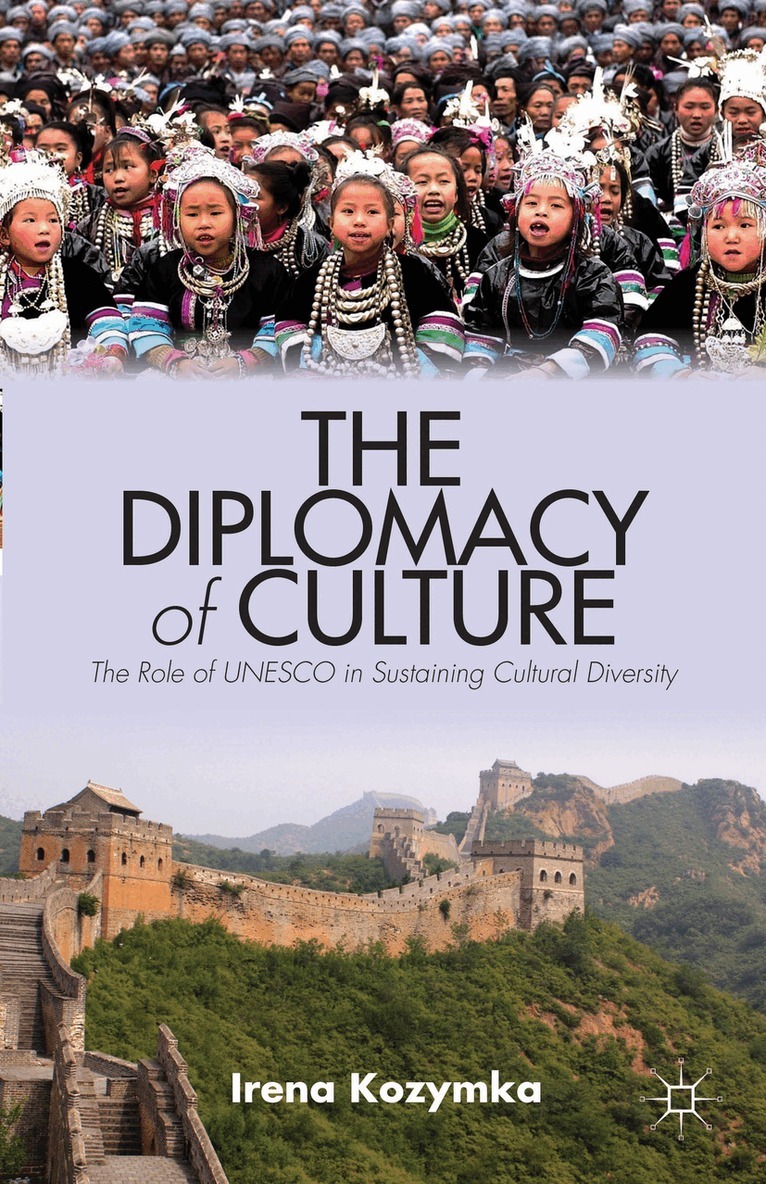
    Diplomacy of Culture

    The Role of UNESCO in Sustaining Cultural Diversity

    AvI. Kozymka

    Häftad, Engelska, 2014

    Del i serien Culture and Religion in International Relations

    547 kr

    Beställningsvara. Skickas inom 10-15 vardagar. Fri frakt över 249 kr.

    Fler format och utgåvor

    Inbunden

    547 kr

    E-bok

    755 kr

    Beskrivning

    Cultural diversity, because it is perceived to have significant security, developmental, and social implications, is fast becoming one of the major political issues of the day. At the international level, it overlaps with the now extensive debates on multiculturalism within states. This work shows how cultural diversity challenges the understanding of international relations as relations between states and, by looking at the issue through the magnifying glass of an international organization, offers innovative insights into the interplay between various levels of international society. The book examines in particular the role of UNESCO, the only United Nations agency responsible for culture and the main forum for international diplomacy on the issue of cultural diversity.

    Produktinformation

    • Utgivningsdatum:2014-04-16
    • Mått:140 x 216 x 17 mm
    • Vikt:360 g
    • Format:Häftad
    • Språk:Engelska
    • Serie:Culture and Religion in International Relations
    • Antal sidor:296
    • Upplaga:2014
    • Förlag:Palgrave Macmillan
    • ISBN:9781349474110

    Utforska kategorier

    • Sociologi inom Samhälle och politik
    • Regionalt styre och förvaltning inom Samhälle och politik
    • Socialt arbete och välfärd inom Samhälle och politik

    Mer om författaren

    UNESCO, Sector for External Relations and Public Information (Paris, France) Current position: Liaison Officer 2008-2012 PhD in International Relations; thesis s topic The Diplomacy of Culture: The Role of UNESCO in Sustaining Cultural Diversity University of Cambridge (UK)

    Recensioner i media

    The Diplomacy of Culture is filling a void in international relations studies. With this in mind, Irena Kozymka wrote a very useful and well documented volume which will be strongly appreciated by scholars and students, and also by many readers who are interested in understanding a crucial new field of knowledge." - Bertrand Badie, Sciences Po, Paris "Irena Kozymka has written an insightful analysis of a subject too neglected by academic International Relations how diplomacy deals with culture and cultural diversity, a rather different matter from 'cultural diplomacy.' Her comparative treatment of different national traditions, combined with an expert study of UNESCO, makes this indispensable for those concerned with both the international politics of culture and with international organizations." - Christopher Hill, Sir Patrick Sheehy Professor of International Relations, and Head of Politics and International Studies Department, University of Cambridge

    Innehållsförteckning

    • Table of Contents PART I: INTRODUCTION Book's Structure Definitions UNESCO: Structure and Agency 1. Legal Basis and Institutional Structure 2. Functions 3. Member States 4. Other Actors 5. UNESCO as an Actor  PART II: UNESCO'S RESPONSES, PAST AND PRESENT 6. Early Years: Protection and Diffusion of Cultural Expressions 7. Decolonisation: Stress on Cultural Identity and Promotion of Cultural Development 8. Responding to the Challenges of the Twenty-first Century  PART III: FRANCE 9. The State and Culture: An Enduring Marriage 10. From Cultural Exception to Cultural Diversity 11. The Makings of the 2005 Convention 12. Protecting and Promoting Cultural Diversity: A View from France  PART IV: THE UNITED STATES 13. Culture in the United States and its Place in the Country's Foreign Policy 14. The United States and UNESCO: An Uneasy Relationship 15. The US Opposition to the Cultural Diversity Convention  PART V: CAMBODIA 16. The Place of Culture in State Policy 17. World Heritage Sites in Cambodia: National or Common Heritage of Humanity? 18. Angkor 19. Preah Vihear 20. Protection and Promotion of Intangible Culture from the Cambodian Perspective  PART VI: BRAZIL 21. Brazil's Racial and Cultural Diversity 22. Cultural Policies in Brazil 23. Public Access 24. Culture as Economically Remunerative 25. UNESCO in Brazil and Brazil at UNESCO 26. Racism and Discrimination 27. Indigenous Cultures  PART VII: UNESCO'S DIFFICULTIES IN HANDLING CULTURAL DIVERSITY 28. Challenges in Handling Cultural Diversity 29. Weaknesses of the UNESCO Convention on the Protection and Promotion of the Diversity of Cultural Expressions 30. Gaps in UNESCO's Legal Action towards Sustaining Cultural Diversity 31. Shortcomings in UNESCO's Functioning  PART VIII: CONCLUSION 32. Double Vision: Culture or Cultural Expressions? 33. Porous Borders and Fuzzy Mandates 34. Imperfect Instruments for an Imperfect World 35. UNESCO: Puppet orMaster? 36. UNESCO as Beacon ANNEX – CONVENTION ON THE PROTECTION AND PROMOTION OF THE DIVERSITY OF CULTURAL EXPRESSIONS Bibliography