• Fri frakt över 249 kr
  • •
  • Snabba leveranser
  • •
  • Billiga böcker
Kundservice

Du är på sajten för privatpersoner.

Företag, bibliotek eller offentlig verksamhet?

Du handlar på classic.bokus.com, där alla dina funktioner finns intakta.
Till classic.bokus.com
Bokus logotyp. Gå till startsidan.
  • Erbjudanden
  • Nyheter
  • Student
  • Topplistor
  • Barn & ungdom
  • Bokus Play
  • E-böcker
  • Pocketböcker
  • Spel & pussel

10% rabatt på allt med kod NYSTART10 →

Sidfot

Mina sidor

    Hjälp

    • Kundservice
    • Vanliga frågor och svar
    • Frakt och leverans
    • Retur vid ångerrätt
    • Reklamera vara
    • Betalning
    • Köpvillkor
    • Allmänna villkor
    • Information om webbplatsens tillgänglighet

    Om Bokus

    • Om oss
    • Pressrum
    • För studenter
    • För företag
    • För bibliotek och offentlig verksamhet
    • För leverantörer
    • Hållbarhet

    Populärt

    • Aktuella erbjudanden
    • Presentkort
    • Studentlitteratur
    • Nya böcker
    • Topplistor
    • Signerade böcker
    • Engelska böcker

    Inspiration

    • Boktips
    • BookTok
    • Populära bokserier
    • Barnbokskaraktärer
    • Populära författare
    Logotyp för Bokus
    Följ oss på Facebook (extern länk)Följ oss på Instagram (extern länk)Följ oss på YouTube (extern länk)Följ oss på TikTok (extern länk)
    bokus @ CookiesAnpassa cookiesIntegritetspolicyKöpvillkor
    Till Citymail hemsida (extern länk)Till Budbee hemsida (extern länk)Till Postnord hemsida (extern länk)Till Schenker hemsida (extern länk)Till Early Bird hemsida (extern länk)Till Walleys hemsida (extern länk)
    1. Samhälle och politik
    2. Samhälle och kultur
    3. Kultur och medier
    4. Referensverk och tvärvetenskap

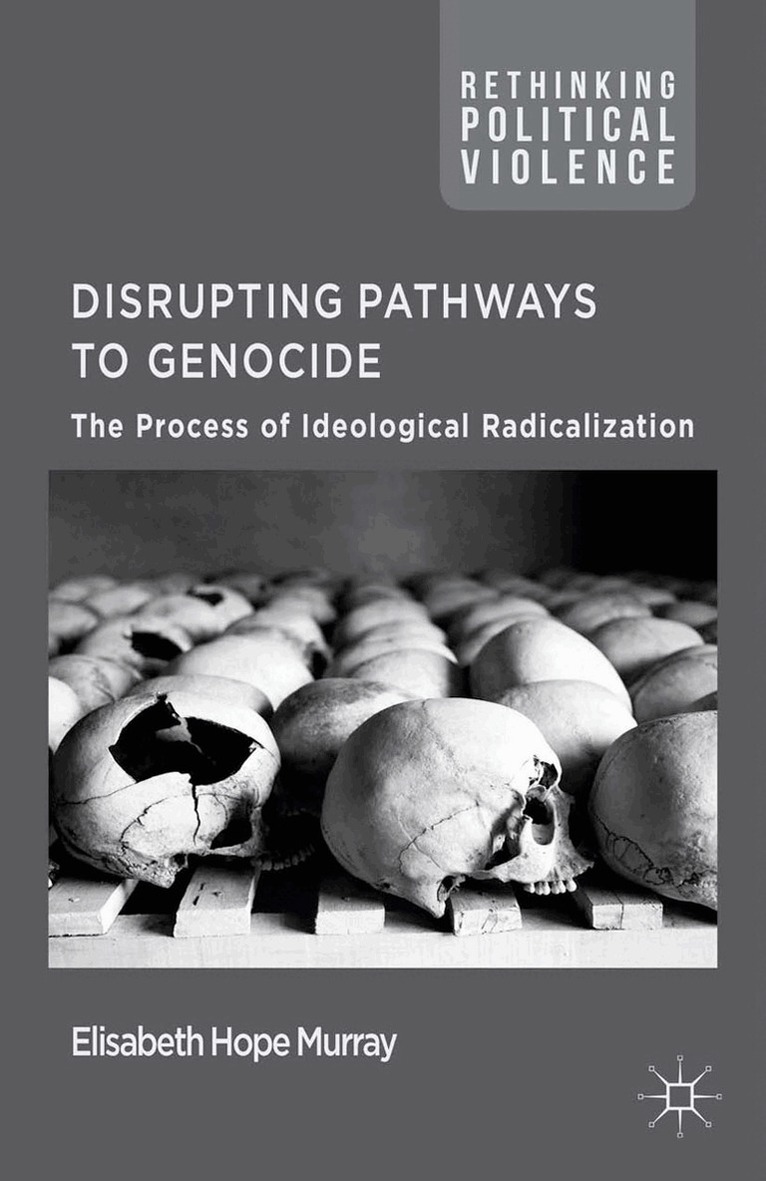
    Disrupting Pathways to Genocide

    The Process of Ideological Radicalization

    AvE. Murray

    Häftad, Engelska, 2015

    Del i serien Rethinking Political Violence

    546 kr

    Beställningsvara. Skickas inom 10-15 vardagar. Fri frakt över 249 kr.

    Fler format och utgåvor

    Inbunden

    563 kr

    E-bok

    755 kr

    Beskrivning

    How does ideology in some states radicalise to such an extent as to become genocidal? Can the causes of radicalisation be seen as internal or external? Examining the ideological evolution in the Armenian genocide, the Holocaust and during the break up of Yugoslavia, Elisabeth Hope Murray seeks to answer these questions in this comparative work.

    Produktinformation

    • Utgivningsdatum:2015-01-01
    • Mått:140 x 216 x 13 mm
    • Vikt:301 g
    • Format:Häftad
    • Språk:Engelska
    • Serie:Rethinking Political Violence
    • Antal sidor:218
    • Upplaga:2015
    • Förlag:Palgrave Macmillan
    • ISBN:9781349487424

    Utforska kategorier

    • Referensverk och tvärvetenskap inom Samhälle och politik
    • Sociologi inom Samhälle och politik
    • Statsvetenskap och politisk teori inom Samhälle och politik

    Mer om författaren

    Dr Elisabeth Hope Murray is an Assistant Professor of Security Studies and International Affairs at Embry-Riddle University in Daytona Beach, Florida, USA. She has held previous research posts at the University of Hamburg in Germany, and the University of Edinburgh in Scotland, and she is on the executive board of the International Network of Genocide Scholars.

    Recensioner i media

    "This is among the most theoretically based comparative studies of genocide, and its focus is one that has generally been neglected. ... this book is a significant addition to genocide research literature and should lead to numerous dissertations that incorporate hypotheses it presents. Summing Up: Recommended. Lower-division undergraduate collections and above." (P. G. Conway, Choice, Vol. 53 (5), January, 2016)

    Innehållsförteckning

    • Introduction 1. Problems and Challenges in Genocidal Research 2. Defining the Devil: a Short Historiography of Genocide and a Case Study Overview 3. The Anti-Nation: Otherness and Ideological Radicalisation 4. The Nation: Ideological Radicalisation of the Elect 5. The Homeland: Changing Perceptions of Blut Und Boden 6. Analysis and Conclusion: Mapping Genocidal Ideology