• Fri frakt över 249 kr
  • •
  • Snabba leveranser
  • •
  • Billiga böcker
Kundservice

Du är på sajten för privatpersoner.

Företag, bibliotek eller offentlig verksamhet?

Du handlar på classic.bokus.com, där alla dina funktioner finns intakta.
Till classic.bokus.com
Bokus logotyp. Gå till startsidan.
  • Erbjudanden
  • Nyheter
  • Student
  • Topplistor
  • Barn & ungdom
  • Bokus Play
  • E-böcker
  • Pocketböcker
  • Spel & pussel

10% rabatt på allt med kod: NYSTART10 →

Sidfot

Mina sidor

    Hjälp

    • Kundservice
    • Vanliga frågor och svar
    • Frakt och leverans
    • Retur vid ångerrätt
    • Reklamera vara
    • Betalning
    • Köpvillkor
    • Allmänna villkor
    • Information om webbplatsens tillgänglighet

    Om Bokus

    • Om oss
    • Pressrum
    • För studenter
    • För företag
    • För bibliotek och offentlig verksamhet
    • För leverantörer
    • Hållbarhet

    Populärt

    • Aktuella erbjudanden
    • Presentkort
    • Studentlitteratur
    • Nya böcker
    • Topplistor
    • Signerade böcker
    • Engelska böcker

    Inspiration

    • Boktips
    • BookTok
    • Populära bokserier
    • Barnbokskaraktärer
    • Populära författare
    Logotyp för Bokus
    Följ oss på Facebook (extern länk)Följ oss på Instagram (extern länk)Följ oss på YouTube (extern länk)Följ oss på TikTok (extern länk)
    bokus @ CookiesAnpassa cookiesIntegritetspolicyKöpvillkor
    Till Citymail hemsida (extern länk)Till Budbee hemsida (extern länk)Till Postnord hemsida (extern länk)Till Schenker hemsida (extern länk)Till Early Bird hemsida (extern länk)Till Walleys hemsida (extern länk)
    1. Samhälle och politik
    2. Samhälle och kultur
    3. Kultur och medier
    4. Referensverk och tvärvetenskap

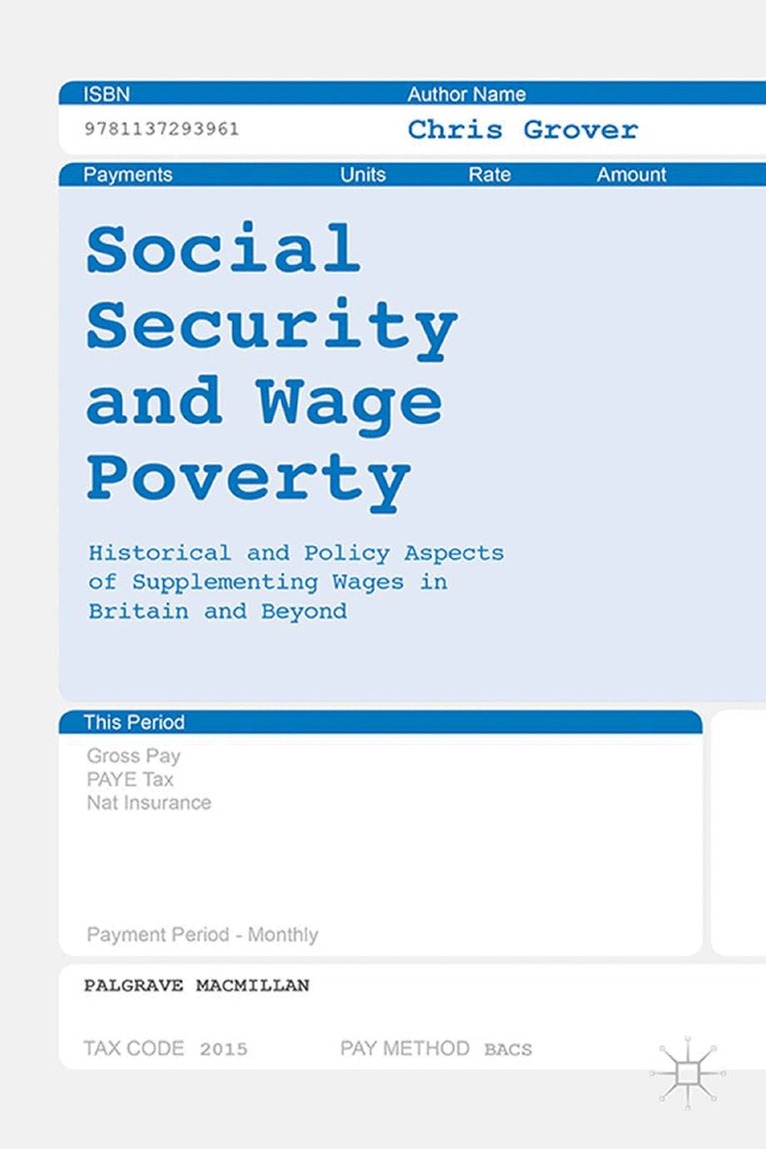
    Social Security and Wage Poverty

    Historical and Policy Aspects of Supplementing Wages in Britian and Beyond

    AvChris Grover

    Häftad, Engelska, 2020

    546 kr

    Beställningsvara. Skickas inom 10-15 vardagar. Fri frakt över 249 kr.

    Fler format och utgåvor

    Inbunden

    546 kr

    E-bok

    755 kr

    Beskrivning

    This is the first book to examine debates about, and the practice of, state supplementing of wages. It charts the historical development of such policies from prohibition in the 1830s and how opposition to it was overcome in the 1970s, thereby allowing the increasing supplementation of the wages of poorly paid working people.

    Produktinformation

    • Utgivningsdatum:2020-02-11
    • Mått:155 x 235 x 21 mm
    • Vikt:475 g
    • Format:Häftad
    • Språk:Engelska
    • Antal sidor:291
    • Upplaga:2016
    • Förlag:Palgrave Macmillan
    • ISBN:9781349671243

    Utforska kategorier

    • Referensverk och tvärvetenskap inom Samhälle och politik
    • Ekonomisk politik inom Ekonomi och Ledarskap
    • Genusvetenskap inom Samhälle och politik

    Mer om författaren

    Chris Grover is Senior Lecturer in Social Policy at Lancaster University, UK. Interested in political economy, he has written extensively on relationships between wage work and social security policy. His recent books include an edited collection (with Linda Piggott) on disability benefits and work, and the loaning of social security payments.

    Recensioner i media

    "This is an incisive and critical examination of the supplementation of low wages through tax credits and benefits for 'the working poor'. It is a topic which has always been at the heart of social policy in all capitalist economies, not least with the explosion of low paid employment in Britain in the last two decades. Chris Grover analyses the evident contradictions with enormous clarity and skill, using lots of historical detail, including some original local history and comparisons with New Zealand and the United States. It is essential reading for anyone interested in progressive reform of the welfare state." - Norman Ginsburg, London Metropolitan University, UK   "In this excellent book, which combines historical analysis with contemporary policy issues and debates, Chris Grover reminds us that the use of wage supplements for the dual purposes of sustaining employment and the alleviation of in work poverty among the low paid have long been, and remain, a key element of many welfare states. Considering policy developments from the 1790s through to the ongoing roll out out of Universal Credit his critical voice combines a political economy approach with a gendered analysis to conclude that wage subsidies are primarily a mechanism designed to manage both the inequalities and demand for profit required by liberal market economies. This is a detailed, well argued and important book that deserves a wide readership." - Peter Dwyer, University of York, UK   "Chris Grover's book is the product of an extensive scholarly and archival project of considerable contemporary significance. Its continuous historical range (from the late C18th to the first Conservative Budget of 2015), scope (agricultural and industrial workers) and policy diversity (from poor relief through supplements to credits) are encompassing, impressive and illuminating, as is its commitment to international comparison. The outcome is a meticulously researched insightful political-economic analysis of the multiple tensions that confound past and present policy endeavours alike, as they struggle to manage or mask intolerable poverty whilst maintaining immiserating low-end wages." - Ross Fergusson, The Open University, UK

    Innehållsförteckning

    • 1. Introduction2. Wage supplements and the New Poor Law3. Wage supplements and poor relief in the 1920s: Norfolk's agricultural labourers4. Wage supplements and Public Assistance in the 1930s: Lancashire's cotton weavers5. Family Allowance, the 'rediscovery of poverty' and the rejection of means-tested wage supplements6. Family Income Supplement: reintroducing means-tested wage supplements 7. Family Credit, wage suppression and the 'think tank'8. Tax Credits, wage worklessness and child poverty9. Universal Credit: wage supplements and 'mini jobs'10. Minimum and 'living' wages: alternatives to wage supplements?11. International experiences of wage supplements: New Zealand and the USA12. Conclusion