• Fri frakt över 249 kr
  • •
  • Snabba leveranser
  • •
  • Billiga böcker
Kundservice

Du är på sajten för privatpersoner.

Företag, bibliotek eller offentlig verksamhet?

Du handlar på classic.bokus.com, där alla dina funktioner finns intakta.
Till classic.bokus.com
Bokus logotyp. Gå till startsidan.
  • Erbjudanden
  • Nyheter
  • Student
  • Topplistor
  • Barn & ungdom
  • Bokus Play
  • E-böcker
  • Pocketböcker
  • Spel & pussel

10% studentrabatt med kod TERM26

Sidfot

Mina sidor

    Hjälp

    • Kundservice
    • Vanliga frågor och svar
    • Frakt och leverans
    • Retur vid ångerrätt
    • Reklamera vara
    • Betalning
    • Köpvillkor
    • Allmänna villkor
    • Information om webbplatsens tillgänglighet

    Om Bokus

    • Om oss
    • Pressrum
    • För studenter
    • För företag
    • För bibliotek och offentlig verksamhet
    • För leverantörer
    • Hållbarhet

    Populärt

    • Aktuella erbjudanden
    • Presentkort
    • Studentlitteratur
    • Nya böcker
    • Topplistor
    • Signerade böcker
    • Engelska böcker

    Inspiration

    • Boktips
    • BookTok
    • Populära bokserier
    • Barnbokskaraktärer
    • Populära författare
    Logotyp för Bokus
    Följ oss på Facebook (extern länk)Följ oss på Instagram (extern länk)Följ oss på YouTube (extern länk)Följ oss på TikTok (extern länk)
    bokus @ CookiesAnpassa cookiesIntegritetspolicyKöpvillkor
    Till Citymail hemsida (extern länk)Till Budbee hemsida (extern länk)Till Postnord hemsida (extern länk)Till Schenker hemsida (extern länk)Till Early Bird hemsida (extern länk)Till Walleys hemsida (extern länk)
    1. Kultur
    2. Konstböcker
    3. Konsthistoria

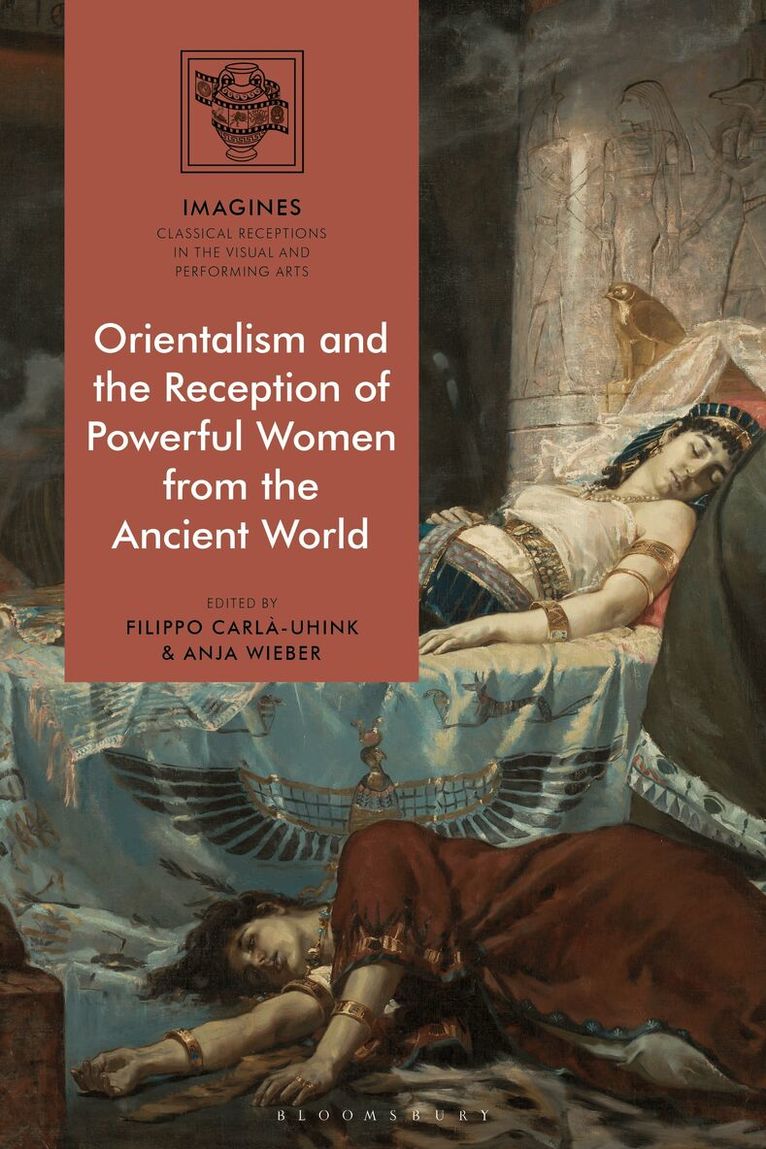
    Orientalism and the Reception of Powerful Women from the Ancient World

    AvFilippo Carlà-Uhink,Anja Wieber

    Inbunden, Engelska, 2020

    Del i serien IMAGINES – Classical Receptions in the Visual and Performing Arts

    1 866 kr

    Beställningsvara. Skickas inom 10-15 vardagar. Fri frakt över 249 kr.

    Beskrivning

    Why is Cleopatra, a descendent of Alexander the Great, a Ptolemy from a Greek–Macedonian family, in popular imagination an Oriental woman? True, she assumed some aspects of pharaonic imagery in order to rule Egypt, but her Orientalism mostly derives from ancient (Roman) and modern stereotypes: both the Orient and the idea of a woman in power are signs, in the Western tradition, of 'otherness' – and in this sense they can easily overlap and interchange. This volume investigates how ancient women, and particularly powerful women, such as queens and empresses, have been re-imagined in Western (and not only Western) arts; highlights how this re-imagination and re-visualization is, more often than not, the product of Orientalist stereotypes – even when dealing with women who had nothing to do with Eastern regions; and compares these images with examples of Eastern gaze on the same women. Through the chapters in this volume, readers will discover the similarities and differences in the ways in which women in power were and still are described and decried by their opponents.

    Produktinformation

    • Utgivningsdatum:2020-02-06
    • Mått:162 x 238 x 24 mm
    • Vikt:660 g
    • Format:Inbunden
    • Språk:Engelska
    • Serie:IMAGINES – Classical Receptions in the Visual and Performing Arts
    • Antal sidor:336
    • Förlag:Bloomsbury Publishing PLC
    • ISBN:9781350050105

    Utforska kategorier

    • Konsthistoria inom Kultur
    • Forntidens historia inom Historia och arkeologi
    • Genusvetenskap inom Samhälle och politik

    Mer om författaren

    Filippo Carlà-Uhink is Professor of Ancient History at the University of Potsdam, Germany.Anja Wieber taught for many years as lecturer in Ancient History at the University of Bochum, Germany, and is now an independent scholar, Germany.

    Recensioner i media

    An illuminating and thought-provoking read.

    Innehållsförteckning

    • List of FiguresList of ContributorsAcknowledgments1. Introduction Filippo Carlà-Uhink, Potsdam University, Germany & Anja Wieber, Independent Scholar, Germany2. Semiramide in India. The Reception of an Ancient Oriental Warrior Queen in Baroque Opera Kerstin Droß-Krüpe, Universität Kassel, Germany3. Carian Queens from the Orient to Greece and Back: The Reception of Artemisia I and Artemisia II Irene Berti, Independent Scholar, Germany4. The Persian Boy, the Bactrian Girl and the Man from Macedon – Gender and Orientalisms in Mary Renault’s Alexander the Great-Trilogy Ann-Cathrin Harders, Universität Bielefeld, Germany5. Drypetis in Fact and (Fan) Fiction Sabine Müller, Universität Marburg, Germany6. Exotic, Erotic, Heroic? Women of Carthage in Western Imagination Marta Garia Morcillo, University of Roehampton, UK7. In the Name of Cleopatra: Emma Hamilton and Catherine Stepney Make Their Mark Mary Hamer, Kipling Society, UK8. Colon(ial)izing Fulvia: (Re)Presenting the Military Woman in History, Fiction, and Art Peter Keegan, Macquarie University, Australia9. The Oriental Empresses of Rome. Severan Women in Literature and the Performative Arts Martijn Icks, University of Amsterdam, The Netherlands10. The Palmyrene Queen Zenobia in Syrian TV – Inverting Orientalism for Modern Nationhood? Anja Wieber, Independent Scholar, Germany11. The Dark Gaze of Galla Placidia, Christopher Bishop, Australian National University, Australia12. Theodora A.P. (After Procopius) / Theodora A.S. (After Sardou): Metamorphoses of an Empress Filippo Carlà-Uhink, Potsdam University, Germany13. From Historical Enigma to Modern Role Model: The Reception of Sasanid Queen Širin in Contemporary Iranian Cinema Irene Madreiter, Universität Innsbruck, Austria14. Instead of a Conclusion: Gynaecocracy in the Orient, Oriental Seclusion in the Occident Beate Wagner-Hasel, Universität Hannover, GermanyNotesBibliographyIndex