• Fri frakt över 249 kr
  • •
  • Snabba leveranser
  • •
  • Billiga böcker
Kundservice

Du är på sajten för privatpersoner.

Företag, bibliotek eller offentlig verksamhet?

Du handlar på classic.bokus.com, där alla dina funktioner finns intakta.
Till classic.bokus.com
Bokus logotyp. Gå till startsidan.
  • Erbjudanden
  • Nyheter
  • Student
  • Topplistor
  • Barn & ungdom
  • Bokus Play
  • E-böcker
  • Pocketböcker
  • Spel & pussel

10% rabatt på allt med kod: NYSTART10 →

Sidfot

Mina sidor

    Hjälp

    • Kundservice
    • Vanliga frågor och svar
    • Frakt och leverans
    • Retur vid ångerrätt
    • Reklamera vara
    • Betalning
    • Köpvillkor
    • Allmänna villkor
    • Information om webbplatsens tillgänglighet

    Om Bokus

    • Om oss
    • Pressrum
    • För studenter
    • För företag
    • För bibliotek och offentlig verksamhet
    • För leverantörer
    • Hållbarhet

    Populärt

    • Aktuella erbjudanden
    • Presentkort
    • Studentlitteratur
    • Nya böcker
    • Topplistor
    • Signerade böcker
    • Engelska böcker

    Inspiration

    • Boktips
    • BookTok
    • Populära bokserier
    • Barnbokskaraktärer
    • Populära författare
    Logotyp för Bokus
    Följ oss på Facebook (extern länk)Följ oss på Instagram (extern länk)Följ oss på YouTube (extern länk)Följ oss på TikTok (extern länk)
    bokus @ CookiesAnpassa cookiesIntegritetspolicyKöpvillkor
    Till Citymail hemsida (extern länk)Till Budbee hemsida (extern länk)Till Postnord hemsida (extern länk)Till Schenker hemsida (extern länk)Till Early Bird hemsida (extern länk)Till Walleys hemsida (extern länk)
    1. Historia och arkeologi
    2. Historia
    3. Historia: särskilda händelser och ämnen
    4. Socialhistoria och kulturhistoria

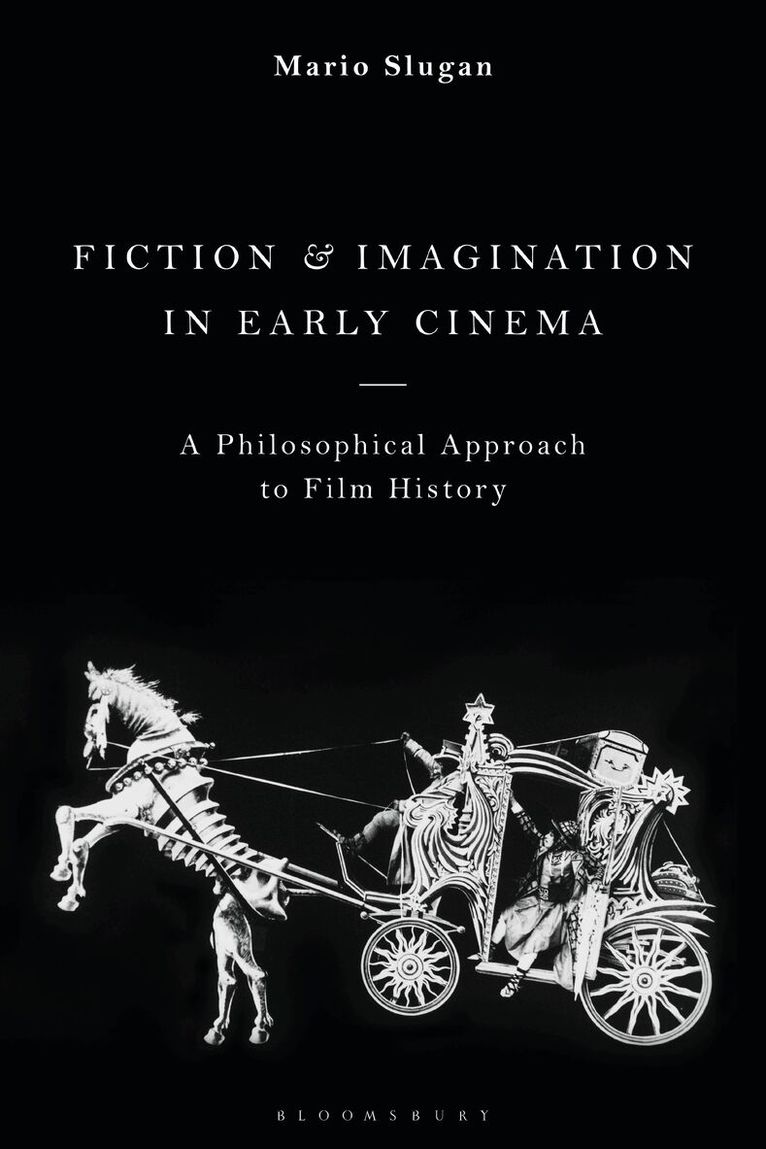
    Fiction and Imagination in Early Cinema

    A Philosophical Approach to Film History

    AvMario Slugan

    Häftad, Engelska, 2021

    465 kr

    Beställningsvara. Skickas inom 10-15 vardagar. Fri frakt över 249 kr.

    Fler format och utgåvor

    E-bok

    498 kr

    E-bok

    498 kr

    Inbunden

    1 672 kr

    Beskrivning

    Shortlisted for the BAFTSS 'Best Monograph' Award 2021When watching the latest instalment of Batman, it is perfectly normal to say that we see Batman fighting Bane or that we see Bruce Wayne making love to Miranda Tate. We would not say that we see Christian Bale dressed up as Batman going through the motions of punching Tom Hardy dressed up us Bane. Nor do we say that we see Christian Bale pretending to be Bruce Wayne making love with Marion Cotillard, who is playacting the role Miranda Tate. But if we look at the history of cinema and consider contemporary reviews from the early days of the medium, we see that people thought precisely in this way about early film. They spoke of film as no more than documentary recordings of actors performing on set. In an innovative combination of philosophical aesthetics and new cinema history, Mario Slugan investigates how our default imaginative engagement with film changed over the first two decades of cinema. It addresses not only the importance of imagination for the understanding of early cinema but also contributes to our understanding of what it means for a representational medium to produce fictions. Specifically, Slugan argues that cinema provides a better model for understanding fiction than literature.

    Produktinformation

    • Utgivningsdatum:2021-05-20
    • Mått:156 x 234 x 15 mm
    • Vikt:395 g
    • Format:Häftad
    • Språk:Engelska
    • Antal sidor:280
    • Förlag:Bloomsbury Publishing PLC
    • ISBN:9781350194816

    Utforska kategorier

    • Socialhistoria och kulturhistoria inom Historia och arkeologi
    • Filosofiska discipliner inom Filosofi och religion
    • Film inom Kultur

    Mer om författaren

    Mario Slugan is Lecturer at the Department of Film of Studies, Queen Mary University of London. He is the author of Montage as Perceptual Experience: Berlin Alexanderplatz from Döblin to Fassbinder (2017) and Noël Carroll and Film: A Philosophy of Art and Popular Culture (Bloomsbury Academic, 2019). He is also Fellow of the Society for the Cognitive Studies of the Moving Image, editor of the open-access peer-reviewed academic journal Apparatus: Film, Media and Digital Cultures of Central and Eastern Europe and book reviews editor of Early Popular Visual Culture.

    Recensioner i media

    I highly recommend it. Dense with period references and informed by analysis drawn from film theory and historiography, it offers comprehensive, insightful and well-informed discussions of imagination, fiction and make-believe in the experience of film during the late C19th and early C20th.

    Innehållsförteckning

    • List of Figures and Tables Acknowledgements Introduction 1: The Status of Fiction in Early Cinema: Train and Trick Films ARE THERE TEXTUAL CRITERIA FOR FICTIONALITY? EXTRA-TEXTUAL CRITERIA OF FICTIONALITY RECEPTION AND EXHIBITION CONTEXT TRAIN FILMS AND THE ARRIVAL OF A TRAIN THE IMPORTANCE OF EXHIBITION CONTEXT AND MAGIC THEATREA TRIP TO THE MOON AND TRICK FILMS PRODUCTION AND PROMOTION CONTEXT2: Hale’s Tours and Adjacent Cultural Series: Illusion, Immersion, Imagination PANORAMAS AND TERMINOLOGICAL CONFLATION: ILLUSION, IMMERSION, IMAGINATION TRAVELOGUES AS ERSATZ-TOURISM: ANY PLACE FOR IMAGINATION? PHANTOM RIDES: FROM FICTION OF TRAVEL TO NON-FICTION OF PLACE HALE’S TOURS THE MYTH OF A ‘DEMENTED FELLOW’ HISTORICIZING THE IMAGINED SEEING THESIS 3: Re-enactments in Early Cinema: Fake, Fiction, Fact WHAT IS A FAKE?FAKES, INDEXICALITY AND FICTIONALITYFAKES AND IMAGINARY PARTICIPATION 4: The Lecturer and Make-Believe: The Borders of the Text and Explicit MandatesTHE RELATION OF THE FILM LECTURER TO THE TEXT IDEAL, PRINTED, AND DELIVERED LECTURESTHE LECTURER AND THE PERFORMANCE OF THE FILM NARRATOR THROUGH DEIXIS 5: Implicit Mandates and Fictional Narrators NARRATIVE AND NARRATOR IN EARLY CINEMA NARRATIVE NARRATOR CONTEMPORARY NARRATOLOGICAL DISCOURSE GENETTE’S THEORY OF VOICE THE NEAR-UBIQUITY THESIS FOR LITERARY FICTION THE NEAR-ABSENCE THESIS FOR FICTION FILM THE ENUNCIATOR AS THE FILMIC NARRATOR THE RETURN OF THE GREAT-IMAGE MAKER EXCEPTIONS TO NEAR-ABSENCE THESIS FOR FICTION FILMConclusion Bibliography