• Fri frakt över 249 kr
  • •
  • Snabba leveranser
  • •
  • Billiga böcker
Kundservice

Du är på sajten för privatpersoner.

Företag, bibliotek eller offentlig verksamhet?

Du handlar på classic.bokus.com, där alla dina funktioner finns intakta.
Till classic.bokus.com
Bokus logotyp. Gå till startsidan.
  • Erbjudanden
  • Nyheter
  • Student
  • Topplistor
  • Barn & ungdom
  • Bokus Play
  • E-böcker
  • Pocketböcker
  • Spel & pussel

Må bättre, för mindre! Upp till 50% rabatt på hälsoböcker

Sidfot

Mina sidor

    Hjälp

    • Kundservice
    • Vanliga frågor och svar
    • Frakt och leverans
    • Retur vid ångerrätt
    • Reklamera vara
    • Betalning
    • Köpvillkor
    • Allmänna villkor
    • Information om webbplatsens tillgänglighet

    Om Bokus

    • Om oss
    • Pressrum
    • För studenter
    • För företag
    • För bibliotek och offentlig verksamhet
    • För leverantörer
    • Hållbarhet

    Populärt

    • Aktuella erbjudanden
    • Presentkort
    • Studentlitteratur
    • Nya böcker
    • Topplistor
    • Signerade böcker
    • Engelska böcker

    Inspiration

    • Boktips
    • BookTok
    • Populära bokserier
    • Barnbokskaraktärer
    • Populära författare
    Logotyp för Bokus
    Följ oss på Facebook (extern länk)Följ oss på Instagram (extern länk)Följ oss på YouTube (extern länk)Följ oss på TikTok (extern länk)
    bokus @ CookiesAnpassa cookiesIntegritetspolicyKöpvillkor
    Till Citymail hemsida (extern länk)Till Budbee hemsida (extern länk)Till Postnord hemsida (extern länk)Till Schenker hemsida (extern länk)Till Early Bird hemsida (extern länk)Till Walleys hemsida (extern länk)
    1. Historia och arkeologi
    2. Historia
    3. Historia: särskilda händelser och ämnen

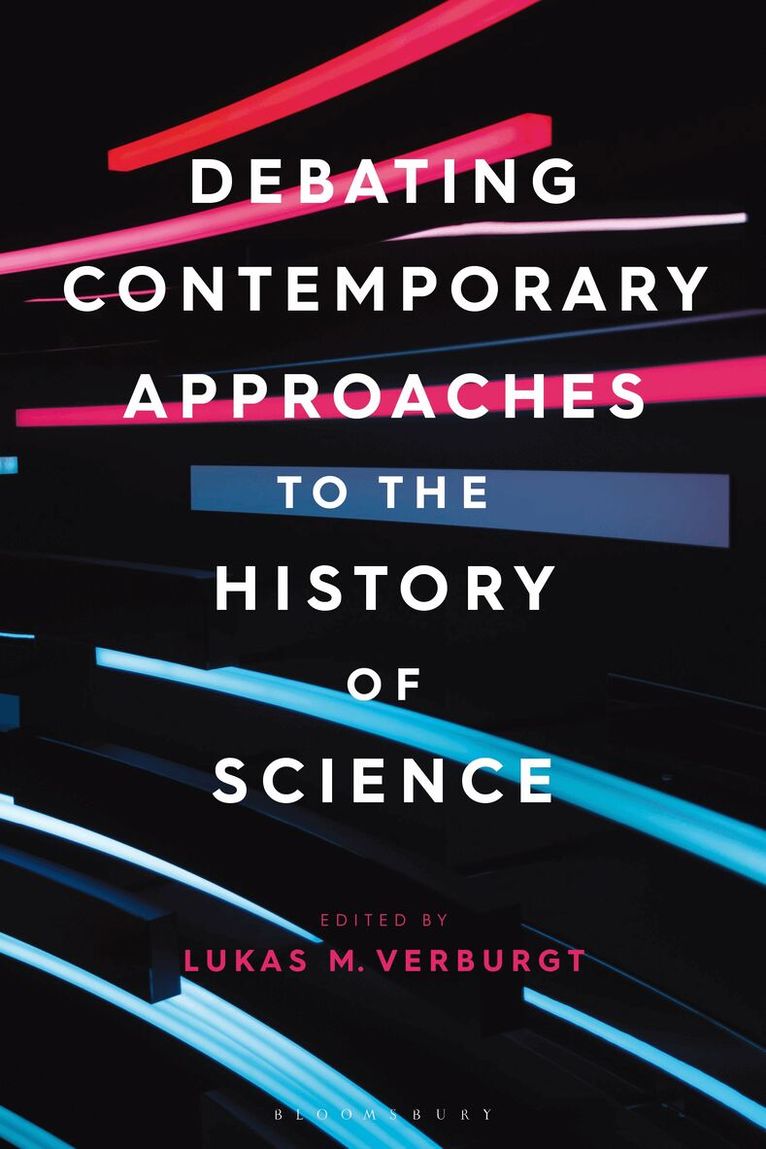
    Debating Contemporary Approaches to the History of Science

    AvLukas M. Verburgt

    Häftad, Engelska, 2024

    373 kr

    Beställningsvara. Skickas inom 5-8 vardagar. Fri frakt över 249 kr.

    Beskrivning

    Debating Contemporary Approaches to the History of Science explores the main themes, problems and challenges currently at the top of the discipline’s methodological agenda. In its chapters, established and emerging scholars introduce and discuss new approaches to the history of science and revisit older perspectives which remain crucial. Each chapter is followed by a critical commentary from another scholar in the field and the author’s response. The volume looks at such topics as the importance of the ‘global’, ‘digital’, ‘environmental’, and ‘posthumanist’ turns for the history of science, and the possibilities for the field of moving beyond a focus on ideas and texts towards active engagement with materials and practices. It also addresses important issues about the relationship between history of science, on the one hand, and philosophy of science, history of knowledge and ignorance studies, on the other. With its innovative format, this volume provides an up-to-date, authoritative overview of the field, and also explores how and why the history of science is practiced. It is essential reading for students and scholars eager to keep a finger on the pulse of what is happening in the history of science today, and to contribute to where it might go next.

    Produktinformation

    • Utgivningsdatum:2024-02-08
    • Mått:156 x 232 x 22 mm
    • Vikt:580 g
    • Format:Häftad
    • Språk:Engelska
    • Antal sidor:376
    • Förlag:Bloomsbury Publishing PLC
    • ISBN:9781350326217

    Utforska kategorier

    • Historia: särskilda händelser och ämnen inom Historia och arkeologi
    • Socialhistoria och kulturhistoria inom Historia och arkeologi
    • Historia: teori och metod inom Historia och arkeologi

    Mer om författaren

    Lukas M. Verburgt is Fellow at the Netherlands Institute for Advanced Study (NIAS) and guest researcher at Leiden University, the Netherlands.

    Recensioner i media

    Recommended for historians, scientists, and all those interested in the history of science.

    Innehållsförteckning

    • List of Contributors Introduction: History of Science – Past, Present, Future, Lukas M. Verburgt (Netherlands Institute for Advanced Study in the Humanities and Social Sciences, The Netherlands)1. Global History of Science, James Poskett (University of Warwick, UK) a. Comment: Gianamar Giovannetti-Singh (University of Cambridge and Royal Institution, UK)b. Response: James Poskett (University of Warwick, UK)2. Gender History of Science, Donald L. Opitz (DePaul University, USA)a. Comment: Joanna Wharton (University of York, UK)b. Response: Donald L. Opitz (DePaul University, USA)3. Post/Decolonial History of Science and STS, Suman Seth(Cornell University, USA)a. Comment: Meredith Alberta Palmer (Cornell University, USA)b. Response: Suman Seth & Meredith Alberta Palmer (both Cornell University, USA)4. Neo-Kantian/Post-Kuhnian History and Philosophy of Science, Lydia Patton (Virginia Tech University, USA) a. Comment: Katherina Kinzel (Utrecht University, The Netherlands)b. Response: Lydia Patton (Virginia Tech University, USA) 5. Integrated History and Philosophy of Science (&HPS), Max Dresow (University of Minnesota, USA)a. Comment: Hasok Chang (The University of Cambridge, UK)b. Response: Max Dresow (University of Minnesota, USA)6. Historical Epistemology, Hans-Jörg Rheinberger (Technical University of Berlin, Germany)a. Comment: Massimiliano Simons (Maastricht University, The Netherlands and KU Leuven, Belgium)b. Response: Hans-Jörg Rheinberger (Technical University of Berlin, Germany)7. Environmental History of Science, Johan Gärdebo (University of Uppsala, Sweden)a. Comment: Libby Robin (Australian National University, Australia)b. Response: Johan Gärdebo (University of Uppsala, Sweden)8. Multispecies History of Science, Raf de Bont (Maastricht University, The Netherlands)a. Comment: Sabina Leonelli (University of Exeter, UK)b. Response: Raf de Bont (Maastricht University, The Netherlands)9. Material and Performative History of Science, Marieke Hendriksen (Royal Netherlands Academy of Arts and Sciences, The Netherlands)a. Comment: Pamela Smith (Columbia University, USA)b. Response: Marieke Hendriksen (Royal Netherlands Academy of Arts and Sciences, The Netherlands)10. Computational History of Science, Julia Damerow and Manfred Laubichler (both Arizona State University USA)a. Comment: Colin Frederick Allen (University of Pittsburgh, USA)b. Response: Julia Damerow & Manfred Laubichler (both Arizona State University USA)11. History of Knowledge, Peter Burke (University of Cambridge, UK)a. Comment: James A. Secord (University of Cambridge, UK)b. Response: Peter Burke (University of Cambridge, UK)12. History of Scientific Ignorance, Lukas M. Verburgt (Netherlands Institute for Advanced Study in the Humanities and Social Sciences, The Netherlands)a. Comment: Jouni-Matti Kuukanen (University of Oulu, Finland)b. Response: Lukas M. Verburgt (Netherlands Institute for Advanced Study in the Humanities and Social Sciences, The Netherlands)13. Agnotology in History of Science, Naomi Oreskes (Harvard University, USA) a. Comment: Anna Lisa Ahlers (Max Planck Institute for the History of Science, Germany)b. Response: Naomi Oreskes (Harvard University, USA)BibliographyIndex