• Fri frakt över 249 kr
  • •
  • Snabba leveranser
  • •
  • Billiga böcker
Kundservice

Du är på sajten för privatpersoner.

Företag, bibliotek eller offentlig verksamhet?

Du handlar på classic.bokus.com, där alla dina funktioner finns intakta.
Till classic.bokus.com
Bokus logotyp. Gå till startsidan.
  • Erbjudanden
  • Nyheter
  • Student
  • Topplistor
  • Barn & ungdom
  • Bokus Play
  • E-böcker
  • Pocketböcker
  • Spel & pussel

Må bättre, för mindre! Upp till 50% rabatt på hälsoböcker

Sidfot

Mina sidor

    Hjälp

    • Kundservice
    • Vanliga frågor och svar
    • Frakt och leverans
    • Retur vid ångerrätt
    • Reklamera vara
    • Betalning
    • Köpvillkor
    • Allmänna villkor
    • Information om webbplatsens tillgänglighet

    Om Bokus

    • Om oss
    • Pressrum
    • För studenter
    • För företag
    • För bibliotek och offentlig verksamhet
    • För leverantörer
    • Hållbarhet

    Populärt

    • Aktuella erbjudanden
    • Presentkort
    • Studentlitteratur
    • Nya böcker
    • Topplistor
    • Signerade böcker
    • Engelska böcker

    Inspiration

    • Boktips
    • BookTok
    • Populära bokserier
    • Barnbokskaraktärer
    • Populära författare
    Logotyp för Bokus
    Följ oss på Facebook (extern länk)Följ oss på Instagram (extern länk)Följ oss på YouTube (extern länk)Följ oss på TikTok (extern länk)
    bokus @ CookiesAnpassa cookiesIntegritetspolicyKöpvillkor
    Till Citymail hemsida (extern länk)Till Budbee hemsida (extern länk)Till Postnord hemsida (extern länk)Till Schenker hemsida (extern länk)Till Early Bird hemsida (extern länk)Till Walleys hemsida (extern länk)
    1. Historia och arkeologi
    2. Historia
    3. Europas historia

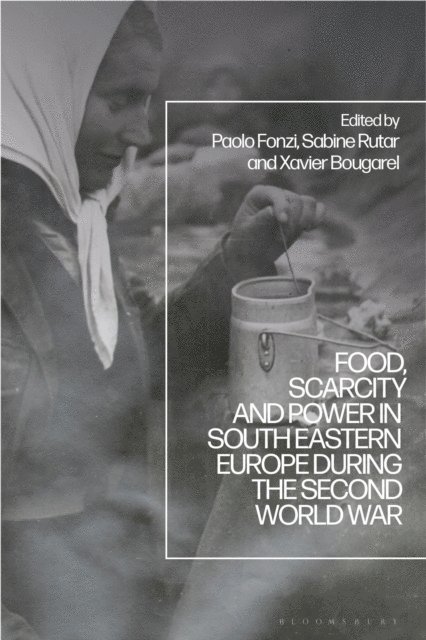
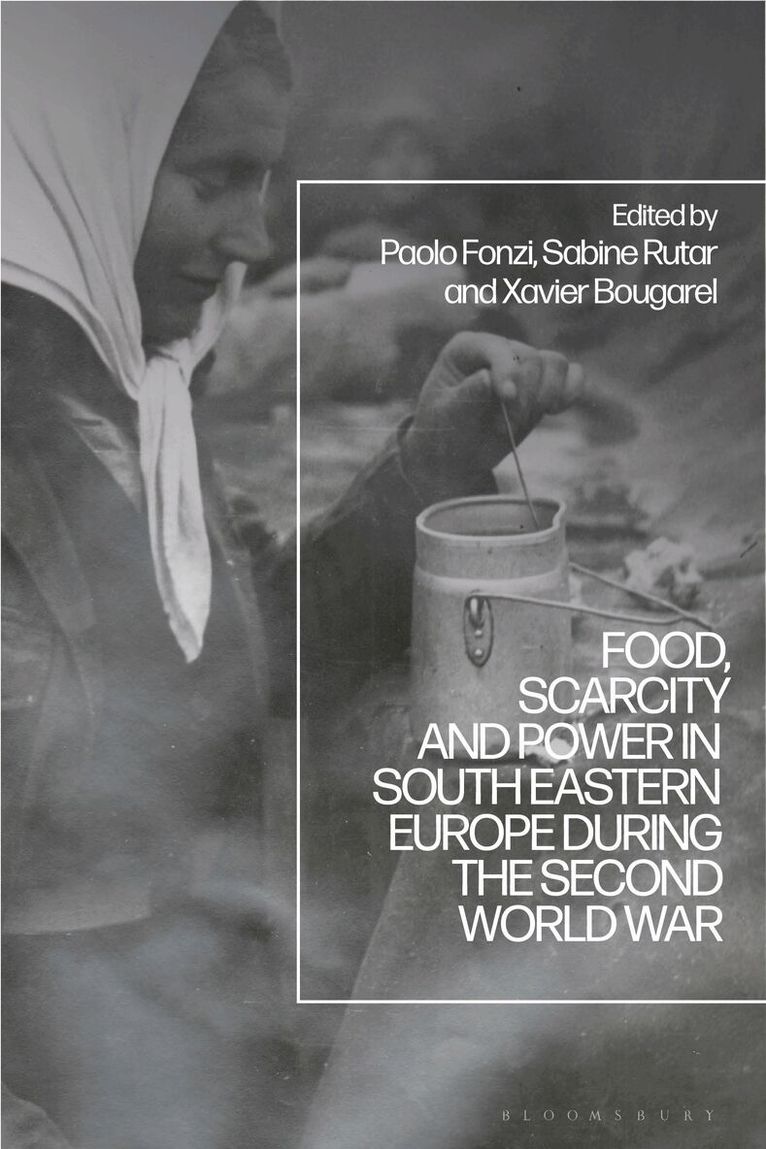
    Food, Scarcity and Power in Southeastern Europe during the Second World War

    AvPaolo Fonzi,Sabine Rutar

    Häftad, Engelska, 2026

    422 kr

    Beställningsvara. Skickas inom 10-15 vardagar. Fri frakt över 249 kr.

    Beskrivning

    The experience of all occupied countries during the Second World War was characterised by severe material shortages. Food, most noticeably, became a scarcity in everyday life; and that food grew into a major stake for all political groups at this time. This book shines a much-needed spotlight on the political role of food in Southeastern Europe from 1939 to 1945.Controlling food was a key strategy adopted by all actors – be they occupiers, state institutions, resistance organizations, international humanitarian organizations or private interest groups – in substantiating their bid for power. As a predominantly agrarian area with a substantial peasant population, investigating this topic is particularly poignant for Southeastern Europe. From discussions of searching for and fighting for food to offering relief and instrumentalising of food politically, the chapters in this volume add nuance to discussions on the complex intertwined political and social dynamics of war and occupation. In so doing, this sophisticated study fills an important gap in our understanding of the Second World War, food policy, and the social history of Europe more broadly.

    Produktinformation

    • Utgivningsdatum:2026-04-30
    • Mått:152 x 232 x 14 mm
    • Vikt:380 g
    • Format:Häftad
    • Språk:Engelska
    • Antal sidor:272
    • Förlag:Bloomsbury Publishing PLC
    • ISBN:9781350333956

    Utforska kategorier

    • Europas historia inom Historia och arkeologi
    • Socialhistoria och kulturhistoria inom Historia och arkeologi
    • Andra världskriget inom Historia och arkeologi

    Mer om författaren

    Paolo Fonzi is Assistant Professor in Contemporary History at University of Eastern Piedmont, Italy.Sabine Rutar is Senior Research Associate at the Leibniz Institute for East and Southeast European Studies, Germany.Xavier Bougarel is CNRS Researcher at CETOBAC, the Center for Turkish, Ottoman, Balkan and Central Asian Studies, France.

    Recensioner i media

    Masterfully researched and impressively detailed, Food, Scarcity and Power in Southeastern Europe During the Second World War, reveals the intimate and far-reaching impacts that high-level Axis decision-making had on the everyday lives of ordinary people. A stunning illustration of the boundless reach of World War II into the daily lives of so many.

    Innehållsförteckning

    • List of FiguresList of MapsList of ContributorsList of AbbreviationsFood, Scarcity and Power: An Introduction, Paolo Fonzi,(University of Eastern Piedmont, Italy) Sabine Rutar, (Leibniz Institute for East and Southeast European Studies, Germany) Xavier Bougarel (CETOBAC, France)Part 1 – Germany: Extracting Food and Labour1. The Western Banat as Germany’s Breadbasket and the Role of the Banat Germans in Agricultural Extraction, Mirna Zakic, (Ohio University, USA)2. Coal and Copper for the German War Effort: Food and Labour in Yugoslav Mining Industries, Sabine Rutar, (Leibniz Institute for East and Southeast European Studies, Germany)Part 2 – Italy: Instrumentalizing Food3. Between Chaos and Economic Weakness. Italian Food Policies in Albania (1939–1943), Alberto Basciani, (Roma Tre University, Italy)4. Imperial Humanitarianism. Italy and the Greek Famine during the Second World War (1941–1943), Paolo Fonzi, (University of Eastern Piedmont, Italy)Part 3 – Cities: Searching for Food5. The Rationing System and Self-Sufficiency Efforts in Ljubljana during the Second World War, Mojca Šorn, (Institute of Contemporary History in Ljubljana, Slovenia)6. Trying the Impossible: The Zagreb Jewish Community and the Provisioning of Female Camp Inmates (1941–1942), Marija Vulesica, (Humboldt University of Berlin, Germany)Part 4 – Contested Territories: Fighting for Food7. Food and Food Policies in Central Dalmatia from April 1941 to the Italian Capitulation in September 1943, Nikica Baric, (Croatian Institute of History in Zagreb, Croatia)8. ‘To Live by the Gun’: Food Insecurity, Ethnic Violence and Political Mobilization in Occupied Greece (1941–1944), Spyros Tsoutsoumpis, (Lancaster University, UK)Part 5 – Liberated Territories: Feeding the Partisans9. Survival and Equity: The Moral Economy of the Liberated Territories of Western Bosnia (1941–1945), Xavier Bougarel, (CETOBAC, France)10. The National Liberation Movement and Food Policies in the Liberated Inland Territories of Southern Albania (1942–1944), Markenc Lorenci, (Roma Tre University, Italy)Conclusion: The Power of Food in Wartime, Paolo Fonzi, Sabine Rutar, Xavier BougarelNotesIndex