• Fri frakt över 249 kr
  • •
  • Snabba leveranser
  • •
  • Billiga böcker
Kundservice

Du är på sajten för privatpersoner.

Företag, bibliotek eller offentlig verksamhet?

Du handlar på classic.bokus.com, där alla dina funktioner finns intakta.
Till classic.bokus.com
Bokus logotyp. Gå till startsidan.
  • Erbjudanden
  • Nyheter
  • Student
  • Topplistor
  • Barn & ungdom
  • Bokus Play
  • E-böcker
  • Pocketböcker
  • Spel & pussel

10% rabatt på allt med kod: NYSTART10 →

Sidfot

Mina sidor

    Hjälp

    • Kundservice
    • Vanliga frågor och svar
    • Frakt och leverans
    • Retur vid ångerrätt
    • Reklamera vara
    • Betalning
    • Köpvillkor
    • Allmänna villkor
    • Information om webbplatsens tillgänglighet

    Om Bokus

    • Om oss
    • Pressrum
    • För studenter
    • För företag
    • För bibliotek och offentlig verksamhet
    • För leverantörer
    • Hållbarhet

    Populärt

    • Aktuella erbjudanden
    • Presentkort
    • Studentlitteratur
    • Nya böcker
    • Topplistor
    • Signerade böcker
    • Engelska böcker

    Inspiration

    • Boktips
    • BookTok
    • Populära bokserier
    • Barnbokskaraktärer
    • Populära författare
    Logotyp för Bokus
    Följ oss på Facebook (extern länk)Följ oss på Instagram (extern länk)Följ oss på YouTube (extern länk)Följ oss på TikTok (extern länk)
    bokus @ CookiesAnpassa cookiesIntegritetspolicyKöpvillkor
    Till Citymail hemsida (extern länk)Till Budbee hemsida (extern länk)Till Postnord hemsida (extern länk)Till Schenker hemsida (extern länk)Till Early Bird hemsida (extern länk)Till Walleys hemsida (extern länk)
    1. Skönlitteratur
    2. Dramatik

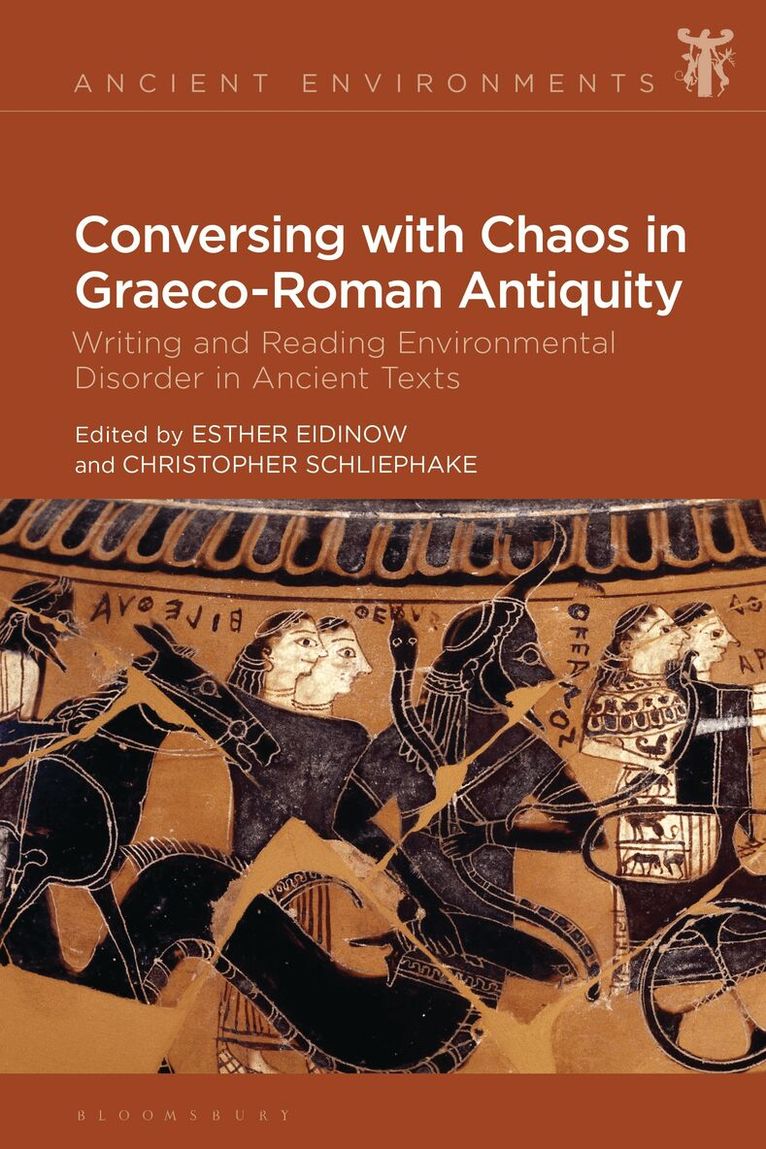
    Conversing with Chaos in Graeco-Roman Antiquity

    Writing and Reading Environmental Disorder in Ancient Texts

    AvEsther Eidinow,Christopher Schliephake

    Häftad, Engelska, 2026

    Del i serien Ancient Environments

    409 kr

    Beställningsvara. Skickas inom 10-15 vardagar. Fri frakt över 249 kr.

    Beskrivning

    How did ancient Greeks and Romans perceive their environments: did they see order or chaos, chance or control? And how do their views compare to modern perceptions? Conversing with Chaos in Graeco-Roman Antiquity challenges prevailing ideas that ancient perceptions of the non-human world rested on a profound belief in universal order, and that the cosmos was harmonious and under human control. Engaging with the concept of chaos in both its ancient and modern meanings, and focusing on the ancient Mediterranean and Near East, this book reveals another sense of environmental awareness, one that paid equal attention to chance and chaos, and the sometimes-fatal consequences of human interventions in nature.Bringing together a team of international scholars, the volume investigates the experience of the interaction of humans with the environment, as reflected in ancient evidence from myths and philosophical treatises, to epigraphic evidence and archaeological remains. The contributors consider the role of the human in the formation of perspectives about the natural world and explore themes of agency, affordances, ecophobia, gender and temporality. Overall, the volume reveals how, in ancient imaginations, environments were perceived as living entities with their own agency, and respondent (or even vulnerable) to human actions and decision-making. It highlights how modern insights can enrich our understanding of the past, and demonstrates the increasing relevance of ancient historical research for reflecting on current relations to the natural world.

    Produktinformation

    • Utgivningsdatum:2026-06-25
    • Mått:152 x 232 x 14 mm
    • Vikt:360 g
    • Format:Häftad
    • Språk:Engelska
    • Serie:Ancient Environments
    • Antal sidor:232
    • Förlag:Bloomsbury Publishing PLC
    • ISBN:9781350344235

    Utforska kategorier

    • Dramatik inom Skönlitteratur
    • Forngrekisk religion och mytologi inom Filosofi och religion
    • Miljövetenskap och miljöpolitik inom Naturvetenskap och teknik

    Mer om författaren

    Esther Eidinow is Professor of Ancient History at the University of Bristol, UK. She is a series editor for the Bloomsbury series Ancient Environments, co-editor of Cognitive Approaches to Ancient Religious Experience (2022) and author of Envy, Poison and Death: Women on Trial in Classical Athens (2016). Christopher Schliephake is Assistant Professor of Ancient History at Augsburg University, Germany. He is author of The Environmental Humanities and the Ancient World (2020) and editor of Ecocritisim, Ecology and Cultures in Antiquity (2017).

    Recensioner i media

    The volume is highly recommended ... It also succeeds in demonstrating to non-classicists (by adequately introducing authors, works and contexts) the relevance of antiquity for understanding contemporary ecological concerns, and in contributing to ecocritical theory. Conversing with Chaos succeeds on every front and establishes itself as a landmark in the ecocritical study of the ancient world.

    Innehållsförteckning

    • List of ContributorsPrefaceList of AbbreviationsIntroduction, Esther Eidinow and Christopher SchliephakeI. Control1. Perilous Environs: The Rustic World in Aratus and Nicander, Leonardo Cazzadori 2. Shared Suffering and Cyclical Destruction: Failures of Environmental Control in the Aeneid, Aaron M. Seider3. Chaos and Kosmos: An Ecocritical Reading of Seneca’s Thyestes, Simona MartoranaII. Connection4. The Interspecies and Trans-Corporeal Mesh in Euripides’ Bacchae, Maria Combatti5. The Relationality of Darkness in Thucydides, Esther Eidinow 6. The Only Constant Is Change – The Environmental Dimension of Plutarch’s De defectu oraculorum, Christopher SchliephakeIII. Contact7. Poseidon’s Mode of Action: Divine Agency and the Helike Disaster, Michiel van Veldhuizen8. River, Agency, and Gender: An Ecocritical Reading of the Myths of the Tiber, Kresimir Vukovic9. Ecological Grief and the Safaitic Inscriptions of Ancient North Arabia, Eris Williams ReedIV. Change10. Ecological Grief in Aelius Aristides and Philostratus, Jason König 11. An Allegory of the ‘Anthropocene’: Environmental and textual disorder in Claudian’s De Raptu Proserpinae, Marco Formisano12. The Environmental Ethics of Delphi: Back-filling Latour’s Facing Gaia, Mark D. Usher