• Fri frakt över 249 kr
  • •
  • Snabba leveranser
  • •
  • Billiga böcker
Kundservice

Du är på sajten för privatpersoner.

Företag, bibliotek eller offentlig verksamhet?

Du handlar på classic.bokus.com, där alla dina funktioner finns intakta.
Till classic.bokus.com
Bokus logotyp. Gå till startsidan.
  • Erbjudanden
  • Nyheter
  • Student
  • Topplistor
  • Barn & ungdom
  • Bokus Play
  • E-böcker
  • Pocketböcker
  • Spel & pussel

10% rabatt på allt med kod: NYSTART10 →

Sidfot

Mina sidor

    Hjälp

    • Kundservice
    • Vanliga frågor och svar
    • Frakt och leverans
    • Retur vid ångerrätt
    • Reklamera vara
    • Betalning
    • Köpvillkor
    • Allmänna villkor
    • Information om webbplatsens tillgänglighet

    Om Bokus

    • Om oss
    • Pressrum
    • För studenter
    • För företag
    • För bibliotek och offentlig verksamhet
    • För leverantörer
    • Hållbarhet

    Populärt

    • Aktuella erbjudanden
    • Presentkort
    • Studentlitteratur
    • Nya böcker
    • Topplistor
    • Signerade böcker
    • Engelska böcker

    Inspiration

    • Boktips
    • BookTok
    • Populära bokserier
    • Barnbokskaraktärer
    • Populära författare
    Logotyp för Bokus
    Följ oss på Facebook (extern länk)Följ oss på Instagram (extern länk)Följ oss på YouTube (extern länk)Följ oss på TikTok (extern länk)
    bokus @ CookiesAnpassa cookiesIntegritetspolicyKöpvillkor
    Till Citymail hemsida (extern länk)Till Budbee hemsida (extern länk)Till Postnord hemsida (extern länk)Till Schenker hemsida (extern länk)Till Early Bird hemsida (extern länk)Till Walleys hemsida (extern länk)
    1. Samhälle och politik
    2. Samhälle och kultur
    3. Kultur och medier
    4. Kulturvetenskap

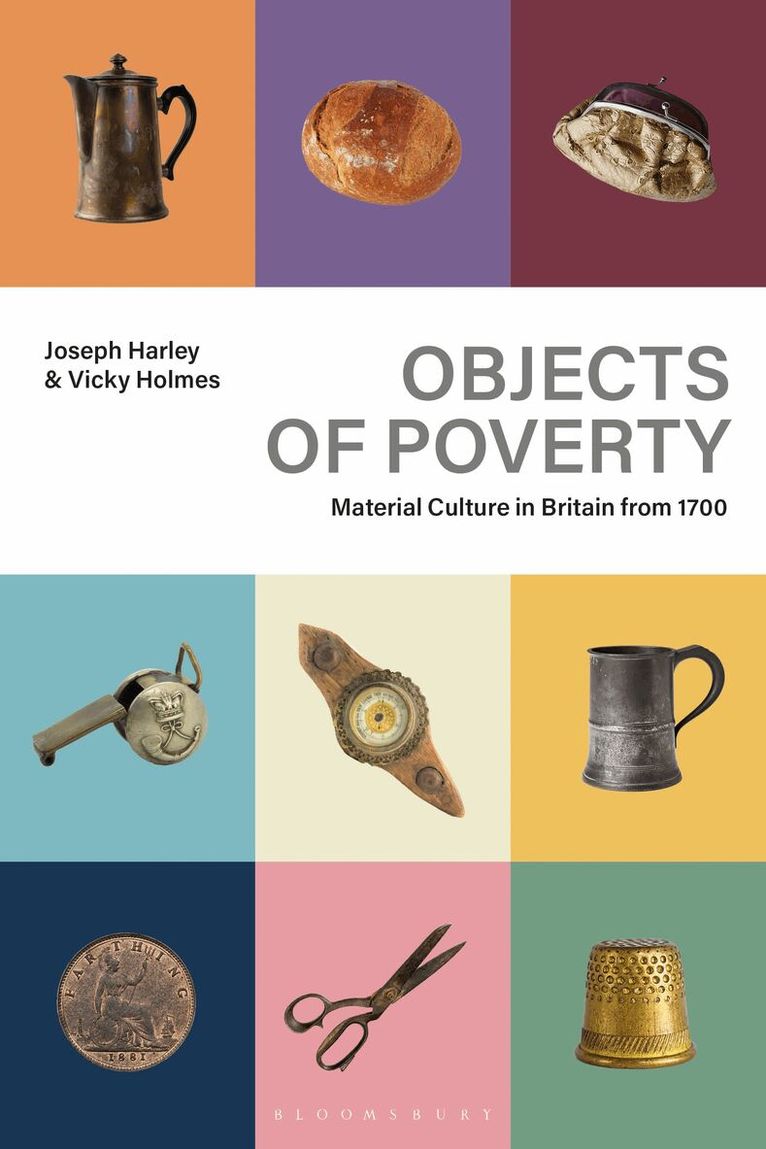
    Objects of Poverty

    Material Culture in Britain from 1700

    AvJoseph Harley,Vicky Holmes

    Inbunden, Engelska, 2025

    1 150 kr

    Beställningsvara. Skickas inom 10-15 vardagar. Fri frakt över 249 kr.

    Beskrivning

    Objects of Poverty is the first volume dedicated to analysing the material culture of poverty in British history from 1700 to the present. The book examines the history of poverty through the objects ‘owned’ by the poor and those crafted, repurposed or simply encountered by them, offering critical new insights into the experience of being impoverished.This collection brings together leading and emerging scholars who draw on a wide array of ‘objects of poverty’ from those that survive today, ranging from dolls to whistles to textile samples, to those that have long since gone and now only exist in visual and written sources. The contributors trace the importance of materiality in eighteenth-century and modern life, covering objects connected to sustenance, home, the makeshift, childhood, animals, money, workhouses, and injury and death. In its 23 chapters, along with some 77 illustrations, the book provides a detailed exploration of the history of poverty in Britain. Each of the chapters are based on original research and make a new contribution to the literature. This book will be fascinating reading for history enthusiasts to students to established academics across multiple disciplines.

    Produktinformation

    • Utgivningsdatum:2025-08-21
    • Mått:154 x 236 x 24 mm
    • Vikt:660 g
    • Format:Inbunden
    • Språk:Engelska
    • Antal sidor:344
    • Förlag:Bloomsbury Publishing PLC
    • ISBN:9781350368187

    Utforska kategorier

    • Kulturvetenskap inom Samhälle och politik
    • Socialhistoria och kulturhistoria inom Historia och arkeologi

    Mer om författaren

    Joseph Harley is a Senior Lecturer in History at Anglia Ruskin University, UK.Vicky Holmes is an Adjunct Assistant Professor at Notre Dame London, The University of Notre Dame (USA) in England.

    Recensioner i media

    The origins of material culture history lie in the study of beautiful and often expensive objects most usually found in museum collections. In the last several decades the objects of middling or more prosperous laboring households have become a subject of sustained historical interest. Finally, we now have a volume on a wide range of material objects associated with the very poor and institutionalized. Joseph Harley and Vicky Holmes have opened a welcome new chapter in our understanding of the material lives of early modern and modern Britons.

    Innehållsförteckning

    • List of FiguresList of TablesList of ContributorsPrefaceAcknowledgementsIntroduction, Joseph Harley and Vicky Holmes (Anglia Ruskin University, UK and Notre Dame London, The University of Notre Dame (USA) in England, UK) Part I: Objects of Sustenance1. Bread: The Matter That Mattered Most, Carl Griffin (University of Sussex, UK)2. Global Goods to Pauper Provisions under the Old Poor Law: Evidence from Overseers’ Vouchers, 1765–1834, Peter Collinge (Keele University, UK)3. ‘Full of saloop with fire under it’: Teaware, Saloop Stalls and Warmth on the Streets of Georgian London, Freya Purcell (Victoria & Albert Museum, UK) Part II: Objects of Home4. From Cradle to Grave? The Enduring Afterlife of the Egg Box in Victorian London, Vicky Holmes (Notre Dame London, The University of Notre Dame (USA) in England, UK)5. From Improvised to Subsidised Safety: Fireguards, Jonathan Reinarz and Shane Ewen (University of Birmingham, UK and Leeds Metropolitan University, UK)6. Coal in the Bath: Poverty, Modernity and the Welfare State in Postwar Britain, Michael Lambert (Lancaster University, UK)Part III: Crafted Objects7. Creativity in Poverty: British Sailors’ Craft in the Long Nineteenth Century, Maya Wassell Smith (Royal Museums Greenwich, UK)8. Buttons for Whistles in the Late-Victorian, Early Edwardian era: Unbranded Calls, Emily Cockayne (University of East Anglia, UK)9. Makeshift Dolls and Working-Class Childhood, c. 1880-1930, Emily Cuming (Liverpool John Moores University, UK) Part IV: Objects of Childhood10. Toys for the Poor, c. 1700-1918, Ken Sneath (University of Cambridge, UK)11. ‘Models of Needlework’: A Needlework Sample Book from the Dublin Female Orphan House, Eliza McKee (Queen’s University Belfast, Northern Ireland)12. Fragmentary Findings: A Victorian School Needlework Sample, Vivienne Richmond (Goldsmiths, University of London, UK) Part V: Living Objects13. The Poor’s Best Friend? Dog Ownership and Companionship in England, c. 1780-1880, Joseph Harley (Anglia Ruskin University, UK)14. ‘Up With the Hen House’: Chickens, Coops and Class Identity in British Municipal Cottage Estates, 1920–1950, Lesley Hoskins and Rebecca Preston (Buckinghamshire New University, UK and English Heritage London, UK)Part VI: Monetary Objects15. “Was much Reduced and had been under the necesity to Pawn his Cloaths”: Parish Payments to Redeem Pawned Goods in London in the Long Eighteenth Century, Samantha Williams (University of Cambridge, UK)16. ‘No Money Value’: The Salvation Army Social Work Tokens in the Late Nineteenth Century, Flore Janssen (Salvation Army International Heritage Centre, UK)17. The Purses of the Poor: Money, Autonomy and Everyday Life in Victorian and Edwardian England, Julie-Marie Strange (University of Durham, UK)Part VII: Workhouse Objects18. Going to Bed in the Workhouse: Facilities, Practices and Implications in the 1790s, Alannah Tomkins (Keele University, UK)19. Scraps and Samplers: The Form and Function of Textile Artefacts in the Nineteenth Century Workhouse, Karen Thompson, Peter Jones and Steven King (University of Glasgow, UK and Nottingham Trent University, UK)20. Investigating All They Possessed: Depredation, Damage and Defiance in the Vagrant Ward 1834 to 1900, Megan Yates (University of Leicester, UK)VIII. Objects of Injury and Death21. ‘Ought I Not to Have Been Grateful?’: Wooden Legs as Military Charity, 1800-1850s, Caroline Louise Nielsen (University of Northampton, UK)22. Medical Objects: The Sick Poor and Their Relief in the Long Nineteenth-Century, Steven King & Peter Jones (University of Glasgow, UK and Nottingham Trent University, UK)23. Inscription Gravestones: Poverty and Commemoration in the Late Nineteenth Century, Rebecca Senior (University of Nottingham, UK)Bibliography