• Fri frakt över 249 kr
  • •
  • Snabba leveranser
  • •
  • Billiga böcker
Kundservice

Du är på sajten för privatpersoner.

Företag, bibliotek eller offentlig verksamhet?

Du handlar på classic.bokus.com, där alla dina funktioner finns intakta.
Till classic.bokus.com
Bokus logotyp. Gå till startsidan.
  • Erbjudanden
  • Nyheter
  • Student
  • Topplistor
  • Barn & ungdom
  • Bokus Play
  • E-böcker
  • Pocketböcker
  • Spel & pussel

10% studentrabatt med kod TERM26

Sidfot

Mina sidor

    Hjälp

    • Kundservice
    • Vanliga frågor och svar
    • Frakt och leverans
    • Retur vid ångerrätt
    • Reklamera vara
    • Betalning
    • Köpvillkor
    • Allmänna villkor
    • Information om webbplatsens tillgänglighet

    Om Bokus

    • Om oss
    • Pressrum
    • För studenter
    • För företag
    • För bibliotek och offentlig verksamhet
    • För leverantörer
    • Hållbarhet

    Populärt

    • Aktuella erbjudanden
    • Presentkort
    • Studentlitteratur
    • Nya böcker
    • Topplistor
    • Signerade böcker
    • Engelska böcker

    Inspiration

    • Boktips
    • BookTok
    • Populära bokserier
    • Barnbokskaraktärer
    • Populära författare
    Logotyp för Bokus
    Följ oss på Facebook (extern länk)Följ oss på Instagram (extern länk)Följ oss på YouTube (extern länk)Följ oss på TikTok (extern länk)
    bokus @ CookiesAnpassa cookiesIntegritetspolicyKöpvillkor
    Till Citymail hemsida (extern länk)Till Budbee hemsida (extern länk)Till Postnord hemsida (extern länk)Till Schenker hemsida (extern länk)Till Early Bird hemsida (extern länk)Till Walleys hemsida (extern länk)
    1. Filosofi och religion
    2. Filosofi
    3. Filosofiska discipliner

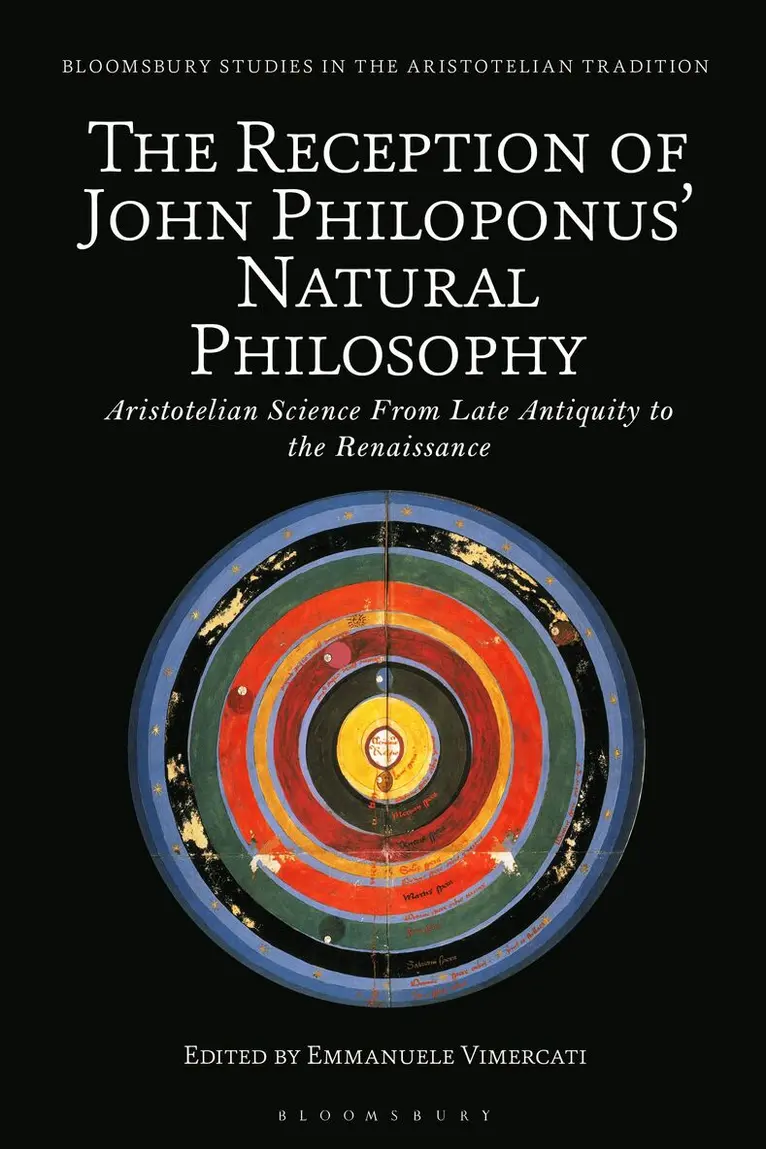
    Reception of John Philoponus’ Natural Philosophy

    Aristotelian Science From Late Antiquity to the Renaissance

    AvEmmanuele Vimercati

    Inbunden, Engelska, 2024

    Del i serien Bloomsbury Studies in the Aristotelian Tradition

    1 187 kr

    Beställningsvara. Skickas inom 10-15 vardagar. Fri frakt över 249 kr.

    Beskrivning

    In some of his most famous works, John Philoponus (c. 490-570 CE) confronts numerous aspects of Aristotle’s philosophy and science. Yet the influence of these reinterpretations and critiques remains under-examined. This volume fills this gap by uncovering the considerable impact of Philoponus’ natural philosophy in both the medieval and Renaissance periods.Divided into three parts, the first part of the volume introduces central concepts in Philoponus’ philosophy. Highlighting the areas of crossover as well as of disagreement with Aristotle, chapters dedicate specific attention to Philoponus’ theories of place, matter and vacuum; his ideas of motion; his discussion of the heavens and the fifth element; and his anthropology. This is followed, in parts two and three, by a focus on Philoponus’ reception in the Middle Ages and the Renaissance respectively. Shedding light on the scientific ideas circulating in these periods, international experts explore a range of topics from the renewal of Aristotelianism in the Arab world, through the medieval Byzantine and Latin traditions, to Philoponus’ appearance in the early works of Galileo.Engaging with a number of Philoponus’ key tracts, The Reception of John Philoponus’ Natural Philosophy is both a much-needed study of Philoponus’ influence and a revealing analysis of how Aristotelian science was received, adapted, critiqued and mediated throughout the Middle Ages and the Renaissance.

    Produktinformation

    • Utgivningsdatum:2024-12-12
    • Mått:154 x 238 x 20 mm
    • Vikt:540 g
    • Format:Inbunden
    • Språk:Engelska
    • Serie:Bloomsbury Studies in the Aristotelian Tradition
    • Antal sidor:264
    • Förlag:Bloomsbury Publishing PLC
    • ISBN:9781350416277

    Utforska kategorier

    • Filosofiska discipliner inom Filosofi och religion
    • Naturvetenskapens filosofi inom Naturvetenskap och teknik

    Mer om författaren

    Emmanuele Vimercati is Professor of History of Ancient Philosophy at the Pontifical Lateran University, Rome, Italy. His previous titles include Fate, Providence and Free Will: Philosophy and Religion in Dialogue in the Early Imperial Age (2020), co-edited with R. Brouwer, and Nicholas of Cusa and the Aristotelian Tradition. A Philosophical and Theological Survey (2020), co-edited with V. Zaffino.

    Recensioner i media

    The importance of Philoponus, well until the time of Galileo, cannot be underestimated as the scholarly and interesting chapters in this book demonstrate.

    Innehållsförteckning

    • Introduction, Emmanuele Vimercati (Pontifical Lateran University, Rome, Italy)Part I: Late Antiquity (and Its Legacy)1. John Philoponus’ Absolute Place and Its Reception by Francisco of Toledo, Ioannis Papachristou (National and Kapodistrian University, Athens, Greece)2. Philoponus on Natural and Impressed Power, Emmanuele Vimercati (Pontifical Lateran University, Rome, Italy)3. Philoponus on the Nature of the Heavens. Revisiting Some Old Debates, Marc-Antoine Gavray (University of Liège, Belgium)4. John Philoponus on Being Human, Mark Edwards (University of Oxford, UK)Part II: The Medieval Tradition5. Proclus, Philoponus and the Brethren of Purity on the Eternity of the World, Carmela Baffioni (University of Naples – L’Orientale, Italy)6. Averroes as Critic and Continuator within the Heritage of Philoponus’ Philosophical Theology, David Twetten (Marquette University, USA)7. Philoponus’ Natural Philosophy in the Medieval Byzantine World: Psychological and Cosmological Debates, Tommaso De Robertis (University of Macerata, Italy and University of Toronto, Canada)8. Philoponus and the Renewal of Aristotelian Cosmology in the Late Latin Middle Ages, Alessandro Ghisalberti (Catholic University, Milan, Italy)Part III: Renaissance9. Why Aristotle? Patterns in Renaissance Philosophy, Paul Richard Blum (Loyola University Maryland, USA and Palacký University Olomouc, Czech Republic)10. Philoponus’ Metaphysical Cosmology in Renaissance Debates, Pietro Daniel Omodeo (University “Ca’ Foscari”, Venice, Italy)11. Francesco Piccolomini (1523-1607) and Giacomo Zabarella (1533-1589) on Philoponus’ Definition of Prime Matter, Antonio Petagine (University of Roma Tre, Italy)12. Philoponus’ Contribution to Copernicus’ Doctrine of Gravity, Dilwyn Knox (University College London, UK)13. Philoponus in Galileo’s Early Works, Flavia Marcacci (University of Urbino "Carlo Bo", Italy)Index