• Fri frakt över 249 kr
  • •
  • Snabba leveranser
  • •
  • Billiga böcker
Kundservice

Du är på sajten för privatpersoner.

Företag, bibliotek eller offentlig verksamhet?

Du handlar på classic.bokus.com, där alla dina funktioner finns intakta.
Till classic.bokus.com
Bokus logotyp. Gå till startsidan.
  • Erbjudanden
  • Nyheter
  • Student
  • Topplistor
  • Barn & ungdom
  • Bokus Play
  • E-böcker
  • Pocketböcker
  • Spel & pussel

10% rabatt på allt med kod NYSTART10 →

Sidfot

Mina sidor

    Hjälp

    • Kundservice
    • Vanliga frågor och svar
    • Frakt och leverans
    • Retur vid ångerrätt
    • Reklamera vara
    • Betalning
    • Köpvillkor
    • Allmänna villkor
    • Information om webbplatsens tillgänglighet

    Om Bokus

    • Om oss
    • Pressrum
    • För studenter
    • För företag
    • För bibliotek och offentlig verksamhet
    • För leverantörer
    • Hållbarhet

    Populärt

    • Aktuella erbjudanden
    • Presentkort
    • Studentlitteratur
    • Nya böcker
    • Topplistor
    • Signerade böcker
    • Engelska böcker

    Inspiration

    • Boktips
    • BookTok
    • Populära bokserier
    • Barnbokskaraktärer
    • Populära författare
    Logotyp för Bokus
    Följ oss på Facebook (extern länk)Följ oss på Instagram (extern länk)Följ oss på YouTube (extern länk)Följ oss på TikTok (extern länk)
    bokus @ CookiesAnpassa cookiesIntegritetspolicyKöpvillkor
    Till Citymail hemsida (extern länk)Till Budbee hemsida (extern länk)Till Postnord hemsida (extern länk)Till Schenker hemsida (extern länk)Till Early Bird hemsida (extern länk)Till Walleys hemsida (extern länk)
    1. Samhälle och politik
    2. Samhälle och kultur
    3. Kultur och medier
    4. Referensverk och tvärvetenskap

    Decolonizing Western-Indigenous Dialogues

    Interwoven Epistemologies for Multiple Modernities

    AvKarsten Kiewitt,Ronald Lutz

    Inbunden, Engelska, 2025

    1 223 kr

    Beställningsvara. Skickas inom 10-15 vardagar. Fri frakt över 249 kr.

    Beskrivning

    This groundbreaking book offers a unique collection of Indigenous and non-Indigenous approaches to decolonizing international development.The world is facing enormous challenges, from ever-growing global inequality to climate change to the continuing fallout from the Covid pandemic. It is becoming increasingly clear that the origin of these challenges lies in the economic models and imperial lifestyles perpetuated by the Global North. In order to find new answers to the world's biggest challenges, then, it is necessary for the Global North to acknowledge Indigenous knowledge systems as unique and legitimate epistemologies and to engage in dialogues with them. This collection brings together contributions from Indigenous and non-Indigenous authors to promote that dialogue. It provides a unique, rare forum for discourse between the expressive potentials of differing world views, and ultimately, for developing cooperation in the terms of Eisenstein’s notion of interbeing, which counteracts the “History of Separation” between nature and culture and between Global South and Global North. What emerges is a path forward towards a new, interwoven modernity characterized by an embrace of separate, but mutually constitutive, ways of knowing.For its wide topical and geographic breadth, and for its bringing together of Indigenous and non-Indigenous scholars around the world, this book is a must-read for researchers and students interested in indigenous studies and decolonial approaches to international development.

    Produktinformation

    • Utgivningsdatum:2025-10-02
    • Mått:164 x 236 x 24 mm
    • Vikt:580 g
    • Format:Inbunden
    • Språk:Engelska
    • Antal sidor:296
    • Förlag:Bloomsbury Publishing PLC
    • ISBN:9781350425200

    Utforska kategorier

    • Referensverk och tvärvetenskap inom Samhälle och politik
    • Naturvetenskap:allmänt inom Naturvetenskap och teknik
    • Etnicitet inom Samhälle och politik

    Mer om författaren

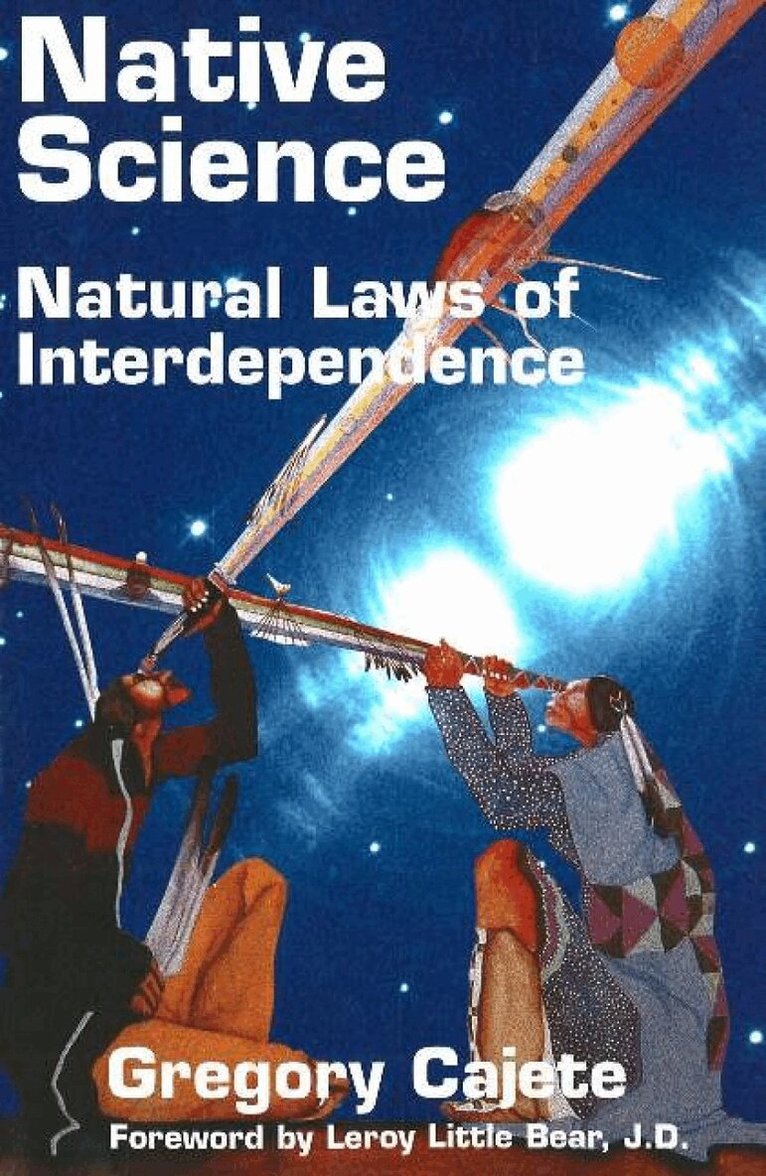
    Gregory Cajete is Professor of Native American Studies and Language, Literacy and Sociocultural Studies at the University of New Mexico, USA.Ditlhake Kefilwe Johanna is a social worker and Lecturer at the University of Johannesburg, South Africa. Maria do Carmo dos Santos Gonçalves is the Director of the Scalabrinian Centre for Migration Studies (CSEM), Brazil. Ronald Lutz is Lecturer at the University of Applied Sciences of Würzburg-Schweinfurt, Germany, Lecturer at the University of Applied Sciences of Erfurt, Germany, and Research Associate at the School of Social Work, University of Johannesburg, South Africa. Karsten Kiewitt is Professor of Inclusive Education at the Clara Hoffbauer University of Applied Sciences, Potsdam, Germany.

    Recensioner i media

    Decolonizing Western-Indigenous Dialogues: Interwoven Epistemologies for Multiple Modernities is a profound and necessary contribution to the urgent global project of epistemic justice. This compelling volume brings together Indigenous and non-Indigenous voices in a rich, respectful, and reflective dialogue that challenges dominant paradigms and affirms the value of diverse ways of knowing. It offers critical insights into decolonial thought and practice across contexts, making it an essential resource for students, scholars, educators, policymakers, and practitioners committed to transforming education, research, and inclusive development. By promoting an ethic of listening, reciprocity, and relational accountability, this book does not merely advocate for decolonisation but embodies it.

    Innehållsförteckning

    • Introductions1. Introduction - On the Decolonization of Dialogues, Karsten Kiewitt2. What is Native Science? Greg Cajetei. Dialogues3. To Know from Within, Benno Glauser4. To be Open for Constructive Strangeness: Experiences with Intercultural Knowledge Exchange in Development Cooperation and Science, Peter Strack5. Embodied Knowledge: Decolonizing Philosophy by Turning to the Nature that We Are, Barbara Schellhammer and Stan Wilson6. Perhaps we Didn’t Need a Bridge: In Dialogue with Indigenous Mathematics, Edward Doolittle & Amber Hughes7. Western and Indigenous Knowledge Systems: Attainment of the Sustainable Development Goals and the Umunthu Developmental Approach, Chance Chagunda8. Kitheka Ki Matu: A Forest has Ears, Mark LawrenceII. Challenges9. Conceded Land Rights, Indigenous Territoriality, and Cooperation: Contradictions and Challenges, Volker von Bremen10. Spirited Five Fingers Model: A Way of Reconnecting to the Spirit of Reciprocity in Social and Community Work, Ksenija Napan11. Mobilities in the Global South and New Circuits of Affects, Maria do Carmo dos Santos Gonçalves12. Indigenous Social Security Systems for Endogenous Social Development in Southern Africa, Ndangwa Noyoo13. Indigenous in Europe: The Challenge in Bringing back Livonian, Valts Ernštreits & Gunta Klava14. The Hijab and Faith: Fashion and modesty, Samira Adel OsmanIII. Perspectives15. Thirty Years of Democracy in South Africa: Reflecting on Social Work and Climate Change Challenges Through Ubuntu Lense, Kefilwe Johanna Ditlhake16. Decoloniality as Total Disentanglement with Modern Capitalist and Neo-Liberal Complex: Social Work Perspective, Mbazima Simeon Mathebane17. Indigenous Youth and the Recomposition of Community Life: Some Experiences in Oaxaca, Mexico, Eduardo Bautista Martínez & María Leticia Briseño Maas18. ‘Not About Us, but With Us!’ Perspectives of Insurgent Research with Children of the Global South, Manfred Liebel19. From alternative epistemologies to alternative aesthetics. A plea for a decolonial environmental aesthetics, Werther Gonzales León20. Buen Vivir and Sustainability: Relation Between Indigenous Knowledge and Western Concepts, Ronald LutzConclusion21. Decolonising Knowledge, Ronald LutzBibliographyIndex