• Fri frakt över 249 kr
  • •
  • Snabba leveranser
  • •
  • Billiga böcker
Kundservice

Du är på sajten för privatpersoner.

Företag, bibliotek eller offentlig verksamhet?

Du handlar på classic.bokus.com, där alla dina funktioner finns intakta.
Till classic.bokus.com
Bokus logotyp. Gå till startsidan.
  • Erbjudanden
  • Nyheter
  • Student
  • Topplistor
  • Barn & ungdom
  • Bokus Play
  • E-böcker
  • Pocketböcker
  • Spel & pussel

10% rabatt på allt med kod: NYSTART10 →

Sidfot

Mina sidor

    Hjälp

    • Kundservice
    • Vanliga frågor och svar
    • Frakt och leverans
    • Retur vid ångerrätt
    • Reklamera vara
    • Betalning
    • Köpvillkor
    • Allmänna villkor
    • Information om webbplatsens tillgänglighet

    Om Bokus

    • Om oss
    • Pressrum
    • För studenter
    • För företag
    • För bibliotek och offentlig verksamhet
    • För leverantörer
    • Hållbarhet

    Populärt

    • Aktuella erbjudanden
    • Presentkort
    • Studentlitteratur
    • Nya böcker
    • Topplistor
    • Signerade böcker
    • Engelska böcker

    Inspiration

    • Boktips
    • BookTok
    • Populära bokserier
    • Barnbokskaraktärer
    • Populära författare
    Logotyp för Bokus
    Följ oss på Facebook (extern länk)Följ oss på Instagram (extern länk)Följ oss på YouTube (extern länk)Följ oss på TikTok (extern länk)
    bokus @ CookiesAnpassa cookiesIntegritetspolicyKöpvillkor
    Till Citymail hemsida (extern länk)Till Budbee hemsida (extern länk)Till Postnord hemsida (extern länk)Till Schenker hemsida (extern länk)Till Early Bird hemsida (extern länk)Till Walleys hemsida (extern länk)
    1. Filosofi och religion
    2. Filosofi
    3. Filosofiska discipliner

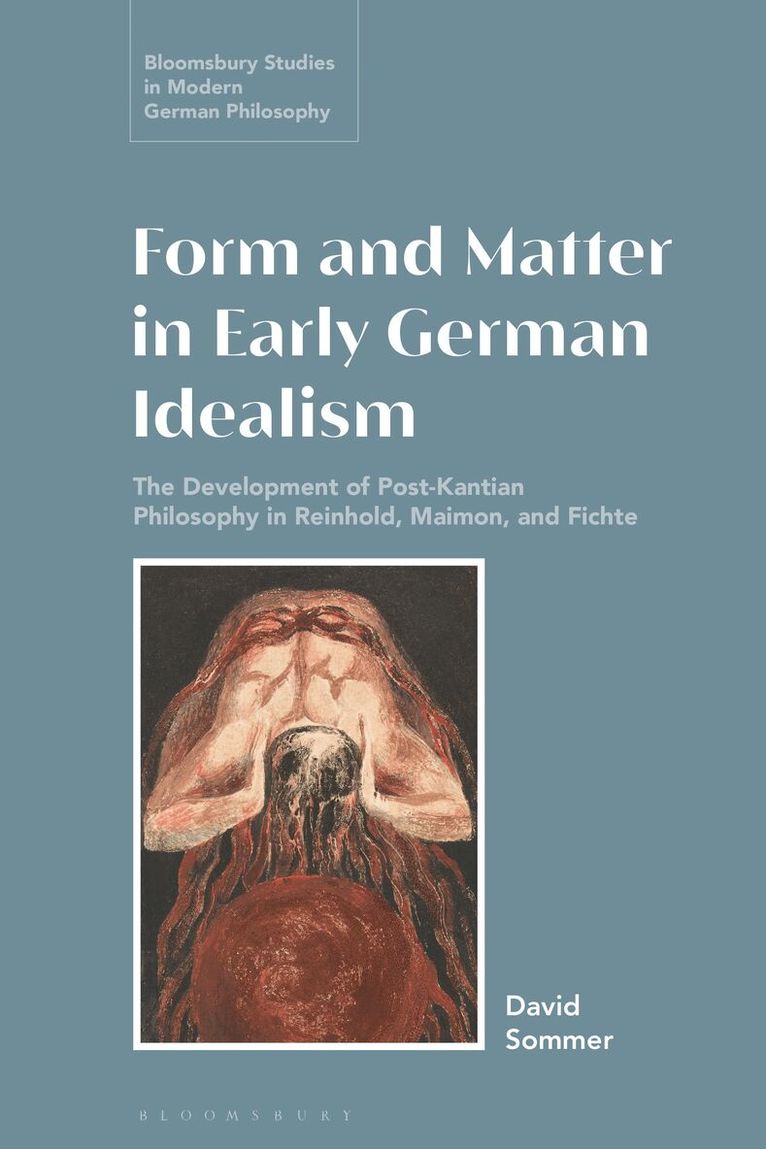
    Form and Matter in Early German Idealism

    The Development of Post-Kantian Philosophy in Reinhold, Maimon and Fichte

    AvDavid Sommer,Courtney D. Fugate

    Inbunden, Engelska, 2026

    Del i serien Bloomsbury Studies in Modern German Philosophy

    1 186 kr

    Beställningsvara. Skickas inom 10-15 vardagar. Fri frakt över 249 kr.

    Fler format och utgåvor

    E-bok

    1 283 kr

    E-bok

    1 283 kr

    Beskrivning

    A pioneering book that sheds crucial light on the distinctions between Kant’s philosophical project and German Idealism as a whole, resolving problems that are as relevant to scholars today as they were to Kant’s immediate successors.This ground-breaking study is the first detailed exploration of 'transcendental hylomorphism'", or the division of all mental faculties and acts into form and matter. Identifying hylomorphism as the fundamental unifying dynamic in post-Kantian philosophy, David Sommer explores how Kant’s idealist successors in the early 1790s—specifically Reinhold, Maimon and Fichte— mapped this dualism in the realm of cognition onto the systematic foundations of philosophy itself.Proceeding through close analyses of primary texts, Sommer addresses an important gap in the existing scholarship while opening up new avenues of research into the works of Kant and his successors. He illuminates key yet understudied philosophical concepts within their historical contexts, notably providing an in-depth examination of the complex and innovative early works of Maimon and Fichte.This is an essential contribution to our understanding of the origins of German idealism and Romanticism in general.

    Produktinformation

    • Utgivningsdatum:2026-06-25
    • Mått:164 x 236 x 22 mm
    • Vikt:540 g
    • Format:Inbunden
    • Språk:Engelska
    • Serie:Bloomsbury Studies in Modern German Philosophy
    • Antal sidor:264
    • Förlag:Bloomsbury Publishing PLC
    • ISBN:9781350559592

    Utforska kategorier

    • Filosofiska discipliner inom Filosofi och religion

    Mer om författaren

    David Sommer is an independent scholar in Kantian philosophy. He received his AHRC-funded PhD from University College London, where he also taught.

    Innehållsförteckning

    • AcknowledgmentsIntroduction1. Form and Matter in Kant’s theoretical philosophy1.1. Form and Matter prior to transcendental idealism1.2. Form and Matter and the Faculties1.3. Form and Matter of the Understanding2. Form and Matter in Reinhold’s Elementarphilosophie2.1. Form and Matter in the first Elementarphilosophie2.2. Form and matter in the revised Elementarphilosophie of 17902.3. Aenesidemus: Schulze’s attack on the Elementarphilosophie3. Form and matter in Maimon’s Versuch3.1. Introduction3.2. Form and matter and the universal antinomy of thought3.3. Differentials4. Form and Matter in Fichte’s early Wissenschaftslehre4.1. Introduction4.2. Eigne Meditationen Über die Elementarphilosophie4.3. On the Concept of the Wissenschaftslehre4.4. Grundlage der gesammten WissenschaftslehreConcluding remarksBibliographyIndex