Inbunden, Engelska, 2026
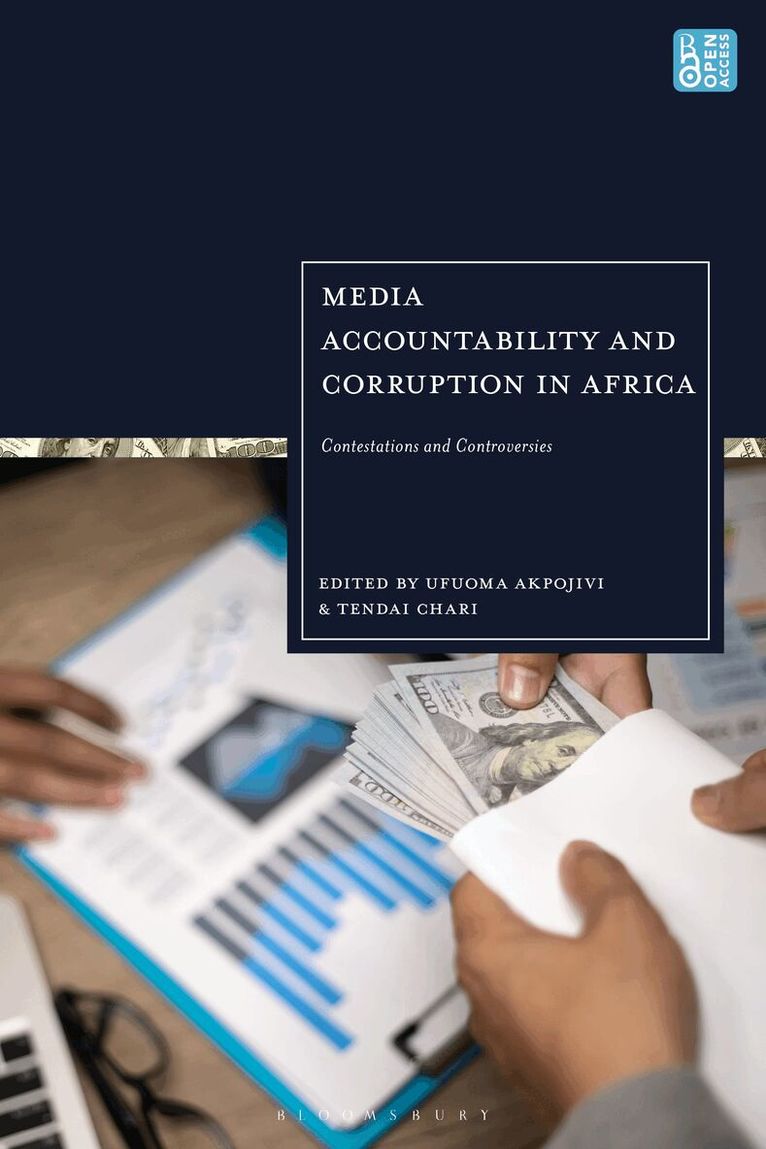
Media Accountability and Corruption in Africa
Av Ufuoma Akpojivi, Tendai Chari
1208 kr
Beställningsvara. Skickas inom 10-15 vardagar. Fri frakt över 249 kr.
Beskrivning
The question of who watches the watchdog has often been raised, highlighting both the crucial role and the failures of the media in society. This groundbreaking open access edited volume critically examines the complex relationship between media accountability and corruption in Africa. It brings together established and leading African scholars to engage with the multiple ways in which corruption is mediated, resisted, and normalized in both traditional and digital media contexts. The volume probes not only how media actors report on corruption, but also how institutional vulnerabilities and structural dependencies render them both watchdogs and potential enablers of ‘media corrupt’ practices. Using empirical case studies from seven sub-Saharan African countries: Mozambique, Cameroon, Malawi, Ghana, Nigeria, South Africa, and Zimbabwe, to foreground African epistemologies and experiences, the volume challenges dominant Global North-centric discourse on media corruption and accountability, offering alternative methodological and theoretical readings to the broader debate and discourse on media corruption and accountability.The ebook editions of this book are available open access under a CC BY-NC-ND 4.0 licence on bloomsburycollections.com. Open access was funded by the Bloomsbury Open Collections Library Collective.
Produktinformation
- Utgivningsdatum: 2026-09-17
- Mått: 158 x 236 x 20 mm
- Vikt: 580 g
- Format: Inbunden
- Språk: Engelska
- Antal sidor: 280
- Förlag: Bloomsbury Publishing PLC
- ISBN: 9781350587311
Betyg & recensioner
0 recensioner
Inga recensioner tillgängliga.