• Fri frakt över 249 kr
  • •
  • Snabba leveranser
  • •
  • Billiga böcker
Kundservice

Du är på sajten för privatpersoner.

Företag, bibliotek eller offentlig verksamhet?

Du handlar på classic.bokus.com, där alla dina funktioner finns intakta.
Till classic.bokus.com
Bokus logotyp. Gå till startsidan.
  • Erbjudanden
  • Nyheter
  • Student
  • Topplistor
  • Barn & ungdom
  • Bokus Play
  • E-böcker
  • Pocketböcker
  • Spel & pussel

10% rabatt på allt med kod NYSTART10 →

Sidfot

Mina sidor

    Hjälp

    • Kundservice
    • Vanliga frågor och svar
    • Frakt och leverans
    • Retur vid ångerrätt
    • Reklamera vara
    • Betalning
    • Köpvillkor
    • Allmänna villkor
    • Information om webbplatsens tillgänglighet

    Om Bokus

    • Om oss
    • Pressrum
    • För studenter
    • För företag
    • För bibliotek och offentlig verksamhet
    • För leverantörer
    • Hållbarhet

    Populärt

    • Aktuella erbjudanden
    • Presentkort
    • Studentlitteratur
    • Nya böcker
    • Topplistor
    • Signerade böcker
    • Engelska böcker

    Inspiration

    • Boktips
    • BookTok
    • Populära bokserier
    • Barnbokskaraktärer
    • Populära författare
    Logotyp för Bokus
    Följ oss på Facebook (extern länk)Följ oss på Instagram (extern länk)Följ oss på YouTube (extern länk)Följ oss på TikTok (extern länk)
    bokus @ CookiesAnpassa cookiesIntegritetspolicyKöpvillkor
    Till Citymail hemsida (extern länk)Till Budbee hemsida (extern länk)Till Postnord hemsida (extern länk)Till Schenker hemsida (extern länk)Till Early Bird hemsida (extern länk)Till Walleys hemsida (extern länk)
    1. Samhälle och politik
    2. Samhälle och kultur
    3. Sociala och etiska frågor
    4. Diskriminering och rättvisa

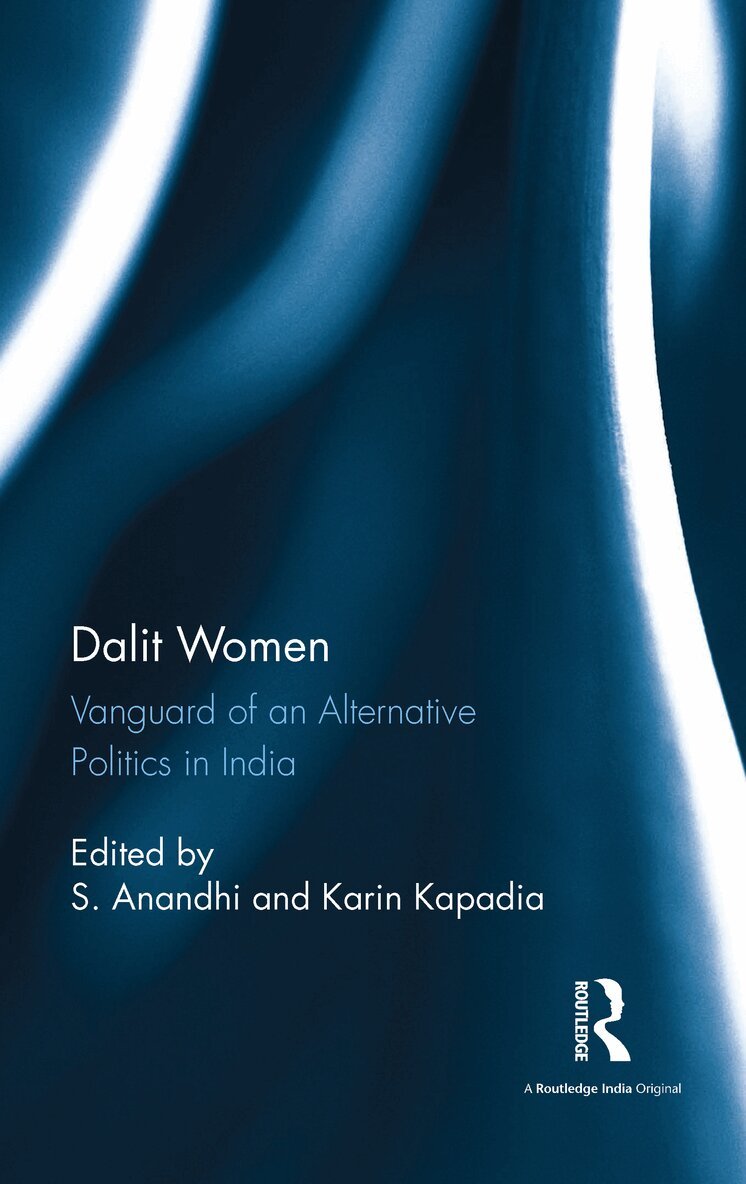
    Dalit Women

    Vanguard of an Alternative Politics in India

    AvS. Anandhi,Karin Kapadia

    E-bok
    Engelska, 2017

    738 kr

    Läs direkt i Bokus Reader – eller ladda ned till din enhet

    Beskrivning

    Through its investigation of the underlying political economy of gender, caste and class in India, this book shows how changing historical geographies are shaping the subjectivities of Dalits across India in ways that are neither fixed nor predictable. It brings together ethnographies from across India to explore caste politics, Dalit feminism and patriarchy, religion, economics and the continued socio-economic and political marginalisation of Dalits.With contributions from major academics this is an indispensable book for researchers, teachers and students working on new political expressions, gender identities, social inequalities and the continuing use of the notion of ‘caste’ identity in the oppression of subalterns in contemporary India. It will be essential reading in the disciplines of politics, gender, social exclusion studies, sociology and social anthropology.

    Produktinformation

    • Utgivningsdatum:2017-05-18
    • Språk:Engelska
    • Filformat:EPUB
    • Kopieringsskydd:LCP
    • ISBN:9781351797184
    • Förlag:Taylor & Francis Ltd

    Utforska kategorier

    • Diskriminering och rättvisa inom Samhälle och politik
    • Etnicitet inom Samhälle och politik
    • Politiskt förtryck inom Samhälle och politik

    Mer om författaren

    S. Anandhi is Associate Professor at the Madras Institute of Development Studies, Chennai, India. Karin Kapadia is Associate at the Contemporary South Asian Studies Programme, School of Interdisciplinary Area Studies, University of Oxford, UK.

    Recensioner i media

    ‘This collection brings us a refreshingly new Dalit feminist conception of emancipatory politics. With its conceptually comprehensive and politically sensitive introduction, it goes much beyond the customary politically correct approach to Dalit women’s issues, and underlines the need for becoming politically conscious about the Dalit women’s’ question. It makes us aware of both the intellectual as well as the political moves that Dalit women from different parts of India make with the subversive intention to interrogate the Dalit patriarchy that resides on the margin of the much larger social patriarchy. It invites us to acknowledge Dalit women’s attempts to produce internal critique, even without the aid of so-called scholarly discourse on ‘Dalit feminism’. This volume is indeed a big relief from the rhetorical, and hence repetitive, writing on the Dalit women’s question.’ Gopal Guru, Professor, Centre for Political Studies, Jawaharlal Nehru University, New Delhi, India‘ "This is not just male domination but casteist patriarchy which is at force in India…." — the Alisamma (Dalit) Women’s Collective sets the tone for this rich collection of ethnographic work on the definitions of politics by Dalit women in India; and the shaping of women’s lives through the practice of politics in which the resistance to caste is at the core. The important question addressed by these essays is Dalit women’s resistance to patriarchy — the cacophonous jugalbandi of Dalit and dominant caste patriarchies, and women’s negotiations around patriarchies as part of anti-caste struggles. Is all Dalit women’s resistance feminist? Indeed, what is feminism in contexts of casteist patriarchy? Cross-caste governmental mobilisation promoting the ‘empowerment’ of women often absorbs casteism, pushing Dalit women to the margins as ‘victim-beneficiaries’, thereby reproducing patriarchal caste ideologies through government-driven NGO contexts. The inescapability of graded inequality in caste society is brought home through the feminisation of tied/unfree labour, as also through the subjugation of Dalit women at the intersections of caste, class, religious and gender hierarchies. In this valuable collection, Karin Kapadia and S. Anandhi open out for us important debates on Dalit feminist resistance, cross-Dalit solidarities, the place of suffering and religious faith in the expression of ‘Dalitness’ and the annihilation of caste.’ Kalpana Kannabiran, Professor and Director, Council for Social Development, Hyderabad, Telangana, India ‘This fine-grained, collective analysis of abuse and constraints, of agency and striving, reveals the persistent double subordination of Dalit women, by society in general and Dalit men in particular. These deeply empathetic accounts highlight the ways in which Dalit women rethink their politics, in the face of hostility and neglect. This is a book that deserves to be widely read.’Barbara Harriss-White, Emeritus Professor of Development Studies, University of Oxford and Emeritus Fellow, Wolfson College, University of Oxford, UK‘A much-awaited work which documents the gender inequality in the Dalit ranks. Highlighting the reign of patriarchy also in this milieu, the contributors discuss how the huge weight of the double burden is being increasingly and sometimes successfully challenged.’Jan Breman, Professor Emeritus, University of Amsterdam and Honorary Fellow, International Institute of Social History, Amsterdam, The Netherlands‘This pathbreaking book brings together research that documents how many Dalit women in different regions of India are at the forefront of struggles against multiple forms of oppression and inequality. Encompassing widely varied contexts, the studies also shed light on the forces and conditions that enable and constrain diverse forms of subaltern politics.’Gillian Hart, Distinguished Professor, University of the Witwatersrand, Johannesburg and Professor of the Graduate School, University of California, Berkeley, USA‘The essays in this volume reflect a remarkable sensitivity to the regional complexities and ethnographic particularities that structure the relationship of caste and inequality, and sexuality and democracy. This volume is required reading for anyone interested in contemporary transformations of the gender–caste interface, and a major contribution to our understanding of the linkages between inequality and social difference.’Anupama Rao, Associate Professor of History, Barnard College, Columbia University, USA

    Innehållsförteckning

    • Notes on Contributors. Preface. Acknowledgements. INTRODUCTION: We Ask You to Rethink: Different Dalit Women and their Subaltern Politics Part I: IMAGINING A NEW DALIT WOMEN’S POLITICS 1. FOREWORD: Dalits, Dalit Women and the Indian State 2. For Another Difference: Agency, Representation and Dalit Women in Contemporary India Part II: DALIT WOMEN’S CONCEPTUALIZATIONS OF CASTE DIFFERENCE AND THEIR MEANS OF COLLECTIVIZATION 3. Gendered Negotiations of Caste Identity: Dalit Women’s Activism in Rural Tamil Nadu 4. Liberation Panthers and Pantheresses? Gender and Dalit Party Politics in South India 5. Microcredit Self-Help Groups and Dalit Women: Overcoming or Essentializing Caste Difference? Part III: A BROKEN EMPOWERMENT? ARE WOMEN STILL TRAPPED BY CASTE AND PATRIARCHY 6. Dalit Women, Rape and the Revitalisation of Patriarchy? 7. Different Dalit Women Speak Differently: Unravelling, through an Intersectional Lens, Narratives of Agency and Activism from Everyday Life in Rural Uttar Pradesh 8. Subsidising Capitalism and Male Labour: The Scandal of Unfree Dalit Female Labour Relations Part IV: RELIGION AS DALIT POLITICAL PRACTICE 9. Transformation and the Suffering Subject: Caste-Class and Gender in Slum Pentecostal Discourse 10. Improper Politics: The Praxis of Subalterns in Chennai AFTERWORD: The Burden of Caste: Scholarship, Democratic Movements and Activism