• Fri frakt över 249 kr
  • •
  • Snabba leveranser
  • •
  • Billiga böcker
Kundservice

Du är på sajten för privatpersoner.

Företag, bibliotek eller offentlig verksamhet?

Du handlar på classic.bokus.com, där alla dina funktioner finns intakta.
Till classic.bokus.com
Bokus logotyp. Gå till startsidan.
  • Erbjudanden
  • Nyheter
  • Student
  • Topplistor
  • Barn & ungdom
  • Bokus Play
  • E-böcker
  • Pocketböcker
  • Spel & pussel

10% studentrabatt med kod TERM26

Sidfot

Mina sidor

    Hjälp

    • Kundservice
    • Vanliga frågor och svar
    • Frakt och leverans
    • Retur vid ångerrätt
    • Reklamera vara
    • Betalning
    • Köpvillkor
    • Allmänna villkor
    • Information om webbplatsens tillgänglighet

    Om Bokus

    • Om oss
    • Pressrum
    • För studenter
    • För företag
    • För bibliotek och offentlig verksamhet
    • För leverantörer
    • Hållbarhet

    Populärt

    • Aktuella erbjudanden
    • Presentkort
    • Studentlitteratur
    • Nya böcker
    • Topplistor
    • Signerade böcker
    • Engelska böcker

    Inspiration

    • Boktips
    • BookTok
    • Populära bokserier
    • Barnbokskaraktärer
    • Populära författare
    Logotyp för Bokus
    Följ oss på Facebook (extern länk)Följ oss på Instagram (extern länk)Följ oss på YouTube (extern länk)Följ oss på TikTok (extern länk)
    bokus @ CookiesAnpassa cookiesIntegritetspolicyKöpvillkor
    Till Citymail hemsida (extern länk)Till Budbee hemsida (extern länk)Till Postnord hemsida (extern länk)Till Schenker hemsida (extern länk)Till Early Bird hemsida (extern länk)Till Walleys hemsida (extern länk)
    1. Medicin
    2. Omvårdnad och medicinska stödfunktioner
    3. Omvårdnad
    • -10% student

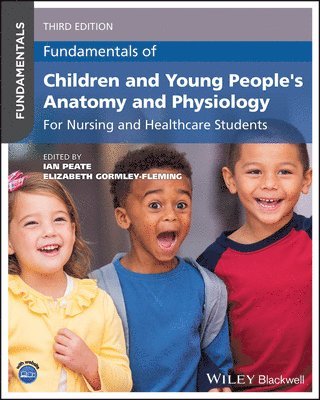
    Fundamentals of Children and Young People's Anatomy and Physiology

    For Nursing and Healthcare Students

    AvIan Peate,Elizabeth Gormley-Fleming

    Häftad, Engelska, 2025

    Del i serien Fundamentals

    586 kr

    Beställningsvara. Skickas inom 5-8 vardagar. Fri frakt över 249 kr.

    Beskrivning

    Fundamentals of Children and Young People's Anatomy and PhysiologyTHIRD EDITIONThe latest edition of an essential resource for nursing and healthcare students covering the anatomy and physiology of children and young peopleFundamentals of Children and Young People's Anatomy and Physiology, 3rd Edition contains the critical knowledge associated with anatomy and physiology required to provide safe and effective care to children and young people. Emphasising the application of evidence-based theory to practice, this comprehensive yet accessible textbook helps nursing and healthcare students understand how children's anatomical and physiological systems influence disease processes and treatment options differently than in adults. This third edition includes an expanded focus on ethnic minority communities and representation of gender and LGBTQI+ issues to ensure a more inclusive understanding of diversity in the population.Readers will also find: A collection of effective pedagogical tools designed to enhance learning, including chapter-specific learning objectives, clinical considerations, and self-assessment questionsPractical discussions with a focus on access to care, determinants of health, and health inequalitiesDetailed considerations of the mental health of children and young people, and how it impacts their anatomy and physiologyThis is the ideal book for nurses, nursing associates, healthcare assistants and allied health professionals, and those studying within those fields.

    Produktinformation

    • Utgivningsdatum:2025-06-05
    • Mått:240 x 20 x 200 mm
    • Vikt:1 120 g
    • Format:Häftad
    • Språk:Engelska
    • Serie:Fundamentals
    • Antal sidor:464
    • Upplaga:3
    • Förlag:John Wiley & Sons Inc
    • ISBN:9781394240920

    Ingår i kampanjer

    -10% student

    Utforska kategorier

    • Omvårdnad inom Medicin

    Mer om författaren

    Ian Peate is a Visiting Professor at Northumbria University and Buckinghamshire New University, a Senior Clinical Fellow at the University of Hertfordshire, and a Professorial Fellow at the University of Roehampton. He is also the Editor-in-Chief of the British Journal of Nursing, and the Consultant Editor of the Journal of Paramedic Practice and the International Journal of Advancing Practice. Elizabeth Gormley-Fleming is the Associate Director of Academic Quality Assurance at the Centre for Academic Quality Assurance, University of Hertfordshire, UK.

    Innehållsförteckning

    • List of contributors xvPreface xixAcknowledgements xxiAbout the companion website xxiiiChapter 1 Learning the language: terminology 1Ian Peate and Elizabeth Gormley- FlemingIntroduction 2Anatomy and physiology 2Physiology 7Terminology 9Pathophysiology 13Conclusion 20Multiple-choice questions 21Post-test questions 21References 22Further reading 22Chapter 2 Scientific principles 23Barry HillIntroduction 24Levels of organisation 24Characteristics of life 24Bodily requirements 25Atoms 26Conclusion 35Multiple-choice questions 36Post-test questions 37Glossary 37References 38Chapter 3 The cell 39Barry HillIntroduction 40Characteristics of the cell 40The structure of the cell 42Organelles 48Fluids and the body 52Electrolytes 55Conclusion 57Multiple-choice questions 57Post-test questions 58Glossary 58References 59Chapter 4 Homeostasis 61Mary BradyIntroduction 62Regulation of homeostasis 62Feedback mechanisms 62Homeostatic mechanisms 62Energy production 64Systematic approach to homeostasis 65Conclusion 74Multiple-choice questions 75Post-test questions 75Glossary 76References 78Chapter 5 Genetics 79Ray BywaterIntroduction 79Genes 80From DNA to proteins 84The transference of genes 87Mendelian genetics 91Conclusion 97Multiple-choice questions 98Post- test questions 99Conditions 99Glossary 99References 102Further reading 102Chapter 6 Tissues 103Louise McLaughlinIntroduction 103Types of tissues 105Children and tissue development 114Conclusion 116Multiple-choice questions 116Post-test questions 117Conditions 117Glossary 117References 118Further reading 118Useful website 118Chapter 7 The immune system 119Alison MosenthalIntroduction 119Blood cell development 120The organs and tissues of the immune system 120Types of immunity 125Immunoglobulins (antibodies) 131Conclusion 135Multiple-choice questions 136Post-test questions 137Conditions 137Glossary 138References 138Further reading 139Chapter 8 Blood 141Sarah Brazel- TerrisIntroduction 141Composition of blood 143Functions of blood 144Constituents of blood 145Haemoglobin and oxygen transport 147Bleeding and platelets 150Blood groups and blood transfusion 152Conclusion 157Multiple-choice questions 158Post-test questions 159Conditions 159Glossary 160References 160Further reading 160Chapter 9 The cardiac system 161Sheila RobertsIntroduction 161Fetal circulation 162Changes at birth 162Electrocardiogram 169The cardiac cycle 169Factors affecting the heart rate 172Conclusion 173Multiple-choice questions 174Post-test questions 174Conditions 175Glossary 175References 175Further reading 176Chapter 10 The respiratory system 177Elizabeth Gormley- FlemingIntroduction 178Airway 179Lungs 183Conclusion 188Multiple-choice questions 189Post- test questions 189Conditions 190Glossary 190References 190Further reading 191Chapter 11 The endocrine system 193Julia PettyIntroduction 194Physiology of the endocrine system 195Anatomy of the endocrine system 197Conclusion 211Multiple-choice questions 211Post-test questions 212Conditions 212Glossary 213References 214Further reading 216Chapter 12 The digestive system and nutrition 217Joanne OutteridgeIntroduction 218Nutritional requirements for healthy growth and development 219Carbohydrates 219Fats 220Proteins 220Vitamins and Minerals 220Fibre 222Infant nutrition 223Early childhood nutrition 224The anatomy and physiology of the digestive system 225Conclusion 235Multiple-choice questions 235Post-test questions 236Conditions 236Glossary 236References 237Chapter 13 The renal system 239Elizabeth Gormley- FlemingIntroduction 240Renal system 240Kidney 241Functions of the kidney 246Blood supply to the kidneys 246Formation of urine 247Composition of urine 249Ureters 251Bladder 251Urethra 253Function of the bladder and micturition 254Conclusion 254Multiple-choice questions 255Post- test questions 256Conditions 256Glossary 256References 257Further reading 258Chapter 14 The reproductive systems 259Michele O’GradyIntroduction 260Fetal embryology: sexual differentiation 260The male reproductive system 260Female reproductive system 268Conclusion 279Multiple-choice questions 280Post-test questions 281Conditions 281Glossary 282References 282Further reading 283Chapter 15 The nervous system 285Petra BrownIntroduction 286Organisation of the nervous system 286Cellular structure of the nervous system 286Transmission of nerve impulses 289Fetal development 291Childhood development 292Central nervous system 293Conclusion 307Multiple-choice questions 307Post-test questions 308Conditions 308Glossary 309References 309Further reading 310Chapter 16 The muscular system 311Elizabeth Gormley-FlemingIntroduction 312Muscle development in early life 312Types of muscle tissue 312Functions of muscular system 314Gross anatomy of skeletal muscle 315The micro-anatomy of the muscle 316Types of muscle fibres 318Skeletal muscle relaxation and contraction 319Contraction 319Energy requirements for muscle contraction 320Organisation of skeletal muscle 321Conclusion 340Multiple-choice questions 341Post-test questions 341Conditions 342Glossary 342References 342Further reading 343Chapter 17 The skeletal system 345Elizabeth Gormley-FlemingIntroduction 345Axial skeleton 346Appendicular skeleton 346The function of the skeleton 346Bone structure and growth 348Bone healing 353Bone classification 355Joints 357Conclusion 361Multiple-choice questions 361Post-test questions 362Conditions 362Glossary 362References 364Further reading 365Chapter 18 The senses 367Joanne OutteridgeIntroduction 368The sense of smell (olfaction) 368The sense of taste (gustation) 369The ear 371The sense of equilibrium 373The sense of sight 375Conclusion 380Multiple-choice questions 380Post-test questions 381Conditions 381Glossary 382References 382Future readings 383Chapter 19 The skin 385Elizabeth Gormley- FlemingIntroduction 386The structure of skin 386Functions of the skin 395Conclusion 399Multiple-choice questions 400Post- test questions 400Conditions 400Glossary 401References 402Further reading 403Chapter 20 Growing up healthy 405Lisa Whiting and Mary L. DonnellyIntroduction 406Having the best start in life 406Health and well-being of children and young people 407Current influences on children and young people’s health 408The child and young person’s voice 409Promoting the health of children and young people 410Using genomics to enhance health and well- being 412Conclusion 413Multiple-choice questions 413Post-test questions 414Glossary 414References 414Further reading 417Answers to multiple-choice questions 419Index 421