• Fri frakt över 249 kr
  • •
  • Snabba leveranser
  • •
  • Billiga böcker
Kundservice

Du är på sajten för privatpersoner.

Företag, bibliotek eller offentlig verksamhet?

Du handlar på classic.bokus.com, där alla dina funktioner finns intakta.
Till classic.bokus.com
Bokus logotyp. Gå till startsidan.
  • Erbjudanden
  • Nyheter
  • Student
  • Topplistor
  • Barn & ungdom
  • Bokus Play
  • E-böcker
  • Pocketböcker
  • Spel & pussel

Upp till 20% på populära nyheter →

Sidfot

Mina sidor

    Hjälp

    • Kundservice
    • Vanliga frågor och svar
    • Frakt och leverans
    • Retur vid ångerrätt
    • Reklamera vara
    • Betalning
    • Köpvillkor
    • Allmänna villkor
    • Information om webbplatsens tillgänglighet

    Om Bokus

    • Om oss
    • Pressrum
    • För studenter
    • För företag
    • För bibliotek och offentlig verksamhet
    • För leverantörer
    • Hållbarhet

    Populärt

    • Aktuella erbjudanden
    • Presentkort
    • Studentlitteratur
    • Nya böcker
    • Topplistor
    • Signerade böcker
    • Engelska böcker

    Inspiration

    • Boktips
    • BookTok
    • Populära bokserier
    • Barnbokskaraktärer
    • Populära författare

    Mina sidor

      Hjälp

      • Kundservice
      • Vanliga frågor och svar
      • Frakt och leverans
      • Retur vid ångerrätt
      • Reklamera vara
      • Betalning
      • Köpvillkor
      • Allmänna villkor
      • Information om webbplatsens tillgänglighet

      Om Bokus

      • Om oss
      • Pressrum
      • För studenter
      • För företag
      • För bibliotek och offentlig verksamhet
      • För leverantörer
      • Hållbarhet

      Populärt

      • Aktuella erbjudanden
      • Presentkort
      • Studentlitteratur
      • Nya böcker
      • Topplistor
      • Signerade böcker
      • Engelska böcker

      Inspiration

      • Boktips
      • BookTok
      • Populära bokserier
      • Barnbokskaraktärer
      • Populära författare
      Logotyp för Bokus
      Följ oss på Facebook (extern länk)Följ oss på Instagram (extern länk)Följ oss på YouTube (extern länk)Följ oss på TikTok (extern länk)
      bokus @ CookiesIntegritetspolicyKöpvillkor
      Till Citymail hemsida (extern länk)Till Budbee hemsida (extern länk)Till Postnord hemsida (extern länk)Till Schenker hemsida (extern länk)Till Early Bird hemsida (extern länk)Till Walleys hemsida (extern länk)
      1. Naturvetenskap och teknik
      2. Teknik och industri
      3. Teknik: allmänt

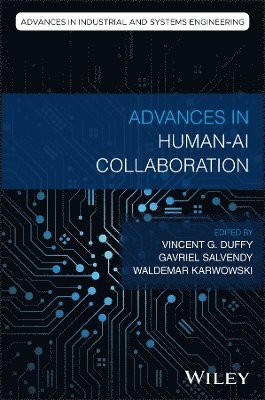
      Advances in Human-AI Collaboration

      AvVincent G. Duffy,Waldemar Karwowski

      Inbunden, Engelska, 2026

      Del i serien Advances in Industrial and Systems Engineering

      1 267 kr

      Beställningsvara. Skickas inom 5-8 vardagar. Fri frakt över 249 kr.

      Beskrivning

      Detailed guide on how humans and AI systems work in tandem, focused on the successful deployment and use of applications Advances in Human-AI Collaboration offers a comprehensive exploration of AI technologies and applications in the field of Industrial and Systems Engineering. The book incorporates knowledge about AI technology, methodologies, and tools for enabling human-AI collaboration at work, covers the effective design and use of systems and operations utilizing human-AI collaboration to benefit productivity, quality, and customer satisfaction, and provides readers with the skills necessary to effectively implement and consider human-AI collaboration across a variety of settings. This book delivers insights on a wide range of topics including similarities and differences of human and artificial intelligence, effort in creating algorithms versus meeting user needs and enabling improved decision support, sentiment analysis and language models, AI tutors and their design, engagement, and theory building, situation awareness of AI models in relation to human performance, and fact-checking beyond machine learning and predictive accuracy. Written by a team of highly qualified academics with significant experience in the field, Advances in Human-AI Collaboration includes information on: Autonomous vehicles and delivery systems, covering sensors and perception as well as adoption rate and safety projectionsChat-based customer service, covering theory-based interventions to enhance public services and examples of intentional human-technology interactionShip safety, covering increased automation and machine vision to enable collision avoidanceStrategies for moving beyond passive writing assistance and writing-related best practicesVulnerabilities in technology-centered design including biased and distorted data, with examples of real-world accidentsAdvances in Human-AI Collaboration is an essential read for industry practitioners and corporate researchers concerned with using AI in integrated system design and operation. The book also provides essential knowledge for academics researching AI and integrated systems.

      Produktinformation

      • Utgivningsdatum:2026-04-14
      • Mått:196 x 244 x 28 mm
      • Vikt:862 g
      • Format:Inbunden
      • Språk:Engelska
      • Serie:Advances in Industrial and Systems Engineering
      • Antal sidor:368
      • Förlag:John Wiley & Sons Inc
      • ISBN:9781394266371

      Utforska kategorier

      • Teknik: allmänt inom Naturvetenskap och teknik
      • Artificiell intelligens inom Data och IT
      • Tillverkningsteknik inom Naturvetenskap och teknik

      Mer om författaren

      VINCENT G. DUFFY is a Professor of Industrial Engineering and Agricultural & Biological Engineering at Purdue University. WALDEMAR KARWOWSKI is a Pegasus Professor and Chairman in the Department of Industrial Engineering and Management Systems at the University of Central Florida. GAVRIEL SALVENDY is a University Distinguished Professor at the University of Central Florida.

      Innehållsförteckning

      • List of Contributors xviiPreface xxiSection I Fundamentals in Human–AI Collaboration 11 Human Interaction with Intelligent Automation: A Continuum of AI Levels from Which Designers and Users Can Choose 3Thomas B. Sheridan and William B. Rouse1.1 Introduction 31.2 Background 31.2.1 Traditional Automation 31.2.2 Human Interaction with Traditional Automation 41.2.3 Artificial Intelligence 61.2.3.1 Evolution of AI 61.2.3.2 Spectrum of AI 71.3 Human Interaction with Intelligent Automation 71.3.1 AI for Robotic Automation 81.3.2 Augmentation and Adaptation 81.3.3 Levels of AI Assist in Automation 91.3.4 Policy Issues Regarding AI and Automation 101.4 Three Scenarios 101.4.1 Driverless Cars 101.4.2 Management of Autonomous Airplanes 111.4.3 Healthcare Decision Support 111.4.4 Comparison of Scenarios 131.5 Discussion 131.5.1 Continuum of Levels 131.5.2 Transition Management 141.5.3 Human-Centered Intelligent Automation 151.6 Conclusions 15References 162 Human–AI Interaction Fundamentals 17George Margetis, Stavroula Ntoa, Asterios Leonidis, and Constantine Stephanidis2.1 Introduction 172.2 Human-Centered AI 182.2.1 Explainability and Understandability 182.2.2 Equity and Fairness 192.2.3 Human–AI Collaboration 202.2.4 Ethical Considerations 202.3 Interaction Styles 222.3.1 Traditional Interaction Styles in AI 222.3.2 Natural Language Interaction 232.3.3 Gesture-Based Interaction 232.3.4 Multimodal Interaction Models and Future Trends 242.4 Interaction Contexts 252.4.1 Affective Computing and Interaction with AI 252.4.2 Decision-Making and Recommender Systems 252.4.3 Generative AI and Large Language Models 262.4.4 Human–Robot Interaction 262.4.5 Application Domains 272.5 HCI Aspects in Human–AI Interaction 282.5.1 Usability and User Experience 282.5.2 Cognitive and Social Factors 292.5.3 Errors and User Trust 292.5.4 Challenges and Limitations 302.6 Summary and Conclusions 31References 313 Human–AI Interaction Fundamentals 41Woei-Chyi Chang, Sogand Hasanzadeh, and Vincent G. Duffy3.1 Introduction 413.2 Entities Involved in Human–AI Interaction 413.2.1 Humans 413.2.1.1 Demographic and Dispositional Factors 423.2.1.2 Situational and Learned Factors 423.2.2 Ai 433.2.3 Environments 433.3 Human–AI Interaction Levels 443.3.1 Coexistence 443.3.2 Cooperation 443.3.3 Collaboration 453.4 Critical Elements of Human–AI Interaction 453.4.1 Trust 453.4.1.1 Trust Spectrum 463.4.1.2 Trust Calibration 463.4.1.3 Trust Measurements 473.4.2 Communication 483.4.3 Privacy and Data Security 493.4.4 Personalization and Adaptability 503.5 Conclusions 51References 514 Guidelines for Human–AI Interaction and User Experience 57Helmut Degen4.1 Introduction 574.2 Social Needs 594.2.1 Laws and Regulations from Selected Regions and Countries 604.2.2 EU AI Act 604.2.3 Chinese Artificial Intelligence Laws 624.2.4 US AI Executive Order 14110 624.2.5 Common Social Needs 634.3 Guidelines to Address Selected Common Social Needs 654.3.1 Ethical Use 654.3.1.1 Social Need Details 654.3.1.2 Guidelines 664.3.2 Product Quality Over Product Lifecycle 664.3.2.1 Social Need Details 664.3.2.2 Guidelines 674.3.3 Human Oversight 694.3.3.1 Social Need Details 694.3.4 Effective, Ethical, Robustness, Accuracy, Safety, and Security 704.3.4.1 Social Need Details 704.3.4.2 Guidelines 714.3.5 Explainability and Trustworthiness 714.3.5.1 Social Need Details 714.3.5.2 Guidelines 724.3.6 Diversity, Fairness, Impartiality, Privacy, Health 774.3.6.1 Social Need Details 774.3.6.2 Guidelines 804.4 Discussion and Future Outlook 814.4.1 Discussion 814.4.2 Outlook 824.4.3 Acknowledgments 824.4.4 Funding 834.4.5 Conflict of Interest 83References 835 Human Intelligence vs. Artificial Intelligence 91Peiran Liu and Denny Yu5.1 Characterizing Similarities and Differences Today 915.1.1 Historical Perspectives of Human Intelligence 915.1.2 Measurement of Human Intelligence 935.1.3 Background on Artificial Intelligence 945.1.4 Similarity and Differences—A Brief Discussion 955.2 Limitations in Human and Artificial Intelligence Today 965.2.1 Perception: Sensory Systems and Sensors 965.2.2 Cognition 985.3 Trustworthiness 100References 1026 Advances in Human–AI Collaboration: Training with AI Support 107Yubin Xie, Siu Shing Man, Ronggang Zhou, and Alan Hoi Shou Chan6.1 Introduction 1076.1.1 What is an AI Agent? 1086.1.1.1 Concept of AI Agent 1086.1.1.2 Type of AI Agent 1086.1.1.3 Characteristics of AI Agent 1086.1.2 Training with AI Support 1096.1.2.1 Background 1096.1.2.2 Definition of AI Training 1096.1.3 Advantages of Training with AI Support 1106.1.3.1 Efficiency 1106.1.3.2 Personalized 1116.1.3.3 Cost Saving 1116.1.3.4 Continuous Learning 1116.1.4 Challenges and Ethical Considerations in Training with AI Support 1126.1.4.1 Transparency and Interpretability 1126.1.4.2 Fairness and Bias 1126.1.4.3 Other Challenges 1126.2 Application of AI in Training 1136.2.1 Knowledge Base Construction 1136.2.1.1 Concept of Knowledge Base 1136.2.1.2 Foundation of Knowledge Base 1146.2.2 Training Needs Analysis 1156.2.3 Feedback on Training Results 1166.2.4 Algorithm Aversion and User Experience 1166.3 Case Studies of Training with AI Support 1176.3.1 Case Study 1 1176.3.2 Case Study 2 1186.4 Summary 118Acknowledgments 119References 1197 Human-AI Teaming 123Tianyi Yuan, Minqian Yang, Dian Yu, and Pei-Luen Patrick Rau7.1 Theoretical Foundations 1237.1.1 Definitions 1237.1.2 History and Trends 1247.1.3 Theoretical Frameworks for Human–AI Teaming 1247.2 Decision-Making Process in Human–AI Teaming 1267.2.1 Division of Labor 1267.2.2 Attribution 1277.3 Communication in Human–AI Teaming 1287.3.1 Factors Influencing Communication in Human–AI Teaming 1287.3.2 Benefits and Challenges 1297.3.3 Communication Strategies in Human–AI Teaming 1297.4 Trust 1307.4.1 Factors Influencing Trust in Human–AI Teaming 1307.4.2 The Role of Trust in Human–AI Teaming 1317.4.3 Strategies to Enhance Trust in Human–AI Teaming 1317.5 Explainability and Explainable AI in Human–AI Teaming 1327.5.1 Human–AI Teaming and the Role of Explainability 1327.5.2 Challenges and Trends in Explainable AI for Human–AI Teaming 1327.6 Ethical and Social Implications 1337.6.1 Ethical Dimensions of Human–AI Teaming 1337.6.2 Social Implications of Human–AI Teaming 134References 1358 Human Teaming with Automation and Advanced Agents 143Barrett S. Caldwell, Rua M. Williams, and C. Nuela Enebechi8.1 Introduction 1438.2 Clarifying Automation and Autonomy 1448.3 Teaming Metaphors and Models 1468.4 Dynamics of Expertise and Function Allocation 1488.5 Challenges in Ascribing Trust Dynamics 1518.6 Impacts of Culture and Bias 1528.7 Conclusion: Design for Robust and Resilient Human-Agent Teams 154References 1559 Integrating Generative Design and Ergonomics: A Data-Driven Approach with Digital Manikins 159H. Onan Demirel, Xingang Li, and Zhenghui Sha9.1 Introduction 1599.2 Literature Review 1619.2.1 Data-Driven Generative Design Process 1619.2.2 Deep Learning Methods for Cross-Modal Tasks 1629.2.3 Computational Human Factors via Digital Human Modeling 1629.3 Methodology 1639.3.1 Human-Centered AI-Assisted Concept Generation 1649.3.2 Concept Evaluation Using Digital Human Modeling 1649.3.3 Iterative Concept Refinement and Concept Modification 1649.4 Result 1659.4.1 Human-Centered AI-Assisted Concept Generation 1659.4.2 Human-Centered AI-Assisted Concept Evaluation 1669.5 Discussions 1679.6 Conclusions 169References 169Section II Application of Human–AI Collaboration 17310 AI-Enabled Accessible Travel in Autonomous Vehicles: Promises, Perceptions, and Prototypes 175Brandon J. Pitts, Qiyue Wang, and Bradley S. Duerstock10.1 Introduction 17510.2 Travel-Limiting Disabilities and Challenges with Current Transportation Systems 17610.2.1 Travelers with Disabilities 17610.2.2 Aging populations 17710.3 Development of Autonomous and Shared Vehicles 17710.4 Perceptions of AVs and SAVs 17910.4.1 Travelers with Disabilities 17910.4.1.1 Mobility Impairments 17910.4.1.2 Visual Impairments 18010.4.1.3 General (Other Types of Disabilities) 18110.4.2 Aging Populations 18110.5 Interactions with AVs and SAVs 18210.5.1 Travelers with Disabilities 18310.5.2 Aging Populations 18410.6 Technologies and AI Solutions to Overcome Barriers to Using AVs 18510.7 Case Study: The EASI RIDER Innovation 18810.8 Future Research and Development Needs 19310.9 Conclusion 193Acknowledgments 194References 19411 Cobot: Collaborative Robots 201li liu11.1 The Origins and Development of Collaborative Robots 20111.1.1 Overview of Early Industrial Robots 20111.1.2 From Industrial Automation to Cobots 20211.1.3 The Birth and Evolution of Cobots 20311.2 Technical Foundations of Cobots 20411.2.1 What Is a Collaborative Robot? 20411.2.2 The Role of AI in Cobots 20411.2.3 Multimodal Perception Systems 20511.2.4 Human–Robot Interaction and Safety Design 20611.3 Application Scenarios of Cobots 20711.3.1 Cobot Applications in Manufacturing 20711.3.2 Cobots in Logistics and Warehousing 20711.3.3 Innovative Applications in Healthcare and Service Industries 20911.3.4 Cobots in Agriculture and Environmental Management 21011.4 The Future of Collaborative Robots 21111.4.1 The Integration of Humanoid Robots and Cobots 21111.4.2 Ethical, Legal, and Safety Challenges 21211.4.3 The Integration of Cobots with Industry 4.0 21311.5 Summary 214References 21412 AI Chat-Based Customer Services and Systems 217Qin Gao and Jinhan Zhang12.1 Introduction 21712.2 Development of AI Chatbots in Customer Services 21812.3 Customer Service Affordances of AI Chatbots 21912.4 Factors Affecting Consumer Experience with AI Chatbots 22512.4.1 Functional and Utilitarian Features 22512.4.2 Interaction Experience Features 22512.4.3 System Quality Features 22712.4.4 Individual Differences 22812.5 Impacts of AI Chatbots on Customer Service Experience 22912.6 AI Chatbot in Public Services 23012.7 Challenges of Using AI Chatbot 23212.7.1 Technical and Functional Challenges 23212.7.2 Data Security, Privacy, and Ethical Challenges 23212.7.3 Organizational and Implementation Challenges 23212.8 Conclusions 233References 23313 AI in Healthcare and Medicine 239Tianrong Chen, Zhenzhen Xie, and Calvin Or13.1 Introduction 23913.2 What Is AI? 24013.2.1 Definition and Scope of AI 24013.2.2 Advancements of AI 24013.2.3 Role of AI in Healthcare and Medicine 24113.3 AI in Healthcare 24113.3.1 AI in Chronic Disease Management 24113.3.2 AI in Home Rehabilitation 24213.3.3 AI in Fall Prevention and Detection 24313.3.4 AI in Mental Health Support 24413.4 AI in Medicine 24513.4.1 Diagnosis and Clinical Decision Support 24513.4.2 Medical Imaging 24613.4.3 Surgery 24713.4.4 Predictive Analytics 24813.4.5 Clinical Workflow Management 24813.5 Considerations and Challenges 24913.5.1 Data Privacy and Security 24913.5.2 Data Fragmentation and Limited Availability 25013.5.3 Transparency and Interpretability of AI 25013.5.4 Human–AI Interaction 25013.5.5 Regulatory Frameworks and Guidelines 25113.6 Future Trends and Opportunities 25213.7 Conclusions 252References 25314 AI in Human Resource Management 263Xinyu Fu, Fiona Fui-Hoon Nah, Songbo Liu, Kairui Zhang, Zixin Huang, Ruilin Zheng, and Weiqi Xie14.1 AI-Driven Human Resource Processes 26414.1.1 Human Resource Planning 26414.1.2 Recruitment and Selection 26514.1.3 Learning and Development 26614.1.4 Performance Management 26814.1.5 Compensation and Benefits 26914.1.6 Employee Relationship Management 27014.1.7 Summary 27114.2 How AI Reshapes Team Dynamics 27214.2.1 AI Reshapes the Teaming Process 27214.2.2 Impact of AI on Team Performance 27314.2.3 AI and Leadership in the Team 27314.2.4 Summary 27414.3 Ethical Considerations and Challenges 27414.3.1 Employees’ Attitudes Toward AI 27414.3.2 Employees’ Adaptation to AI 27514.3.3 Human–Machine Relationship in HRM 275References 27615 Kansei Engineering: Current Challenges and Future Trends with Advances in Artificial Intelligence 287Qing-Xing Qu, Fu Guo, and Vincent G. Duffy15.1 Introduction 28715.2 Advances in Intelligence Product Development 28915.3 Kansei Design in Different Interaction Modalities 29215.3.1 Kansei Design in Unimodal Interaction 29215.3.2 Kansei Design in Bimodal Interaction 29315.3.3 Kansei Design in Multimodal Interaction 29315.4 Challenges Encountered and Opportunities for Future Research 29515.5 Conclusions 296References 29716 AI in Collaborative Writing 303Nina Jiang and Vincent G. Duffy16.1 Introduction 30316.2 Literature Review 30416.2.1 Data Collection 30416.2.2 Trend Analysis 30416.2.3 Co-citation Analysis 30416.2.4 Timeline Analysis 30616.2.5 Word Cloud 30816.2.6 Geography Network 30916.3 Fundamentals in Machine Learning and Text Generation 30916.3.1 Language Model 30916.3.2 Natural Language Generation 31016.4 User Perception of the Machine Role 31116.5 Strategies for Moving Beyond Passive Writing Assistance 31316.6 Collaborative Writing Best Practice Examples 31416.7 Discussion 31516.7.1 Evolution of AI Tools for Collaborative Writing 31516.7.2 Impact of AI on Collaborative Writing 31616.7.3 Challenges and Limitations 31616.7.4 Future Directions 31716.8 Conclusion 318References 31817 Addressing AI Vulnerabilities Through Human-Centered Approaches and Risk Frameworks 325Sarvesh Sawant, Aasish Bhanu, Beau G. Schelble, and Kapil Chalil Madathil17.1 Introduction 32517.1.1 AI Vulnerabilities 32517.1.2 Frameworks for Identifying and Mitigating AI Vulnerabilities 32717.2 Types of AI Vulnerabilities 32817.2.1 Technical Vulnerabilities 32917.2.2 Human-Centered AI Vulnerabilities 33017.3 Mitigating AI Vulnerabilities Through Human-Centered Design 33117.3.1 Human-Centered Design Principles 33117.3.2 Transparency and Explainability in AI 33217.3.3 Human-in-the-Loop Design 33317.3.4 User Education and Training 33317.3.5 Ethical Considerations 33417.4 Summary 335References 335Index 341
      Hoppa över listan

      Du kanske också är intresserad av

      Gavriel (Purdue University) Salvendy, Waldemar (University of Central Florida) Karwowski, Vincent (Purdue University) Duffy, Waldemar Karwowski, Vincent G. Duffy, Gavriel Salvendy - Advances in Artificial Intelligence Applications in Industrial and Systems Engineering, Inbunden

      Advances in Artificial Intelligence Applications in Industrial and Systems Engineering

      Gavriel (Purdue University) Salvendy, Waldemar (University of Central Florida) Karwowski, Vincent (Purdue University) Duffy, Waldemar Karwowski, Vincent G. Duffy, Gavriel Salvendy

      Inbunden, 2025

      1 267 kr

      Gavriel Salvendy, Vincent G. Duffy, Waldemar Karwowski - Advances in Integrated Intelligent Systems Engineering, Inbunden

      Advances in Integrated Intelligent Systems Engineering

      Gavriel Salvendy, Vincent G. Duffy, Waldemar Karwowski

      Inbunden, 2026

      1 291 kr

      Gavriel Salvendy, Waldemar Karwowski, Vincent G. Duffy - Advances in Human-AI Collaboration, E-bok

      Advances in Human-AI Collaboration

      Gavriel Salvendy, Waldemar Karwowski, Vincent G. Duffy

      E-bok
      2026

      1 592 kr

      Gavriel Salvendy, Vincent G. Duffy, Waldemar Karwowski - Advances in Artificial Intelligence Applications in Industrial and Systems Engineering, E-bok

      Advances in Artificial Intelligence Applications in Industrial and Systems Engineering

      Gavriel Salvendy, Vincent G. Duffy, Waldemar Karwowski

      E-bok
      2025

      1 530 kr

      Gavriel Salvendy, Vincent G. Duffy, Waldemar Karwowski - Advances in Artificial Intelligence Applications in Industrial and Systems Engineering, E-bok

      Advances in Artificial Intelligence Applications in Industrial and Systems Engineering

      Gavriel Salvendy, Vincent G. Duffy, Waldemar Karwowski

      E-bok
      2025

      1 546 kr

      Gavriel Salvendy, Waldemar Karwowski, Vincent G. Duffy - Advances in Human-AI Collaboration, E-bok

      Advances in Human-AI Collaboration

      Gavriel Salvendy, Waldemar Karwowski, Vincent G. Duffy

      E-bok
      2026

      1 576 kr

      Constantine Stephanidis, Vincent G. Duffy, Heidi Krömker, Fiona Fui-Hoon Nah, Keng Siau, Gavriel Salvendy, June Wei - HCI International 2021 - Late Breaking Papers: HCI Applications in Health, Transport, and Industry, Häftad
      Del 13097

      HCI International 2021 - Late Breaking Papers: HCI Applications in Health, Transport, and Industry

      Constantine Stephanidis, Vincent G. Duffy, Heidi Krömker, Fiona Fui-Hoon Nah, Keng Siau, Gavriel Salvendy, June Wei

      Häftad, 2021

      1 371 kr

      June Wei, Gavriel Salvendy, Keng Siau, Fiona Fui-Hoon Nah, Heidi Kromker, Vincent G. Duffy, Constantine Stephanidis - HCI International 2021 - Late Breaking Papers: HCI Applications in Health, Transport, and Industry, E-bok

      HCI International 2021 - Late Breaking Papers: HCI Applications in Health, Transport, and Industry

      June Wei, Gavriel Salvendy, Keng Siau, Fiona Fui-Hoon Nah, Heidi Kromker, Vincent G. Duffy, Constantine Stephanidis

      E-bok
      2021

      1 780 kr

      Waldemar Karwowski, Gavriel Salvendy - Advances in Cognitive Ergonomics, E-bok

      Advances in Cognitive Ergonomics

      Waldemar Karwowski, Gavriel Salvendy

      E-bok
      2016

      1 392 kr

      Waldemar Karwowski, Gavriel Salvendy - Introduction to Service Engineering, Inbunden

      Introduction to Service Engineering

      Waldemar Karwowski, Gavriel Salvendy

      Inbunden, 2010

      1 894 kr