• Fri frakt över 249 kr
  • •
  • Snabba leveranser
  • •
  • Billiga böcker
Kundservice

Du är på sajten för privatpersoner.

Företag, bibliotek eller offentlig verksamhet?

Du handlar på classic.bokus.com, där alla dina funktioner finns intakta.
Till classic.bokus.com
Bokus logotyp. Gå till startsidan.
  • Erbjudanden
  • Nyheter
  • Student
  • Topplistor
  • Barn & ungdom
  • Bokus Play
  • E-böcker
  • Pocketböcker
  • Spel & pussel

10% rabatt på allt med kod: NYSTART10 →

Sidfot

Mina sidor

    Hjälp

    • Kundservice
    • Vanliga frågor och svar
    • Frakt och leverans
    • Retur vid ångerrätt
    • Reklamera vara
    • Betalning
    • Köpvillkor
    • Allmänna villkor
    • Information om webbplatsens tillgänglighet

    Om Bokus

    • Om oss
    • Pressrum
    • För studenter
    • För företag
    • För bibliotek och offentlig verksamhet
    • För leverantörer
    • Hållbarhet

    Populärt

    • Aktuella erbjudanden
    • Presentkort
    • Studentlitteratur
    • Nya böcker
    • Topplistor
    • Signerade böcker
    • Engelska böcker

    Inspiration

    • Boktips
    • BookTok
    • Populära bokserier
    • Barnbokskaraktärer
    • Populära författare
    Logotyp för Bokus
    Följ oss på Facebook (extern länk)Följ oss på Instagram (extern länk)Följ oss på YouTube (extern länk)Följ oss på TikTok (extern länk)
    bokus @ CookiesAnpassa cookiesIntegritetspolicyKöpvillkor
    Till Citymail hemsida (extern länk)Till Budbee hemsida (extern länk)Till Postnord hemsida (extern länk)Till Schenker hemsida (extern länk)Till Early Bird hemsida (extern länk)Till Walleys hemsida (extern länk)
    1. Samhälle och politik
    2. Samhälle och kultur
    3. Kultur och medier
    4. Referensverk och tvärvetenskap

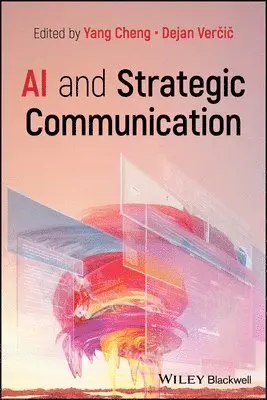
    AI and Strategic Communication

    AvYang Cheng,Dejan Verčič

    Häftad, Engelska, 2025

    542 kr

    Beställningsvara. Skickas inom 5-8 vardagar. Fri frakt över 249 kr.

    Beskrivning

    Provides an essential guide to AI's impact on PR practices, ethics, and societal implications As AI technologies continue to evolve, communication professionals must understand their profound effects on media relations, activism, and digital engagement. AI and Strategic Communication: Navigating the Future offers a comprehensive exploration of AI's role in reshaping public relations, bringing together contributions from leading scholars and practitioners from 9 countries across 5 continents, with representation from Europe, North America, Oceania, and Asia, this comprehensive volume addresses the ethical implications, challenges, and opportunities AI presents for individuals, organizations, and society. Covering topics such as AI-driven crisis communication, algorithmic bias, and human-robot interactions, the authors provide both theoretical frameworks and actionable strategies to help readers navigate the AI-driven landscape. The book is structured into three distinct sections, each addressing AI's impact at different levels of communication, including individual, professional and organizational, and society levels. The opening section explores personal experiences with AI, followed by an examination of AI's transformative role in public relations and strategic communication, including crisis management, employee communication, and AI-augmented content creation. The concluding section delves into the broader implications of AI on democracy, media ethics, and cultural biases. Offering expert guidance for integrating AI tools responsibly while addressing privacy concerns and ethical dilemmas, AI and Strategic Communication: Presents cutting-edge research from experts in AI, PR, and media ethicsDiscusses emerging AI-driven technologies and their implications for PR professionalsDiscusses AI's impact on democracy, misinformation, and truth in public discourseIncludes a forward-looking analysis of AI's evolving role in communicationOffers recommendations for future research and professional adaptationFeatures research-backed insights, practical strategies, and real-world case studiesWith a multidisciplinary approach to communication in the digital age, AI and Strategic Communication: Navigating the Future is essential reading for students, educators, and industry professionals looking to stay ahead in the evolving field of strategic communication. It is an ideal textbook for undergraduate and postgraduate courses on digital communication and social media, communication ethics and technology, advanced public relations, and strategic communication.

    Produktinformation

    • Utgivningsdatum:2025-10-27
    • Mått:210 x 10 x 150 mm
    • Vikt:510 g
    • Format:Häftad
    • Språk:Engelska
    • Antal sidor:352
    • Förlag:John Wiley & Sons Inc
    • ISBN:9781394275403

    Utforska kategorier

    • Referensverk och tvärvetenskap inom Samhälle och politik
    • Artificiell intelligens inom Data och IT

    Mer om författaren

    YANG CHENG is an Associate Professor at North Carolina State University One of Stanford University’s top 2% most-cited scholars, she specializes in AI, crisis communication, and relationship management. Her work has earned numerous awards, and she has lectured at top institutions worldwide. DEJAN VERČIČ is Professor and Head of the Centre for Marketing and Public Relations at the University of Ljubljana. A Fulbright scholar and PhD graduate of the London School of Economics, he specializes in globalization, internal communication, and strategic PR.

    Innehållsförteckning

    • Notes on Editors xviiList of Contributors xixForeword xxiiiPreface xxvAcknowledgements xxviiDecoding Complexity: The Role of AI in Modern Public Relations 1Marko GrobelnikSetting the Stage: An Analogy 1Introduction 1PR through the Lens of AI Definition 3AI System Definition 4PR Systems in Relation to AI System Definition 6Demystification of AI Modeling 8An Exercise How to Construct AI-Based PR Systems 12Reputation Management Scenario 12Social Media Performance Scenario 13Crisis Response Effectiveness Scenario 14Ethics, Risks, and Bias of AI 15Future AI Technologies and PR Applications 17Five AI Technologies of the Future 17Four Future PR Application Scenarios 19Scenario 1: The Corporate Sentinel 19Scenario 2: Disaster Relief in the Digital Age 20Scenario 3: Vaccination: A Public Health Imperative 21Scenario 4: The Political Arena 21Summary 22References 22Introduction: AI and Strategic Communication 24Yang Cheng and Dejan Verčič1 Staying Human in a Smart Machine World 33Anne Gregory and Swati VirmaniStaying Human in a Smart Machine World 33AI and Technological Advancement 34AI and Government 35AI and the Corporate Sphere 36AI and Civic Society 37AI and Its Use in Strategic Communication 38Ethics and the Human 45Ethics by Design 47Conclusion 52References 522 AI and Privacy: Privacy Concerns in the Public Sphere 55Tugce Ertem- Eray and Eyun- Jung KiInformation Privacy 57AI and Privacy in Strategic Communications 58Using AI in Strategic Communication to Shape the Public Sphere 60Moving Forward 62References 653 AI, Activism, and Strategic Communication: Grappling with Evolving Power Dynamics 71Dean Kruckeberg, Marina Vujnovic, Lukasz Swiatek, and Chris GallowayIntroduction 71There is no Return 74AI Opens a Whole New Frontier and at a Whole New Level 75AI Will Alter Requisite KSAs of Public Relations Practitioners 76What is AI? 76Power, Opacity, and AI 77Conclusion 79References 804 Anxiety and Education: How Not To Become Obsolete 83Cheng Chen and Qian XuAnxiety and Education: How Not To Become Obsolete 83AI and Generative AI 84AI Anxiety 84AI Anxiety Typology 85AI Anxiety among Educators 86Solutions to Mitigate AI Anxiety 87Method 88Sampling and Participants 88Procedure 89Focus Group Protocol 89Data Transcription and Coding 90Results 90Primary Types of Perceived AI Anxieties 90Job Replacement Anxiety 90Anxiety about Integrating AI into Teaching 91Anxiety Surrounding Student Use and Perceptions of AI 92Potential Solutions to Alleviate AI Anxieties 92Solutions to Job Replacement Anxiety 92Solutions to AI Integration Anxiety 93Solutions to Anxiety about Student Use and Perceptions of Generative AI 94Discussion 95Job Replacement Anxiety and Its Solutions 96AI Integration Anxiety and Its Solutions 97Anxiety about Students’ Use and Perceptions of Generative AI and Its Solutions 98Theoretical Implications 98Limitations and Future Studies 99Conclusion 99References 1005 AI Strategies and Tools for Public Relations Practitioners 105Stephen WaddingtonTheoretical Perspectives of AI 106AI in a Practical Context 108The Strategic Case for AI 109Practitioner Adoption 109Organizational Adoption 110Strategies for Practitioner Adoption of AI in Practice 111Strategies for Organizational Adoption of AI in a Public Relations Setting 112Governance and Regulation of Systems 117Data Management 118Copyright and Disintermediation 118Hallucination: Tools Make Stuff Up 120Transparency and Detection 120Ethical Decision- making 121AI and Future Skills in Public Relations 121References 1226 Linking AI with Internal Communication: A Systematic Review 125Yi Luo, Dongdong Yang, and Hua JiangIntroduction 125Theoretical Framework 126Defining Artificial Intelligence 126Linking Artificial Intelligence with Internal Communication 127Focus of this Study 128Method 128Literature Search 128Analysis 133Results 133Findings from Literature Review 134RQ1: What is the Current Status of AI Adoption for Internal Communication? 134AI Adoption for Internal Communication 134Transformative Potential of AI Use for Internal Communication 135Employee Attitudes toward AI Communication Tools 135Organizational Readiness 136RQ2: What is the Impact of AI Use on Internal Communication? 137Operational Efficiency and Employee Development 137Organizational Listening and Employee Voice 138Value of Internal Communication 139Employee Well- being and Professional Role Identity 139RQ3: What are the Barriers and Risks of AI Use for Internal Communication? 140Barriers to Adoption 140Ethical Considerations 140Discussion 141Future Research Directions 142References 1447 Does AI Democratize Commercial Content Creation? Changes to the Strategic Communication Profession 149Jukka Niittymaa, Joel Mero, and Vilma Luoma- ahoIntroduction 149AI in Strategic Communication 151Data and Methodology 153Analysis 156Conclusions 158Implications for Strategic Communication 160Limitations 162Future Research Opportunities 162Acknowledgements of Funding and AI Use 163References 1638 Collaborating with AI: The Next Frontier of Crisis Communication 167Elise Karinshak, Wenqing Zhao, Philippe Borremans, and Yan JinIntroduction 167AI Tools 170Relevant Technological Developments 170Practitioner Tools 172Human- AI Collaboration in Crisis Communication 173The Need for Collaboration with AI 173Using AI in Crisis Management across Sectors 176Practitioner Responses to AI Adoption 177Ethical and Societal Considerations 178Conclusion 182References 1829 Human– Robot Communication and Organization– Public Relationships 187Jeyoung Oh and Eyun- Jung KiIntroduction 187Robot and Human– Robot Communication 189AI- Powered Robots in Public Relations 190Organization– Public Relationship (OPR) Framework 191Theoretical Frameworks for Human– Robot Communication 193Computers are Social Actors (CASA) Theoretical Framework 193Social Presence Theory 194Uncanny Valley Effect 195Building Relationships through Robots 195Future Direction 197References 19810 Democracy and Public Deliberations in an AI- Mediated World 207Anca AntonIntroduction 207Theoretical Framework 208AI’s Utopian Possibilities 209Enhanced Inclusion 209Transparency and Accountability 212Heterotopic Tensions in AI- Mediated Public Deliberations 214Algorithmic Manipulation 215AI- Driven Echo Chambers 216Human Agency versus Technological Influence 216Case Studies 217Reframing the Role of the Communicator 220From Organizational to Societal Logic 220Combating Societal Myopia 221Responsible AI Implementation in Relation to Democracy and Public Deliberation 222Regulatory Frameworks 222Balancing Benefits and Risks 223Strengthening Democratic Values 224Conclusions 224References 22611 Deepfakes in Subversive Strategic Communication: Challenges and Responses 231Sergei A Samoilenko and Inna SuvorovaSubversive Strategic Communication 232Deepfakes in Subversive Strategic Communication Campaigns 234Deepfakes in Political Contexts and Warfare Scenarios 236Deepfakes in Political Contexts 236Deepfakes in Warfare Scenarios 238Threats, Challenges, and Responses to Deepfakes 239Conclusions 241References 24212 AI, Biases and Cultures: Values in a Machine World 251Shannon A Bowen and Evgeny N PashentsevValues and Ethical Use of AI Across Cultures 251The Malicious Use of AI 255Malicious Use of AI as Intentionally Antisocial Action: Roots of the Problem 255Malicious Actors, Cyber Attacks, and AI Ownership 256Twin- Use Technologies (Deepfakes, Chatbots, Emotional AI, Prognostic Weapons, etc) in the Hands of Bad Actors 260Conclusion: The Role of Strategic Communication and Acting as Values Managers 263References 26513 Strategic Communication for AI: How Strategic Communication Makes AI Socially Accepted 271Yangzhi (Nicole) Jiang, Yang Cheng, and Yuan WangIntroduction 271AI- Powered Chatbots in CSR Communication 273AI- Powered Chatbots and Their Attributes Enabling CSR Communication 273Humanlike Conversational Cues 274Social- Oriented Communication 274Intelligence 275Animacy 275Understanding Stakeholder Acceptance of Humanlike Chatbots 276Trendiness 276Social Presence 277Trust 278Impacts of Humanlike Chatbots on CSR Dialogue and Stakeholder Behavior 279Organizational Listening 279Shared Meaning Creation 280Supportive Intent 281Recommendations for Practices 282Advancing Humanlike Conversational Abilities and Trendiness 282Emphasizing Chatbots as Listening and Shared Meaning Creation Tools 283Conclusion and Future Research Directions 284References 285Embracing the Future of AI in Strategic Communication: Impacts at the Individual, Professional, Organizational, and Societal Levels 293Yang Cheng, Wanjun He, Jinzhe Qiao, and Dejan VerčičIntroduction 294AI’s Origin in Strategic Communication 295AI’s Application across Strategic Communication Domains 296AI’s Multi-level Impact across Strategic Communication 298AI’s Impact on the Individual Level 299AI’s Influence on the Organization and Professional Level 300AI’s Impact on the Society Level 302The Future of AI in Strategic Communication 303Organizational Level: Ethics, Privacy, and Fairness in AI Integration 303Privacy Concerns 304Fairness in AI Design 304Individual Level: Trust and Public Behavior 305Trust Dynamics and Psychological Impact 305Regulatory Challenges 305Society Level: Inclusivity, Global Impact, and Emerging Technologies 306Inclusivity and Cultural Sensitivity 306Emerging Technologies and Synergies 306Conclusion: Balancing Innovation with Responsibility 306References 307Index 313