Häftad, Engelska, 2025
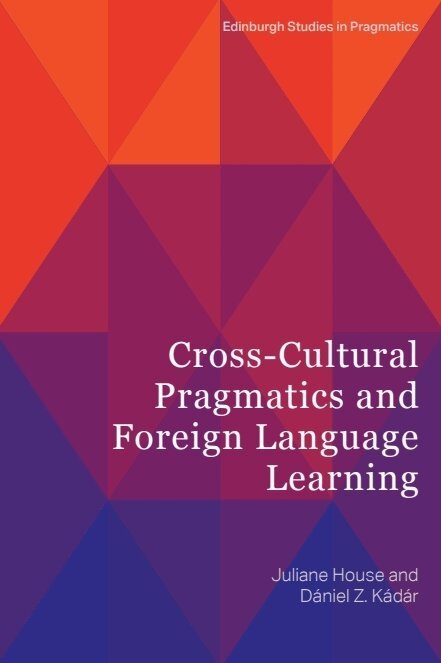
Cross-Cultural Pragmatics and Foreign Language Learning
Av Juliane House, Daniel Z. Kádár
Del i serien Edinburgh Studies in Pragmatics
457 kr
Beställningsvara. Skickas inom 3-6 vardagar. Fri frakt över 249 kr.
Beskrivning
Produktinformation
- Utgivningsdatum: 2025-12-31
- Mått: 156 x 234 x 15 mm
- Vikt: 330 g
- Format: Häftad
- Språk: Engelska
- Serie: Edinburgh Studies in Pragmatics
- Antal sidor: 208
- Förlag: Edinburgh University Press
- ISBN: 9781399523233
Utforska kategorier
Mer om författaren
Hamburg University Dániel Z. Kádár is Qihang Chair Professor and Director of the Center for Pragmatic Research at Dalian University of Foreign Languages, China. He is also Research Professor at the Hungarian Research Centre for Linguistics, Hungary and Professor of English Linguistics at the University of Maribor. He is an ordinary member of Academia Europaea (MAE.), and he also has a higher doctorate (D.Litt.) in pragmatics (2015) and Ph.D. in linguistics (2006). His areas of research involve cross-cultural, intercultural and L2 pragmatics; linguistic (im)politeness and interactional ritual; language and politics; and historical and modern Chinese language. He has published many books with internationally leading publishers, and research papers in high-impact journals. He is author of Relational Rituals and Communication: Ritual Interaction in Groups (2013), Politeness, Impoliteness and Ritual – Maintaining the Moral Order in Interpersonal Interaction (2017), and co-author of Understanding Politeness (with Michael Haugh, 2013) and Intercultural Politeness – Managing Relationships across Cultures (with Helen Spencer-Oatey, 2020). His most recent book is Cross-Cultural Pragmatics (with Juliane House, 2021). He is co-editor of Cross-cultural pragmatics – A Cross-Disciplinary Journal.
Recensioner i media
Overall, this book enriches academic discussions and advances more critical reflections on how to learn, teach, and conduct pragmatics research. Its integration of a theoretical framework and in-depth empirical analysis is highly relevant for ESL/EFL teachers looking to enhance students’ pragmatic competence through context-based instruction, which may be more responsive to student needs. It also offers a well-structured framework for teacher educators to design more effective teacher training programs, identify pragmatic gaps among students, and develop targeted teaching interventions. Additionally, the book’s exploration of sociopragmatic variables opens ample opportunities for further studies to explore the often overlooked pragmatic dimensions, particularly in underexplored linguacultures. It also reminds readers that cross-cultural pragmatics is a dynamic field. To this end, this work serves as an excellent resource for future research and L2 teaching to improve pragmatic competencies across cultural boundaries.
Betyg & recensioner
0 recensioner
Inga recensioner tillgängliga.