• Fri frakt över 249 kr
  • •
  • Snabba leveranser
  • •
  • Billiga böcker
Kundservice

Du är på sajten för privatpersoner.

Företag, bibliotek eller offentlig verksamhet?

Du handlar på classic.bokus.com, där alla dina funktioner finns intakta.
Till classic.bokus.com
Bokus logotyp. Gå till startsidan.
  • Erbjudanden
  • Nyheter
  • Student
  • Topplistor
  • Barn & ungdom
  • Bokus Play
  • E-böcker
  • Pocketböcker
  • Spel & pussel

10% rabatt på allt med kod: NYSTART10 →

Sidfot

Mina sidor

    Hjälp

    • Kundservice
    • Vanliga frågor och svar
    • Frakt och leverans
    • Retur vid ångerrätt
    • Reklamera vara
    • Betalning
    • Köpvillkor
    • Allmänna villkor
    • Information om webbplatsens tillgänglighet

    Om Bokus

    • Om oss
    • Pressrum
    • För studenter
    • För företag
    • För bibliotek och offentlig verksamhet
    • För leverantörer
    • Hållbarhet

    Populärt

    • Aktuella erbjudanden
    • Presentkort
    • Studentlitteratur
    • Nya böcker
    • Topplistor
    • Signerade böcker
    • Engelska böcker

    Inspiration

    • Boktips
    • BookTok
    • Populära bokserier
    • Barnbokskaraktärer
    • Populära författare
    Logotyp för Bokus
    Följ oss på Facebook (extern länk)Följ oss på Instagram (extern länk)Följ oss på YouTube (extern länk)Följ oss på TikTok (extern länk)
    bokus @ CookiesAnpassa cookiesIntegritetspolicyKöpvillkor
    Till Citymail hemsida (extern länk)Till Budbee hemsida (extern länk)Till Postnord hemsida (extern länk)Till Schenker hemsida (extern länk)Till Early Bird hemsida (extern länk)Till Walleys hemsida (extern länk)
    1. Naturvetenskap och teknik
    2. Matematik och naturvetenskap
    3. Biologi
    4. Biovetenskap

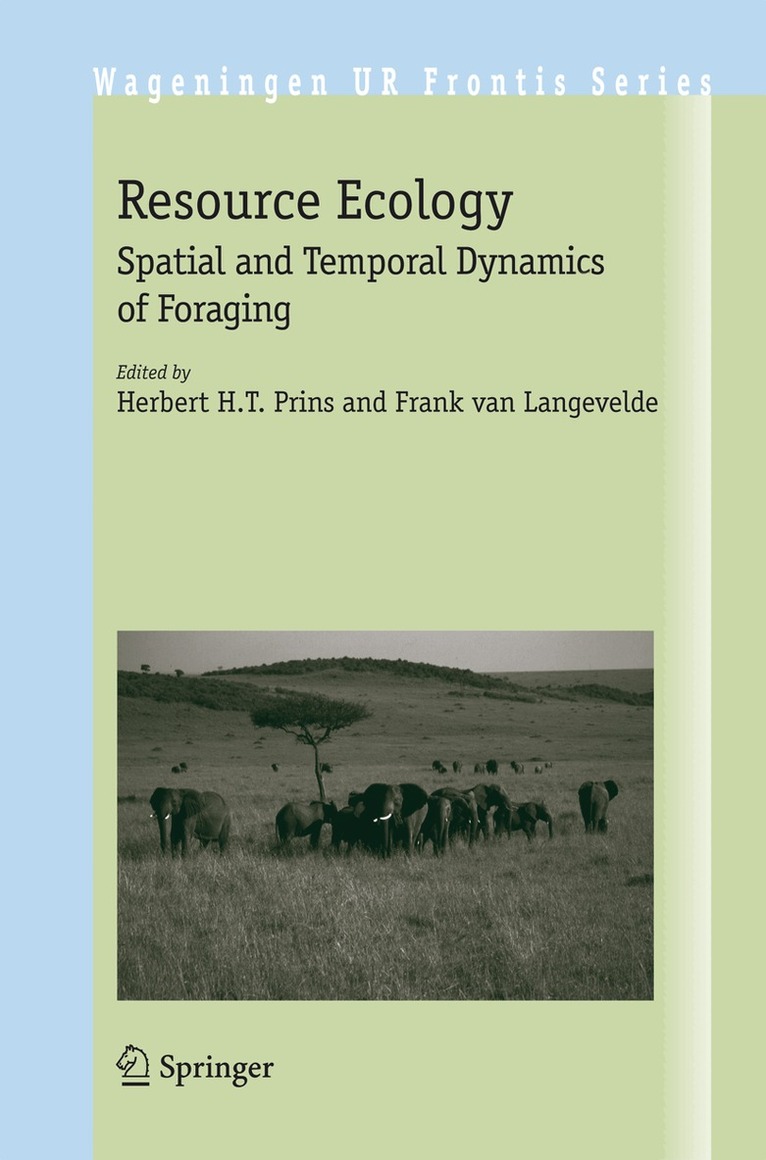
    Resource Ecology

    Spatial and Temporal Dynamics of Foraging

    AvHerbert H.T. Prins,Frank van Langevelde

    Häftad, Engelska, 2008

    Del 23 i serien Wageningen UR Frontis Series

    2 165 kr

    Beställningsvara. Skickas inom 10-15 vardagar. Fri frakt över 249 kr.

    Beskrivning

    This book focuses on ‘resource ecology’, which we defined as ‘the ecology of trophic interactions between consumers and their resources’. In our endeavour to shape the discipline of ‘resource ecology’ further, we invited some world-class scientists to think with us. We thus organised a symposium where we made sure that we paid attention to the original Greek meaning of the word: we discussed, ate and drank together and, for health reasons, made sure that we hade enough time for strolling and bicycling along the banks of the River Rhine. We even climbed a beautiful mediaeval church tower dedicated to Saint Cunera dating back to the year that Columbus sailed for America. In ecology, spatial ecology is an up-and-coming domain of science. It addresses the effects of space and scale on the dynamics of individual species and on the structure and dynamics of multi-species assemblages. More than a few recent studies demonstrate the significance of taking into account the spatial structure of resources on the population dynamics and assemblage structure of consumers. We believe that bringing together scientists specialised in foraging theory with those who know much about spatial ecology can create a new context from which new theory will emerge. Every chapter was written on invitation. We as editors had outlined what we had in mind and sent that outline to the selected authors.

    Produktinformation

    • Utgivningsdatum:2008-01-21
    • Mått:156 x 234 x 18 mm
    • Vikt:482 g
    • Format:Häftad
    • Språk:Engelska
    • Serie:Wageningen UR Frontis Series
    • Antal sidor:306
    • Upplaga:2008
    • Förlag:Springer-Verlag New York Inc.
    • ISBN:9781402068492

    Utforska kategorier

    • Biovetenskap inom Naturvetenskap och teknik

    Recensioner i media

    From the reviews: "The book presents a very readable account of the current state of play across the broad range of herbivore resource ecology: diet selection and intake at local, patch and landscape scales. ... I would certainly recommend this book to researchers, undergraduate and graduate reading groups, because the contents provide plenty of food for thought and debate. Conveniently, the chapters can be viewed individually at the website." (Andrew Illius, African Journal of Range & Forage Science, Vol. 27 (1), 2010)

    Innehållsförteckning

    • to Resource Ecology.- Mechanisms Determining Large-Herbivore Distribution.- Comments on “Mechanisms Determining Large-Herbivore Distribution”.- Spatial Statistics to Quantify Patterns of Herd Dispersion in a Savanna Herbivore Community.- Comments on “Spatial Statistics to Quantify Patterns of Herd Dispersion in a Savanna Herbivore Community”Introduction to Resource Ecology.- Resource Distribution and Dynamics: mapping herbivore resources.- Comments on “Resource Distribution and Dynamics: Mapping Herbivore Resources”.- Foraging in a heterogeneous environment: intake and diet choice.- Comments on “Foraging in a Heterogeneous Environment: Intake and Diet Choice”.- Predictive modelling of patch use by terrestrial herbivores.- Comments On “Predictive Modelling Of Patch Use By Terrestrial Herbivores”.- Assembling a diet from different places.- Comments On “Assembling A Diet From Different Places”.- Effects of Temporal Variability in Resources on Foraging Behaviour.- Comments on “Effects of Temporal Variability in Resources on Foraging Behaviour?.- Large-Scale Movements of Large Herbivores Livestock following changes in seasonal forage supply.- Comments on “Large-Scale Movements of Large Herbivores: Livestock Following Changes in Seasonal Forage Supply”.- Relevance of Key Resource Areas for Large-Scale Movements of Livestock.- Comments on “Relevance of Key Resource Areas for Large-Scale Movements of Livestock”.- Structuring herbivore communities: the role of habitat and diet.- Comments on “Structuring Herbivore Communities: the Role of Habitat and Diet”.- Prospects for Further Development of Resource Ecology.