• Fri frakt över 249 kr
  • •
  • Snabba leveranser
  • •
  • Billiga böcker
Kundservice

Du är på sajten för privatpersoner.

Företag, bibliotek eller offentlig verksamhet?

Du handlar på classic.bokus.com, där alla dina funktioner finns intakta.
Till classic.bokus.com
Bokus logotyp. Gå till startsidan.
  • Erbjudanden
  • Nyheter
  • Student
  • Topplistor
  • Barn & ungdom
  • Bokus Play
  • E-böcker
  • Pocketböcker
  • Spel & pussel

10% rabatt på allt med kod NYSTART10 →

Sidfot

Mina sidor

    Hjälp

    • Kundservice
    • Vanliga frågor och svar
    • Frakt och leverans
    • Retur vid ångerrätt
    • Reklamera vara
    • Betalning
    • Köpvillkor
    • Allmänna villkor
    • Information om webbplatsens tillgänglighet

    Om Bokus

    • Om oss
    • Pressrum
    • För studenter
    • För företag
    • För bibliotek och offentlig verksamhet
    • För leverantörer
    • Hållbarhet

    Populärt

    • Aktuella erbjudanden
    • Presentkort
    • Studentlitteratur
    • Nya böcker
    • Topplistor
    • Signerade böcker
    • Engelska böcker

    Inspiration

    • Boktips
    • BookTok
    • Populära bokserier
    • Barnbokskaraktärer
    • Populära författare
    Logotyp för Bokus
    Följ oss på Facebook (extern länk)Följ oss på Instagram (extern länk)Följ oss på YouTube (extern länk)Följ oss på TikTok (extern länk)
    bokus @ CookiesAnpassa cookiesIntegritetspolicyKöpvillkor
    Till Citymail hemsida (extern länk)Till Budbee hemsida (extern länk)Till Postnord hemsida (extern länk)Till Schenker hemsida (extern länk)Till Early Bird hemsida (extern länk)Till Walleys hemsida (extern länk)
    1. Naturvetenskap och teknik
    2. Matematik och naturvetenskap
    3. Biologi
    4. Djurens beteende

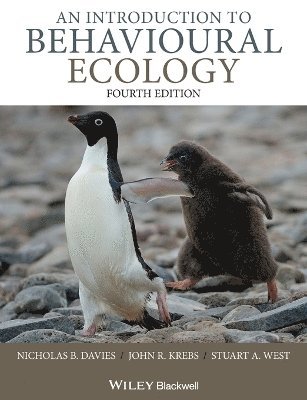
    Introduction to Behavioural Ecology

    AvNicholas B. Davies,John R. Krebs

    Häftad, Engelska, 2012

    677 kr

    Beställningsvara. Skickas inom 5-8 vardagar. Fri frakt över 249 kr.

    Beskrivning

    This textbook helped to define the field of Behavioural Ecology. In this fourth edition the text has been completely revised, with new chapters and many new illustrations and full colour photographs. The theme, once again, is the influence of natural selection on behaviour – an animal's struggle to survive and reproduce by exploiting and competing for resources, avoiding predators, selecting mates and caring for offspring, – and how animal societies reflect both cooperation and conflict among individuals.Stuart A. West has joined as a co-author bringing his own perspectives and work on microbial systems into the book.Written in the same engaging and lucid style as the previous editions, the authors explain the latest theoretical ideas using examples from micro-organisms, invertebrates and vertebrates. There are boxed sections for some topics and marginal notes help guide the reader. The book is essential reading for students of behavioural ecology, animal behaviour and evolutionary biology.Key Features: Long-awaited new edition of a field-defining textbookNew chapters, illustrations and colour photographsNew co-authorFocuses on the influence of natural selection on behavior, and how animal societies reflect both cooperation and conflict among individuals"The long-awaited update to a classic in this field is now here, presenting new directions in thinking and addressing burning questions. Richly informed by progress in many other disciplines, such as sensory physiology, genetics and evolutionary theory, it marks the emergence of behavioural ecology as a fully fledged discipline.... This is a marvellous book, written in a lucid style. A must-read for those in the field, it is also a cornucopia of new thinking for anyone interested in evolution and behaviour."—Manfred Milinski, Nature, 2012

    Produktinformation

    • Utgivningsdatum:2012-03-02
    • Mått:187 x 246 x 20 mm
    • Vikt:1 020 g
    • Format:Häftad
    • Språk:Engelska
    • Antal sidor:528
    • Upplaga:4
    • Förlag:John Wiley and Sons Ltd
    • ISBN:9781405114165

    Utforska kategorier

    • Djurens beteende inom Naturvetenskap och teknik
    • Zoologi inom Naturvetenskap och teknik
    • Djurböcker inom Djur och Natur

    Mer om författaren

    Nicholas B. Davies FRS is Professor of Behavioural Ecology in the Department of Zoology at the University of Cambridge and a Fellow of Pembroke College.John R. Krebs FRS is Principal of Jesus College and Professor in the Department of Zoology at the University of Oxford, and a member of the House of Lords.Stuart West is Professor of Evolutionary Biology in the Department of Zoology at the University of Oxford.

    Recensioner i media

    “Altogether this is an excellent introductory text, with full and balanced coverage, easy to read and, to the publisher’s credit, a physically attractive book. It does the authors great credit that they have so refreshed an enduring classic.”  (Austral Ecology, 20 July 2015)“… a new edition of the textbook that has introduced generations of undergraduates (and postgraduates) to the delights of behavioural ecology, inspiring many (myself included) to take up the discipline professionally, is a rare treat.  Behavioural ecology is, fundamentally, modern-day natural history and there is no clearer written, more inspiringly enthusiastic guide to the subject on the market.  This book sets the gold standard for behavioural ecology and animal behaviour textbooks which will no doubt continue to inform and delight students and researchers in equal measure for many years to come.”  (Animal Behaviour, 1 March 2013)“Overall, this seems a timely update to a very useful book; it should be widely used by lecturers and undergraduates alike.”  (British Ecological Society Bulletin, 1 December 2012)“[An Introduction to Behavioural Ecology, 4th Edition] Stands tall as the textbook to have in the field of Behavioral Ecology...I expect anyone with an A level in Biology, or equivalent, or an interest in Zoology without the qualification, could pick this book up and get a lot out of it...What this book is, is good science explained well, I scored higher in my behavioral ecology exam than I did in any other exam in my finals. I wouldn’t put that entirely down to this book, but it certainly influenced things.The book is well printed, as you would expect, with great clear photographs used liberally, and a lot of graphs and diagrams.In summary then, if you want to know why animals behave the way they do, why swordtail fish do really have the long tails, why birds sing, why fish shoal under certain circumstances, why well fed parrot females produce more males, and why related long-tailed tits help each other raise young, then this book really is for you. I recommend it wholeheartedly.” (The Amateur Naturalist magazine, 1 November 2012)“The book opens with a section on Watching and Wondering, capturing the excitement of natural history, that same wonderment that Kruuk describes so well, and then guides the reader through a series of fascinating questions and findings, experiments and field studies. . . This is clearly good for students wishing to put together presentations for assessments, and extremely useful for lecturers, new and old . . I should say that this is a certainty and future generations will owe this book a considerable debt.”  (Journal of Evolutionary Psychology, 1 October 2012)“Among the most influential books in the field of behavioral ecology, An Introduction to Behavioural Ecology certainly stands out to the extent that it has been called ‘a classic textbook.”  (Trends in Ecology & Evolution, 2012)“The long-awaited update to a classic in this field is now here, presenting new direc­tions in thinking and addressing burning questions. Richly informed by progress in many other disciplines, such as sensory physiology, genetics and evolutionary theory, it marks the emergence of behav­ioural ecology as a fully fledged discipline….. This is a marvellous book, written in a lucid style. A must-read for those in the field, it is also a cornucopia of new thinking for anyone interested in evolution and behaviour.”  (Manfred Milinski, Nature, 2012)

    Innehållsförteckning

    • Preface xAcknowledgements xiii1 Natural Selection, Ecology and Behaviour 1Watching and wondering 1Natural selection 5          Genes and behaviour 6Selfish individuals or group advantage? 11Phenotypic plasticity: climate change and breeding times 18Behaviour, ecology and evolution 21Summary 22Further reading 22Topics for discussion 232 Testing Hypotheses in Behavioural Ecology 24The comparative approach 25Breeding behaviour of gulls in relation to predation risk 26Social organization of weaver birds 28Social organization in African ungulates 30Limitations of early comparative studies 31Comparative approach to primate ecology and behaviour 33Using phylogenies in comparative analysis 37The comparative approach reviewed 45Experimental studies of adaptation 46Summary 49Further reading 50Topics for discussion 513 Economic Decisions and the Individual 52The economics of carrying a load 52The economics of prey choice 59Sampling and information 62The risk of starvation 63Environmental variability, body reserves and food storing 65Food storing birds: from behavioural ecology to neuroscience 66The evolution of cognition 71Feeding and danger: a trade-off 73Social learning 75Optimality models and behaviour: an overview 79Summary 81Further reading 82Topics for discussion 824 Predators versus Prey: Evolutionary Arms Races 83Red Queen evolution 83Predators versus cryptic prey 86Enhancing camouflage 92Warning colouration: aposematism 95Mimicry 100Trade-offs in prey defences 103Cuckoos versus hosts 105Summary 113Further reading 114Topics for discussion 1145 Competing for Resources 116The Hawk–Dove game 116Competition by exploitation: the ideal free distribution 119Competition by resource defence: the despotic distribution 123The ideal free distribution with unequal competitors 123The economics of resource defence 126Producers and scroungers 130Alternative mating strategies and tactics 131ESS thinking 142Animal personalities 143Summary 144Further reading 145Topics for discussion 1466 Living in Groups 147How grouping can reduce predation 148How grouping can improve foraging 159Evolution of group living: shoaling in guppies 163Group size and skew 164Group decision making 169Summary 177Further reading 177Topics for discussion 1787 Sexual Selection, Sperm Competition and Sexual Conflict 179Males and females 180Parental investment and sexual competition 182Why do females invest more in offspring care than do males? 184Evidence for sexual selection 186Why are females choosy? 189Genetic benefits from female choice: two hypotheses 194Testing the hypotheses for genetic benefits 196Sexual selection in females and male choice 201Sex differences in competition 204Sperm competition 205Constraints on mate choice and extra-pair matings 208Sexual conflict 209Sexual conflict: who wins? 216Chase-away sexual selection 218Summary 220Further reading 221Topics for discussion 2218 Parental Care and Family Conflicts 223Evolution of parental care 223Parental investment: a parent’s optimum 227Varying care in relation to costs and benefits 229Sexual conflict 232Sibling rivalry and parent–offspring conflict: theory 238Sibling rivalry: evidence 240Parent–offspring conflict: evidence 243Brood parasites 249Summary 252Further reading 252Topics for discussion 2539 Mating Systems 254Mating systems with no male parental care 254Mating systems with male parental care 264A hierarchical approach to mating system diversity 279Summary 280Further reading 281Topics for discussion 28110 Sex Allocation 282Fisher’s theory of equal investment 285Sex allocation when relatives interact 286Sex allocation in variable environments 296Selfish sex ratio distorters 304Summary 305Further reading 305Topics for discussion 30611 Social Behaviours: Altruism to Spite 307Kin selection and inclusive fitness 308Hamilton’s rule 313How do individuals recognize kin? 318Kin selection doesn’t need kin discrimination 322Selfish restraint and kin selection 325Spite 327Summary 331Further reading 332Topics for discussion 33312 Cooperation 334What is cooperation? 334Free riding and the problem of cooperation 336Solving the problem of cooperation 337Kin selection 339Hidden benefits 341By-product benefit 341Reciprocity 345Enforcement 350A case study – the Seychelles Warbler 354Manipulation 356Summary 358Further reading 358Topics for discussion 35913 Altruism and Conflict in the Social Insects 360The social insects 360The life cycle and natural history of a social insect 364The economics of eusociality 366The pathway to eusociality 366The haplodiploidy hypothesis 367The monogamy hypothesis 371The ecological benefits of cooperation 375Conflict within insect societies 379Conflict over the sex ratio in the social hymenoptera 379Worker policing in the social hymenoptera 386Superorganisms 389Comparison of vertebrates with insects 390Summary 392Further reading 392Topics for discussion 39314 Communication and Signals 394The types of communication 395The problem of signal reliability 396Indices 397Handicaps 405Common interest 411Human language 416Dishonest signals 417Summary 421Further reading 422Topics for discussion 42315 Conclusion 424How plausible are our main premises? 424Causal and functional explanations 436A final comment 438Summary 441Further reading 441References 442Index 489