• Fri frakt över 249 kr
  • •
  • Snabba leveranser
  • •
  • Billiga böcker
Kundservice

Du är på sajten för privatpersoner.

Företag, bibliotek eller offentlig verksamhet?

Du handlar på classic.bokus.com, där alla dina funktioner finns intakta.
Till classic.bokus.com
Bokus logotyp. Gå till startsidan.
  • Erbjudanden
  • Nyheter
  • Student
  • Topplistor
  • Barn & ungdom
  • Bokus Play
  • E-böcker
  • Pocketböcker
  • Spel & pussel

10% rabatt på allt med kod: NYSTART10 →

Sidfot

Mina sidor

    Hjälp

    • Kundservice
    • Vanliga frågor och svar
    • Frakt och leverans
    • Retur vid ångerrätt
    • Reklamera vara
    • Betalning
    • Köpvillkor
    • Allmänna villkor
    • Information om webbplatsens tillgänglighet

    Om Bokus

    • Om oss
    • Pressrum
    • För studenter
    • För företag
    • För bibliotek och offentlig verksamhet
    • För leverantörer
    • Hållbarhet

    Populärt

    • Aktuella erbjudanden
    • Presentkort
    • Studentlitteratur
    • Nya böcker
    • Topplistor
    • Signerade böcker
    • Engelska böcker

    Inspiration

    • Boktips
    • BookTok
    • Populära bokserier
    • Barnbokskaraktärer
    • Populära författare
    Logotyp för Bokus
    Följ oss på Facebook (extern länk)Följ oss på Instagram (extern länk)Följ oss på YouTube (extern länk)Följ oss på TikTok (extern länk)
    bokus @ CookiesAnpassa cookiesIntegritetspolicyKöpvillkor
    Till Citymail hemsida (extern länk)Till Budbee hemsida (extern länk)Till Postnord hemsida (extern länk)Till Schenker hemsida (extern länk)Till Early Bird hemsida (extern länk)Till Walleys hemsida (extern länk)
    1. Skönlitteratur
    2. Litteraturvetenskap
    3. Litteraturteori

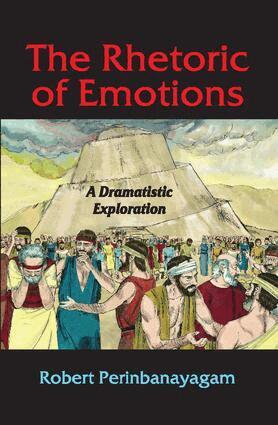
    Rhetoric of Emotions

    A Dramatistic Exploration

    AvRobert Perinbanayagam

    Inbunden, Engelska, 2016

    1 282 kr

    Tillfälligt slut

    Fler format och utgåvor

    Häftad

    610 kr

    E-bok

    832 kr

    E-bok

    829 kr

    Beskrivning

    Kenneth Burke, founder of the critical method of dramatism, believed that motives and attitudes are constantly generated by individuals as they encounter social situations and material objects in the course of their everyday lives. In The Rhetoric of Emotions, Robert Perinbanayagam proposes that by analysing individuals' experiences, especially through their interaction with creative outlets, we can come to a deeper understanding of how the human mind systematically approaches the emotive process.The author maintains that individuals use spoken language, and all other forms of symbolism, including art and literature, to elicit social cooperation and emotional understanding, both in regard to the world around them and within themselves. Rhetoric and culture are mechanisms for managing values, behaviour, and emotions. In order to ground this philosophical viewpoint, Perinbanayagam strategically discusses famous novels and paintings to show how individuals construct emotional responses to the rhetorical objects at their disposal.In addition to the ideas of Burke and George Herbert Mead, the ideas of Max Weber, Georg Simmel, Charles Sanders Peirce, Edmund Husserl, Alfred Schutz, and Erving Goffman are also reflected in this provocative analysis.

    Produktinformation

    • Utgivningsdatum:2016-12-30
    • Mått:152 x 229 x undefined mm
    • Vikt:476 g
    • Format:Inbunden
    • Språk:Engelska
    • Antal sidor:286
    • Förlag:Taylor & Francis Inc
    • ISBN:9781412863964

    Utforska kategorier

    • Litteraturteori inom Skönlitteratur
    • Referensverk och tvärvetenskap inom Samhälle och politik

    Mer om författaren

    Robert Perinbanayagam is professor of sociology (emeritus) at Hunter College, City University of New York, USA. He is recipient of the G. H. Mead Award and the C. H. Cooley Award from the Society for the Study of Symbolic Interaction, and the award from the theory section of the American Sociological Association for his book, The Presence of Self. He has written numerous books, including Discursive Acts and Games and Sport in Everyday Life.

    Recensioner i media

    'The author writes on a grander scale and has achieved considerable respect within the symbolic interaction-ist community by doing so...I am in fact enthusiastic about this fasci-nating work, and I hope that others will not only read it, but also explore more deeply the enchantments within the grand interhuman caverns where Perinbanayagam, in this and many other volumes, has scattered the light of his imagination.'Robert Wade Kenny, University of Pittsburgh, Symbolic Interaction

    Innehållsförteckning

    • ContentsPrefaceAcknowledgments1 The Rhetorical Attitude2 Acts, Scenes, and Emotions3 Identity and Emotions in Dialogue4 The Dialogic of Madness: Quantum Mechanics, Mirror Neurons, and Emotions5 Identity and the Dialogic of Looking, Reading, and Watching6 Revels and RapturesReferencesIndex