• Fri frakt över 249 kr
  • •
  • Snabba leveranser
  • •
  • Billiga böcker
Kundservice

Du är på sajten för privatpersoner.

Företag, bibliotek eller offentlig verksamhet?

Du handlar på classic.bokus.com, där alla dina funktioner finns intakta.
Till classic.bokus.com
Bokus logotyp. Gå till startsidan.
  • Erbjudanden
  • Nyheter
  • Student
  • Topplistor
  • Barn & ungdom
  • Bokus Play
  • E-böcker
  • Pocketböcker
  • Spel & pussel

10% rabatt på allt med kod NYSTART10 →

Sidfot

Mina sidor

    Hjälp

    • Kundservice
    • Vanliga frågor och svar
    • Frakt och leverans
    • Retur vid ångerrätt
    • Reklamera vara
    • Betalning
    • Köpvillkor
    • Allmänna villkor
    • Information om webbplatsens tillgänglighet

    Om Bokus

    • Om oss
    • Pressrum
    • För studenter
    • För företag
    • För bibliotek och offentlig verksamhet
    • För leverantörer
    • Hållbarhet

    Populärt

    • Aktuella erbjudanden
    • Presentkort
    • Studentlitteratur
    • Nya böcker
    • Topplistor
    • Signerade böcker
    • Engelska böcker

    Inspiration

    • Boktips
    • BookTok
    • Populära bokserier
    • Barnbokskaraktärer
    • Populära författare
    Logotyp för Bokus
    Följ oss på Facebook (extern länk)Följ oss på Instagram (extern länk)Följ oss på YouTube (extern länk)Följ oss på TikTok (extern länk)
    bokus @ CookiesAnpassa cookiesIntegritetspolicyKöpvillkor
    Till Citymail hemsida (extern länk)Till Budbee hemsida (extern länk)Till Postnord hemsida (extern länk)Till Schenker hemsida (extern länk)Till Early Bird hemsida (extern länk)Till Walleys hemsida (extern länk)
    1. Psykologi och pedagogik
    2. Pedagogik
    3. Skolan och förskolan

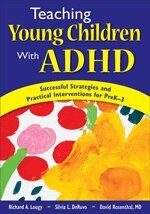
    Teaching Young Children With ADHD

    Successful Strategies and Practical Interventions for PreK-3

    AvRichard A. Lougy,Silvia L. Deruvo

    Häftad, Engelska, 2007

    566 kr

    Beställningsvara. Skickas inom 3-6 vardagar. Fri frakt över 249 kr.

    Beskrivning

    "Well written, easy to read, and comprehensive in scope. The advice, strategies, and vignettes all are excellent."
    —Sandra F. Rief, Author of How to Reach & Teach Children With ADD/ADHD and The ADHD Book of Lists

    "This is the most complete and definitive book on the topic. A must-read for every educator and administrator."
    —Carol S. Reynolds, Principal, Frostproof Elementary School, FL

    Know the facts about ADHD to improve children's academic and behavioral outcomes!

    This indispensable resource provides general education teachers with a solid understanding of ADHD, detailed descriptions of how it manifests in preschool and the primary grades, and research-based approaches for designing and adapting instruction to meet the needs of all young children. Together, the authors offer decades of experience from the fields of school psychology, special education, and medicine. Their combined knowledge clarifies and informs the what, why, and how of inclusive strategies that work, particularly for children with attention disorders.

    In reading this book, you will discover:

    • Practical interventions to develop children's social skills and manage classroom behavior
    • Suggestions for helping children with ADHD master the challenging task of writing
    • Guidelines for recognizing appropriate and inappropriate responses to medication
    • Recommendations for partnering with parents and families
    • In-depth profiles of children with ADHD, and more

    By being aware of the impact that ADHD has on children's social, emotional, and educational development, educators can work toward building trust with both students and parents, and develop a positive, lasting influence on the lives of the children they teach.

    Produktinformation

    • Utgivningsdatum:2007-05-23
    • Mått:177 x 254 x 14 mm
    • Vikt:450 g
    • Format:Häftad
    • Språk:Engelska
    • Antal sidor:208
    • Upplaga:1
    • Förlag:SAGE Publications
    • ISBN:9781412941600

    Utforska kategorier

    • Skolan och förskolan inom Psykologi och pedagogik
    • Utbildningsstrategier och utbildningspolitik inom Psykologi och pedagogik

    Mer om författaren

    Richard A. Lougy has been living and working for the last 30 years in Sacramento, California, where he began his career as a middle school teacher. During that time, he also served as an elementary school counselor and later as a school psychologist. Before retiring in 2007, he oversaw mental health services for Head Start and Early Head Start programs in a large metropolitan school district in Northern California. He currently runs a private practice specializing in ADHD and related disorders, as well as being a mental health consultant for Early Head Start programs and Before and After School Care Programs for a large school district. Lougy has treated and worked with thousands of children with ADHD and their families throughout his career. In addition to coauthoring two books on ADHD, ADHD: A Survival Guide for Parents and Teachers (Hope Press/2002) and Teaching Young Children With ADHD: Successful Strategies and Practical Interventions for PreK-3 (Corwin Press/2007), Lougy has also written numerous articles on ADHD and regularly presents at state and national conferences. Silvia L. DeRuvo is a special education resources development specialist with WestEd, a nonprofit agency that works with schools, districts, state agencies, and national policy makers in the areas of educational research, products, and programs. Her work focuses primarily on working with schools and teachers on effective research-based instructional practices that support the needs of students with disabilities within core content integrated classrooms. Prior to her work at WestEd, DeRuvo has been an elementary special educator for nearly 20 years, and a teacher trainer at California State University, Sacramento. Her experience in the classroom, as well as in state special education leadership, has given her vast experience in the area of special education practices and effective inclusion practices that support the needs of students with ADHD and other learning disabilities. She is a national speaker for the Bureau of Education and Research on Response to Intervention implementation practices and is a coauthor of Teaching Young Children With ADHD: Successful Strategies and Practical Interventions for PreK-3, a book on classroom strategies for students with Attention Deficit Hyperactivity Disorder (ADHD) published in 2007 by Corwin Press. She is currently authoring a book on instructional strategies to support secondary students with ADHD that will be published in 2009. DeRuvo received an MA in communicative disorders, and holds credentials in Multiple Subjects, Special Education Specialist Communications Handicapped, and Resource Specialist certification from California State University, Fresno. David Rosenthal, MD, is an adult, adolescent, and child psychiatrist in private practice in Boulder, Colorado. He is an adjunct professor in the Graduate School of Social Work at the University of Denver, where he teaches courses on psychopharmacology. Rosenthal practiced psychiatry in various settings in California for many years and treated thousands of patients with ADHD, anxiety, and mood disorders before coauthoring two books on ADHD: ADHD: A Survival Guide for Parents and Teachers (Hope Press/2007) and Teaching Young Children With ADHD: Successful Strategies and Practical Interventions for PreK-3 (Corwin Press/2007). He also has written articles on ADHD and regularly speaks at state and national conferences on ADHD. Rosenthal earned his medical degree at the University of Iowa School of Medicine in 1986, and completed his residency in adult psychiatry and fellowship training in child and adolescent psychiatry at the University of California, Davis, Medical Center.

    Recensioner i media

    "Well written, easy to read, and comprehensive in scope. The advice, strategies, and vignettes are all excellent."

    Innehållsförteckning

    • Foreword by Meredith CathcartPrefaceAcknowledgmentsAbout the Authors1. Yes, ADHD Is a Real Disorder!Myth or Fact?Diagnostic CriteriaManifestations of ADHDPrevalence of ADHDRecognizing and Understanding ADHD in Young ChildrenWhat Causes ADHD?Creating an Optimal Learning EnvironmentSummary2. Recognizing ADHD: Primary Symptoms and Common ImpairmentsInattentionHyperactivityImpulsivityOther Behaviors Often Seen in Children With ADHDImpairments in Executive FunctioningTemperament and ADHDSummary3. Developing and Reinforcing Appropriate Social SkillsPreschool and Elementary School as the Training GroundWhat Are Social Skills and Why Are They So Important?Social-Skills DevelopmentStrategies That Support Social Skill DevelopmentFive Problem-Solving Areas That Challenge Children With ADHDSuggestions for Reinforcing Appropriate Social BehaviorsChallenging Settings for Children With ADHDSummary4. Help, This Kid Is Driving Me Crazy!!: Proactive Classroom Management and Positive Behavior SupportsDeveloping a Personal Philosophy of Behavior ManagementAnalyzing BehaviorPutting the Strategies to PracticeSummary5. How Do I Teach This Kid? Classroom Strategies to Support All LearnersClassroom Success Is PossibleTreating Children With ADHD FairlyDefining the Objective of the LessonThe Differentiated ClassroomMaking Appropriate AccommodationsBeyond Accommodations and Interventions: The Special Education ReferralLearning DisabilitiesOther Health ImpairedSummary6. Why Is Writing So Hard? Specific Strategies to Develop Writing SkillsWhy Writing Is So HardTeaching Early WritingAnalyzing Writing TasksScaffolds for Writing SuccessThe Dreaded Book Report!The Even More Dreaded Written ReportSummary7. What Teachers Should Know About MedicationWhat Medications Are Most Commonly Used to Treat ADHD?What Changes Can I Expect to See With My Students on Stimulants?Do Stimulants Cure ADHD? How Do These Medicines Work?How Long Does a Child With ADHD Need to Be on Medication Before It Works?How Will I Know If My Student Is Over-Medicated?If the Medicine Works, Does That Confirm That the Diagnosis of ADHD Is Correct?What Are the Possible Side Effects of Stimulants That My Student Might Experience?What Information From Teachers Is Helpful to Doctors?Are Stimulants Addictive?Can Stimulants Lead to Problems With Abuse of Other Drugs?Are There Particular Kids Who Would Be Expected to Do Poorly on Stimulants?Are There Children Who Need to be on Medication Only at School?Are there Problems With Adverse Drug Interactions if a Child Is on a Stimulant?I′ve Heard That Kids Can Become Psychotic on Stimulants. Is It True?Can Stimulants Be Used by Children Younger Than Age 5?My Students Used to Do Well on Ritalin, but Now It Doesn′t Seem to Work. What′s Going On?Are There Any Good Natural Remedies Available for Treating ADHD?One of My Students Is on Prozac. Is This Commonly Used in Young Children With ADHD?Do Medications Help Learning Disabilities?One of My Students Is Very Defiant and Oppositional. Will Medications Help With This?Summary8. Communicating Effectively With ParentsParents: The Most Important ResourceRespect and Acknowledge the Challenges Parents FaceCriticism Is the Least Effective Form for ChangeADHD as an "Excuse"Helping Parents Separate Enabling From Supportive DecisionsWhen It Seems a Child Might Have ADHDWhen Parents Don′t Disclose That Their Child Is Taking MedicationRegular Communication Is CriticalSummary9. Taking Care of YourselfRecognizing the Signs of StressSuggested Ways to Lower StressResource A: Recognizing ADHD in Preschool and Primary Grades: Real ProfilesResource B: Other Disorders Sometimes Associated With ADHDResource C: Childhood Disorders and Conditions That Can Mimic ADHD in Young ChildrenResource D: Recommended Books for TeachersResource E: Useful Web SitesReferencesIndex