• Fri frakt över 249 kr
  • •
  • Snabba leveranser
  • •
  • Billiga böcker
Kundservice

Du är på sajten för privatpersoner.

Företag, bibliotek eller offentlig verksamhet?

Du handlar på classic.bokus.com, där alla dina funktioner finns intakta.
Till classic.bokus.com
Bokus logotyp. Gå till startsidan.
  • Erbjudanden
  • Nyheter
  • Student
  • Topplistor
  • Barn & ungdom
  • Bokus Play
  • E-böcker
  • Pocketböcker
  • Spel & pussel

10% rabatt på allt med kod: NYSTART10 →

Sidfot

Mina sidor

    Hjälp

    • Kundservice
    • Vanliga frågor och svar
    • Frakt och leverans
    • Retur vid ångerrätt
    • Reklamera vara
    • Betalning
    • Köpvillkor
    • Allmänna villkor
    • Information om webbplatsens tillgänglighet

    Om Bokus

    • Om oss
    • Pressrum
    • För studenter
    • För företag
    • För bibliotek och offentlig verksamhet
    • För leverantörer
    • Hållbarhet

    Populärt

    • Aktuella erbjudanden
    • Presentkort
    • Studentlitteratur
    • Nya böcker
    • Topplistor
    • Signerade böcker
    • Engelska böcker

    Inspiration

    • Boktips
    • BookTok
    • Populära bokserier
    • Barnbokskaraktärer
    • Populära författare
    Logotyp för Bokus
    Följ oss på Facebook (extern länk)Följ oss på Instagram (extern länk)Följ oss på YouTube (extern länk)Följ oss på TikTok (extern länk)
    bokus @ CookiesAnpassa cookiesIntegritetspolicyKöpvillkor
    Till Citymail hemsida (extern länk)Till Budbee hemsida (extern länk)Till Postnord hemsida (extern länk)Till Schenker hemsida (extern länk)Till Early Bird hemsida (extern länk)Till Walleys hemsida (extern länk)
    1. Samhälle och politik
    2. Samhälle och kultur
    3. Kultur och medier
    4. Referensverk och tvärvetenskap

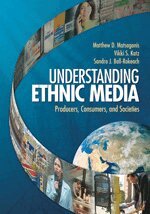
    Understanding Ethnic Media

    Producers, Consumers, and Societies

    AvMatthew D. Matsaganis,Vikki S. Katz

    Häftad, Engelska, 2010

    1 965 kr

    Beställningsvara. Skickas inom 3-6 vardagar. Fri frakt över 249 kr.

    Fler format och utgåvor

    Inbunden

    3 005 kr

    Beskrivning

    This is the first book to provide a comprehensive review and analysis of how media produced by ethnic communities, and for ethnic communities, affect identity and perceived lines of division between "us" and "others," as well as how the production and consumption of ethnic media affect the character of the larger media and societal landscapes.

    Integrating key ethnic media studies with original research, this book makes a unique contribution by covering both consumers and producers of ethnic media, as well as the history of ethnic media, its role in ethnic communities, the effect of globalization, and the professional challenges faced by ethnic media journalists. A compelling discussion on the future of ethnic media concludes the book and points the way toward further research.

    Key Features:

    • A fresh viewpoint: The book focuses on how and why ethnic and racial minorities produce and consume media for themselves—not just how they are represented in or by the media.
    • An ecological approach: The authors explore the growth of ethnic media in different socio-political contexts and approach ethnic media from the vantage points of both the audience and the media organization.
    • An international focus: Provides readers with comparative examples from around the world.
    • A conceptual and practical focus: Conceptual content is relevant, timely, and connected to readers' lived experiences through real-world case studies.
    • A student-friendly presentation: In each chapter, introductory bullet points identify the main concepts and issues, key terms are defined, student projects are suggested, and discussion questions are provided.

    Produktinformation

    • Utgivningsdatum:2010-08-18
    • Mått:177 x 254 x 17 mm
    • Vikt:590 g
    • Format:Häftad
    • Språk:Engelska
    • Antal sidor:336
    • Upplaga:1
    • Förlag:SAGE Publications
    • ISBN:9781412959131

    Utforska kategorier

    • Referensverk och tvärvetenskap inom Samhälle och politik
    • Etnicitet inom Samhälle och politik

    Mer om författaren

    Matthew D. Matsaganis (Ph.D., University of Southern California) is an Assistant Professor of Communication at the University at Albany, State University of New York. His research addresses issues of ethnic media production and sustainability, neighborhood effects and the role of communication in building civic engagement and community capacity, as well as health disparities and the social determinants of health. His research has been published in the American Behavioral Scientist, Human Communication Research, the Electronic Journal of Communication, and the Encyclopedia of International Media and Communications; he has presented his work at a number of academic and professional conferences. Matthew is also a recovering print journalist. He has worked for a variety of publications in Athens, Greece and New York City. In November 2001, he received a certificate of recognition from the U.S. Congress for his work as a journalist and for promoting Greek-American friendship and cooperation. Vikki S. Katz (Ph.D., University of Southern California) is an Assistant Professor of Communication in the School of Communication and Information at Rutgers, the State University of New Jersey. Her research explores issues of ethnic media consumption, particularly the interplay between media content and access to community resources in ethnic minority and immigrant neighborhoods. She has conducted research on the relationship between family decision-making around media content and disparities in connecting to health care, schools, and social services; children’s translating activities around media content; the viability of ethnic media with second and third generation audiences; and the role of family communication in civic engagement. Her research has been published in the Journal of Communication and the Journal of Children and Media. She has also presented her work at academic and professional conferences on topics including ethnic media viability, intergenerational media connection patterns, and immigrant family media use. Sandra J. Ball-Rokeach, PhD, is a professor of Communication and Sociology in the Annenberg School for Communication and Journalism at the University of Southern California. She is the founder and principal investigator of The Metamorphosis Project—an in-depth inquiry into the transformation of urban community under the forces of globalization, new communication technologies, and population diversity. This multi-method project is guided by communication infrastructure theory. It has addressed issues of civic engagement, health disparities, intergroup relations, and community news site development.

    Recensioner i media

    "This comprehensive book offers a global overview. The rich data discussed and the activities proposed make a very good introductory text for ethnic media teaching. The organization of the material is excellent and the writing is particularly engaging and confident, and brings the subject to life."

    Innehållsförteckning

    • PrefacePART I: ETHNIC MEDIA IN CONTEXT1. What Are Ethnic Media?IntroductionDefining Ethnic MediaThe Role of Geographic ContextThe Roles of Ethnic MediaGlobalization and the Ethnic MediaSocial Changes That Make Studying Ethnic Media NecessaryChapter-by-Chapter Book Overview2. The Ethnic Media in HistoryEmigration, Immigration, and the Ethnic MediaBeginnings of the Ethnic Press in EuropeEthnic Media in the United StatesEthnic Media in CanadaEthnic Media in MexicoEthnic and Immigrant Media in AustraliaHow the Past Affects Present Ethnic Media TrendsPART II: THE CONSUMERS3. Immigrants and Their MediaWhy Immigration MattersContext of ReceptionEthnic Media as Resources for Immigrants4. Ethnic Minorities and Their MediaWhat Is an Ethnic Minority?Ethnic Media′s Roles in Ethnic Minority CommunitiesThe Challenge for Ethnic Media to Remain ViablePART III: THE PRODUCERS5. Ethnic Media Audience Trends and What Lies Behind the NumbersEthnic Newspapers: The Importance of Circulation AuditsEthnic Television and Radio: Trends and Politics Behind the RatingsTrends in Print Media CirculationThe Audiences of Ethnic Television and Radio6. Ethnic Media Organizations and CompetitionSurviving Competition, Achieving SustainabilityCompeting for Advertising RevenueChallenges and Opportunities for Ethnic Print MediaThe Internet as a Substitute for Ethnic Print MediaCompetition in Ethnic Television and RadioEthnic Television, Ethnic Radio, and the InternetOnline-Only Ethnic MediaThe 2008 Global Economic Crisis: Catalyst for Innovation or Demise?Satellite Broadcasting Networks7. Globalization and the Ethnic Media OrganizationThe Structure of Ethnic Media OrganizationsWhat is Globalization?Forces of GlobalizationSix Types of Ethnic Media OrganizationsWho Owns the Ethnic Media?8. Policy and Ethnic Media DevelopmentGovernance and Ethnic MediaPolicymaking in a Globalizing WorldThe Broader Policy Context of Ethnic Media DevelopmentMedia Policy Provisions and the Ethnic MediaImmigrant Versus Indigenous Ethnic CmmunitiesPublic Service Broadcasting and Ethnic MediaPublic Access to the Airwaves, Open Channels, and Restricted Service LicensesDeregulation and the InternetPART IV: ETHNIC MEDIA AS CIVIC COMMUNICATORS9. Ethnic Media as Local MediaEthnic Media and the Communities They ServeGeo-Ethnic Media and Civic EngagementGeo-Ethnic Media and Community HealthGeo-Ethnic Media Challenges10. Professional Challenges for Ethnic Media JournalistsThe Ethnic Media Journalist in the 21st CenturyWho Are the Ethnic Media Journalists, Editors, and Staff?Journalists as Conduits to the Larger CommunityChallenges Ethnic Media Producers, Editors and Reporters FaceProfessionalization: Objectivity and Social ResponsibilityWhen the Ethnic Community Turns Against Its Ethnic MediaEthnic and Mainstream Media Collaborations: Experiments, Possibilities, ChallengesThe Role of Professional Journalism Education in the Future of Ethnic MediaPART V: THE FUTURE OF ETHNIC MEDIAConclusions: What Does the Future Hold for Ethnic Media?How the Experts See the Future of Ethnic MediaEthnic Media and Emerging Technologies: Opportunity or Risk?The Future of Ethnic Media: The ConsumersThe Future of Ethnic Media: The ProducersGaps in the Research: What Do We Still Need to Know to Understand Ethnic Media?ReferencesAuthor IndexSubject IndexAbout the Authors