• Fri frakt över 249 kr
  • •
  • Snabba leveranser
  • •
  • Billiga böcker
Kundservice

Du är på sajten för privatpersoner.

Företag, bibliotek eller offentlig verksamhet?

Du handlar på classic.bokus.com, där alla dina funktioner finns intakta.
Till classic.bokus.com
Bokus logotyp. Gå till startsidan.
  • Erbjudanden
  • Nyheter
  • Student
  • Topplistor
  • Barn & ungdom
  • Bokus Play
  • E-böcker
  • Pocketböcker
  • Spel & pussel

10% rabatt på allt med kod: NYSTART10 →

Sidfot

Mina sidor

    Hjälp

    • Kundservice
    • Vanliga frågor och svar
    • Frakt och leverans
    • Retur vid ångerrätt
    • Reklamera vara
    • Betalning
    • Köpvillkor
    • Allmänna villkor
    • Information om webbplatsens tillgänglighet

    Om Bokus

    • Om oss
    • Pressrum
    • För studenter
    • För företag
    • För bibliotek och offentlig verksamhet
    • För leverantörer
    • Hållbarhet

    Populärt

    • Aktuella erbjudanden
    • Presentkort
    • Studentlitteratur
    • Nya böcker
    • Topplistor
    • Signerade böcker
    • Engelska böcker

    Inspiration

    • Boktips
    • BookTok
    • Populära bokserier
    • Barnbokskaraktärer
    • Populära författare
    Logotyp för Bokus
    Följ oss på Facebook (extern länk)Följ oss på Instagram (extern länk)Följ oss på YouTube (extern länk)Följ oss på TikTok (extern länk)
    bokus @ CookiesAnpassa cookiesIntegritetspolicyKöpvillkor
    Till Citymail hemsida (extern länk)Till Budbee hemsida (extern länk)Till Postnord hemsida (extern länk)Till Schenker hemsida (extern länk)Till Early Bird hemsida (extern länk)Till Walleys hemsida (extern länk)
    1. Naturvetenskap och teknik
    2. Teknik och industri
    3. Agronomi och lantbruk

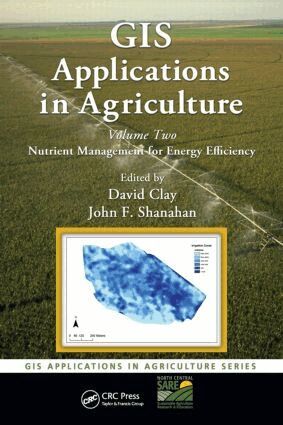
    GIS Applications in Agriculture, Volume Two

    Nutrient Management for Energy Efficiency

    AvDavid E. Clay,John F. Shanahan

    Inbunden, Engelska, 2011

    Del i serien GIS Applications in Agriculture

    2 954 kr

    Beställningsvara. Skickas inom 10-15 vardagar. Fri frakt över 249 kr.

    Beskrivning

    We are entering a new era in production agronomics. Agricultural scientists the world over call for the development of techniques that simultaneously increase soil carbon storage and reduce agriculture’s energy use. In response, site-specific or precision agriculture has become the focus and direction for the three motivating forces that are changing agriculture today: the expanding capacity of personal computers, the molecular biology revolution, and the recent developments in information technology such as the increasing use of geographical information systems (GIS).Using mathematics, technology, and creativity, GIS Applications in Agriculture, Volume Two: Nutrient Management for Energy Efficiency examines the development of nutrient management practices that help producers improve their profitability and energy efficiency. Throughout the book, chapters demonstrate how complex mathematical and spatial modeling approaches can provide the basis for much of our present and certainly our future management practices. Highlighting recent successes and the nuts and bolts associated with implementing the proposed techniques, the book covers energy efficiency calculations, techniques for overcoming yield-limiting factors, soil information collection and analysis, and remote sensing for improving management decisions. It describes the development of an economically optimum site-specific corn plant population equation based on an experiment containing many field sites, the estimation of soil productivity and energy efficiency using online data sources, and the assessment and implementation of site-specific carbon and water management systems, analyzing energy efficiency of compost and manures. Emphasizing the mathematics that will enable producers to make full use of the technological advances made during the 21st century, GIS Applications in Agriculture, Volume Two holds the key to the successful, sustainable, and efficient production of food to feed the ever increasing world population.

    Produktinformation

    • Utgivningsdatum:2011-02-16
    • Mått:156 x 234 x 27 mm
    • Vikt:816 g
    • Format:Inbunden
    • Språk:Engelska
    • Serie:GIS Applications in Agriculture
    • Antal sidor:472
    • Förlag:Taylor & Francis Inc
    • ISBN:9781420092707

    Utforska kategorier

    • Agronomi och lantbruk inom Naturvetenskap och teknik
    • Agronomi inom Naturvetenskap och teknik

    Mer om författaren

    David Clay is professor of Plant Science at South Dakota State University. His research program aims to develop and test sustainable agricultural management systems that enhance environmental quality and maintain rural economies and self sufficiency. John Shanahan is an Agronomy Research Manager with Pioneer Hi-Bred International of Johnston, Iowa. He is responsible for developing and disseminating agronomic recommendations that enable farmers to maximize economic returns while improving nutrient and water use efficiency in crop production.

    Innehållsförteckning

    • Introduction: scale of the problem, impact of nutrient management on energy efficiency, the relationship between energy efficiency and production efficiency. Calculating energy efficiency. Obtaining critical information. Defining field boundaries. Obtaining digital information, remote sensing, soils, yield monitor data. Manure management. P index relationship to energy and water quality efficiency. P management zones. Manure impacts on carbon, N, and water budgets. Water management. Relationship between water and energy efficiency. Water and nutrient management-irrigation planning. Water and nutrient management for ethanol production. Matching crops, landscape positions, and nutrient management. Landscape planning for improved water use efficiency. Legumes and cover crops. Crop residue harvesting impacts. Nitrogen. Relationship between N and energy efficiency. Real-time management vs. mapped management, Remote sensing- Ground-based sensor technology vs. aerial or satellite imagery. Model-based recommendations. Nutrient removal based recommendation. Delta-yield based N recommend.