David E. Clay – författare
Soil Fertility Management in Agroecosystems
332 kr
Skickas inom 5-8 vardagar
Practical Mathematics for Precision Farming
851 kr
Skickas
Precision Agriculture Basics
1 003 kr
Skickas
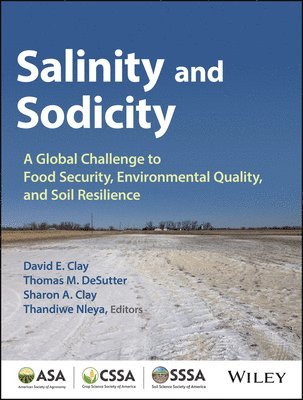
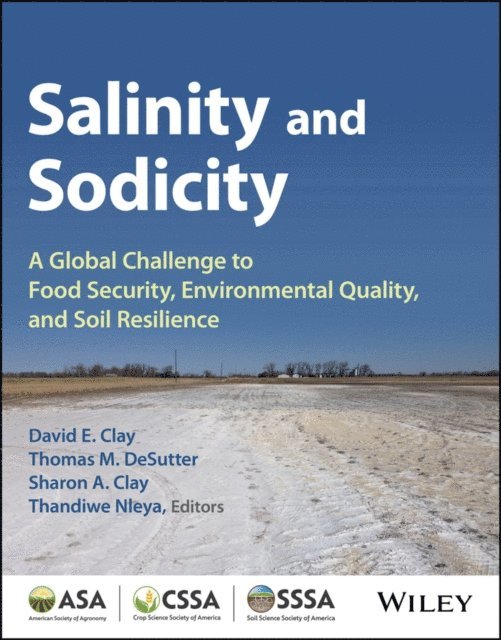
Salinity and Sodicity
A Growing Global Challenge to Food Security, Environmental Quality and Soil Resilience
922 kr
Skickas inom 3-6 vardagar
1 139 kr
Läs direkt efter köp
Explore the growing problem of soil salinity and sodicity and its impact on the environment, profitability, the human population, and soil resilience
In Salinity and Sodicity: A Global Challenge to Food Security, Environmental Quality, and Soil Resilience, a team of distinguished educators delivers an expert discussion of salinity and sodicity management. This book is designed to improve the problem-solving capabilities of students, soil health professionals, certified crop advisors, and other practicing professionals in this area.
In addition to an introduction to the causes of a rapidly growing problem, Salinity and Sodicity explores different measurement techniques, provides answers to common questions, provides potential solutions in a way that’s appropriate for introductory classes on soil salinity and sodicity management. It’s an ideal reference manual for professionals, as well as an effective tool for classrooms and crop advisor workshops.
Readers will also find:
A thorough introduction to the use of supplemental irrigation and the impact of salts on the environmentComprehensive explorations of the economic considerations for farming problematic soilsPractical discussions of the effects of salinity and sodicity on erosion and greenhouse gas emissionsPractical case studies, problem sets, and an instructor answer keyPerfect for undergraduate, graduate, and doctoral students and certified and practicing soil professionals and advisors, Salinity and Sodicity will also benefit industry and academic researchers with an interest in soil salinity and sodicity in dryland regions.
1 139 kr
Läs direkt efter köp
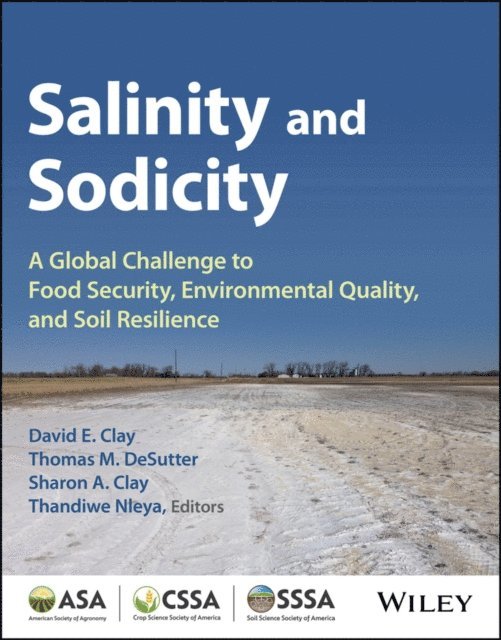
Explore the growing problem of soil salinity and sodicity and its impact on the environment, profitability, the human population, and soil resilience
In Salinity and Sodicity: A Global Challenge to Food Security, Environmental Quality, and Soil Resilience, a team of distinguished educators delivers an expert discussion of salinity and sodicity management. This book is designed to improve the problem-solving capabilities of students, soil health professionals, certified crop advisors, and other practicing professionals in this area.
In addition to an introduction to the causes of a rapidly growing problem, Salinity and Sodicity explores different measurement techniques, provides answers to common questions, provides potential solutions in a way that’s appropriate for introductory classes on soil salinity and sodicity management. It’s an ideal reference manual for professionals, as well as an effective tool for classrooms and crop advisor workshops.
Readers will also find:
A thorough introduction to the use of supplemental irrigation and the impact of salts on the environmentComprehensive explorations of the economic considerations for farming problematic soilsPractical discussions of the effects of salinity and sodicity on erosion and greenhouse gas emissionsPractical case studies, problem sets, and an instructor answer keyPerfect for undergraduate, graduate, and doctoral students and certified and practicing soil professionals and advisors, Salinity and Sodicity will also benefit industry and academic researchers with an interest in soil salinity and sodicity in dryland regions.
Precision Agriculture Basics
906 kr
Kommande
3 329 kr
Läs direkt efter köp
We are entering a new era in production agronomics. Agricultural scientists the world over call for the development of techniques that simultaneously increase soil carbon storage and reduce agriculture’s energy use. In response, site-specific or precision agriculture has become the focus and direction for the three motivating forces that are changing agriculture today: the expanding capacity of personal computers, the molecular biology revolution, and the recent developments in information technology such as the increasing use of geographical information systems (GIS).
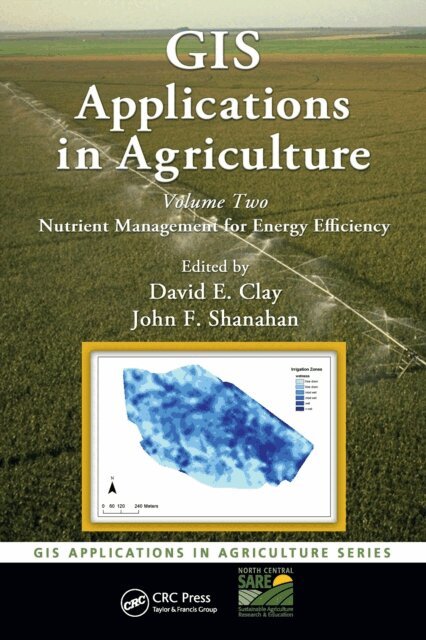
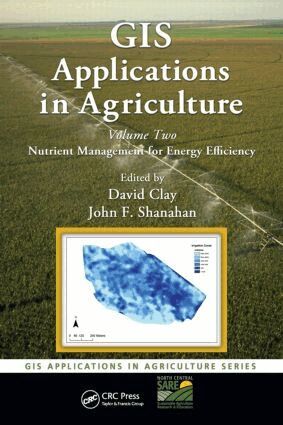
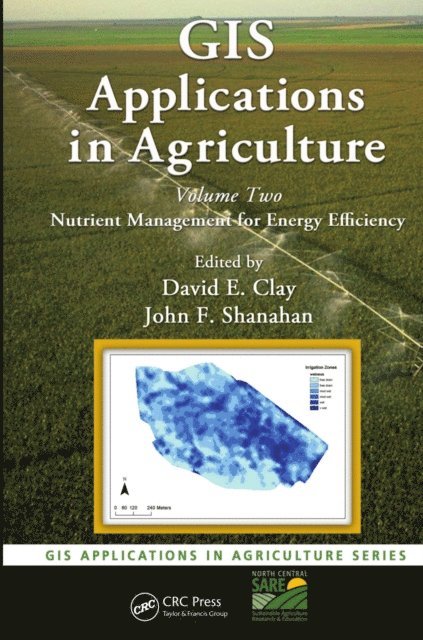
Using mathematics, technology, and creativity, GIS Applications in Agriculture, Volume Two: Nutrient Management for Energy Efficiency examines the development of nutrient management practices that help producers improve their profitability and energy efficiency. Throughout the book, chapters demonstrate how complex mathematical and spatial modeling approaches can providethe basis for much of our present and certainly our future management practices.
Highlighting recent successes and the nuts and bolts associated with implementing the proposed techniques, the book covers energy efficiency calculations, techniques for overcoming yield-limiting factors, soil information collection and analysis, and remote sensing for improving management decisions. It describes the development of an economically optimum site-specific corn plant population equation based on an experiment containing many field sites, the estimation of soil productivity and energy efficiency using online data sources, and the assessment and implementation of site-specific carbon and water management systems, analyzing energy efficiency of compost and manures.
Emphasizing the mathematics that will enable producers to make full use of the technological advances made during the 21st century, GIS Applications in Agriculture, Volume Two holds the key to the successful, sustainable, and efficient production of food to feed the ever increasing world population.
2 934 kr
Skickas inom 10-15 vardagar
1 165 kr
Läs direkt efter köp
We are entering a new era in production agronomics. Agricultural scientists the world over call for the development of techniques that simultaneously increase soil carbon storage and reduce agriculture’s energy use. In response, site-specific or precision agriculture has become the focus and direction for the three motivating forces that are changing agriculture today: the expanding capacity of personal computers, the molecular biology revolution, and the recent developments in information technology such as the increasing use of geographical information systems (GIS).
Using mathematics, technology, and creativity, GIS Applications in Agriculture, Volume Two: Nutrient Management for Energy Efficiency examines the development of nutrient management practices that help producers improve their profitability and energy efficiency. Throughout the book, chapters demonstrate how complex mathematical and spatial modeling approaches can providethe basis for much of our present and certainly our future management practices.
Highlighting recent successes and the nuts and bolts associated with implementing the proposed techniques, the book covers energy efficiency calculations, techniques for overcoming yield-limiting factors, soil information collection and analysis, and remote sensing for improving management decisions. It describes the development of an economically optimum site-specific corn plant population equation based on an experiment containing many field sites, the estimation of soil productivity and energy efficiency using online data sources, and the assessment and implementation of site-specific carbon and water management systems, analyzing energy efficiency of compost and manures.
Emphasizing the mathematics that will enable producers to make full use of the technological advances made during the 21st century, GIS Applications in Agriculture, Volume Two holds the key to the successful, sustainable, and efficient production of food to feed the ever increasing world population.