• Fri frakt över 249 kr
  • •
  • Snabba leveranser
  • •
  • Billiga böcker
Kundservice

Du är på sajten för privatpersoner.

Företag, bibliotek eller offentlig verksamhet?

Du handlar på classic.bokus.com, där alla dina funktioner finns intakta.
Till classic.bokus.com
Bokus logotyp. Gå till startsidan.
  • Erbjudanden
  • Nyheter
  • Student
  • Topplistor
  • Barn & ungdom
  • Bokus Play
  • E-böcker
  • Pocketböcker
  • Spel & pussel

10% studentrabatt med kod TERM26

Sidfot

Mina sidor

    Hjälp

    • Kundservice
    • Vanliga frågor och svar
    • Frakt och leverans
    • Retur vid ångerrätt
    • Reklamera vara
    • Betalning
    • Köpvillkor
    • Allmänna villkor
    • Information om webbplatsens tillgänglighet

    Om Bokus

    • Om oss
    • Pressrum
    • För studenter
    • För företag
    • För bibliotek och offentlig verksamhet
    • För leverantörer
    • Hållbarhet

    Populärt

    • Aktuella erbjudanden
    • Presentkort
    • Studentlitteratur
    • Nya böcker
    • Topplistor
    • Signerade böcker
    • Engelska böcker

    Inspiration

    • Boktips
    • BookTok
    • Populära bokserier
    • Barnbokskaraktärer
    • Populära författare
    Logotyp för Bokus
    Följ oss på Facebook (extern länk)Följ oss på Instagram (extern länk)Följ oss på YouTube (extern länk)Följ oss på TikTok (extern länk)
    bokus @ CookiesAnpassa cookiesIntegritetspolicyKöpvillkor
    Till Citymail hemsida (extern länk)Till Budbee hemsida (extern länk)Till Postnord hemsida (extern länk)Till Schenker hemsida (extern länk)Till Early Bird hemsida (extern länk)Till Walleys hemsida (extern länk)
    1. Naturvetenskap och teknik
    2. Matematik och naturvetenskap
    3. Biologi

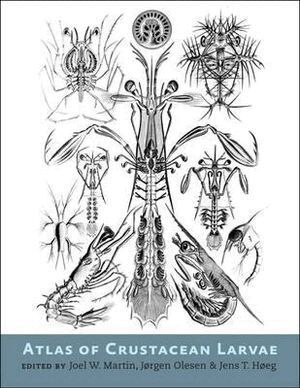
    Atlas of Crustacean Larvae

    AvJoel W. Martin,Jørgen Olesen

    Inbunden, Engelska, 2014

    1 213 kr

    Tillfälligt slut

    Beskrivning

    Crustaceans - familiar to the average person as shrimp, lobsters, crabs, krill, barnacles, and their many relatives-are easily one of the most important and diverse groups of marine life. Poorly understood, they are among the most numerous invertebrates on earth. Most crustaceans start life as eggs and move through a variety of morphological phases prior to maturity. In Atlas of Crustacean Larvae, more than 45 of the world's leading crustacean researchers explain and illustrate the beauty and complexity of the many larval life stages. Revealing shapes that are reminiscent of aliens from other worlds - often with bizarre modifications for a planktonic life or for parasitization, including (in some cases) bulging eyes, enormous spines, and aids for flotation and swimming - the abundant illustrations and photographs show the detail of each morphological stage and allow for quick comparisons. The diversity is immediately apparent in the illustrations: spikes that deter predators occur on some larvae, while others bear unique specializations not seen elsewhere, and still others appear as miniature versions of the adults.Small differences in anatomy are shown to be suited to the behaviors and survival mechanisms of each species. Destined to become a key reference for specialists and students and a treasured book for anyone who wishes to understand "the invertebrate backbone of marine ecosystems," Atlas of Crustacean Larvae belongs on the shelf of every serious marine biologist.

    Produktinformation

    • Utgivningsdatum:2014-08-26
    • Mått:216 x 279 x 29 mm
    • Vikt:1 678 g
    • Format:Inbunden
    • Språk:Engelska
    • Antal sidor:384
    • Förlag:Johns Hopkins University Press
    • ISBN:9781421411972
    • Utmärkelser:Winner of CHOICE Outstanding Academic Title 2015 (United States)

    Utforska kategorier

    • Biologi inom Naturvetenskap och teknik
    • Vattendjur inom Djur och Natur

    Mer om författaren

    Joel W. Martin is chief of the Division of Invertebrate Studies and curator of crustacea at the Natural History Museum of Los Angeles County. Jorgen Olesen is an associate professor and curator of crustacea at the Zoological Museum of the University of Copenhagen. Jens T. Hoeg is an associate professor of biology at the University of Copenhagen.

    Recensioner i media

    This welcome addition to the crustacean literature compiles, for the first time, descriptions and figures of larvae from all the different groups of crustaceans. Many are exquisite, never-before published scanning electron micrographs or light microscope photographs... One especially helpful feature is a table clarifying the many different (and often confusing) terms that have been used for the larvae of crabs and shrimps. This book is an essential reference, valuable for any natural history library. Choice The volume not only has the intended first-rate scientific rigor, but will also serve as a fetching and stimulating embellishment for the biologists' office desk or even home coffee table... This volume will be the definitive work on crustacean larvae for some time to come, and it will surely find its place in the libraries of academic institutions, museums, and many biologists. For the price, Atlas of Crustacean Larvae is truly a bargain. -- Raymond T. Bauer Quarterly Review of Biology

    Innehållsförteckning

    • Acknowledgments 1 Introduction 2 The Crustacean Nauplius 3 Fossil Larvae (Head Larvae, Nauplii, and Others) from the Cambrian in Orsten Preservation 4 Introduction to the Branchiopoda5 Anostraca 6 Uniquely Preserved Fossil Larvae, Some with Branchiopod Affinities, from the Devonian: The Rhynieand Windyfield Cherts 7 Notostraca 8 Laevicaudata 9 Spinicaudata 10 Cyclestherida 11 Cladocera: Anomopoda 12 Cladocera: Ctenopoda 13 Cladocera: Haplopoda 14 Cladocera: Onychopoda 15 Remipedia 16 Cephalocarida 17 Introduction to the Thecostraca 18 Facetotecta 19 Ascothoracida 20 Acrothoracica 21 Rhizocephala 22 Thoracica 23 Tantulocarida 24 Branchiura 25 Pentastomida 26 Mystacocarida 27 Copepoda 28 Introduction to the Ostracoda 29 Ostracoda: Podocopa30 Ostracoda: Myodocopa 31 Introduction to the Malacostraca 32 Fossil Malacostracan Larvae 33 Leptostraca 34 Stomatopoda 35 Syncarida 36 Introduction to the Peracarida 37 Thermosbaenacea, Spelaeogriphacea, and "Mictacea" 38 Lophogastrida and Mysida 39 Amphipoda 40 Isopoda and Tanaidacea 41 Cumacea 42 Introduction to the Eucarida 43 Euphausiacea 44 Amphionidacea45 Introduction to the Decapoda46 Dendrobranchiata 47 Stenopodidea 48 Caridea 49 Astacidea 50 Gebiidea and Axiidea (= Thalassinidea) 51 Achelata 52 Polychelida 53 Anomura 54 Brachyura 55 Summary and Synopsis GlossaryReferencesIndex