• Fri frakt över 249 kr
  • •
  • Snabba leveranser
  • •
  • Billiga böcker
Kundservice

Du är på sajten för privatpersoner.

Företag, bibliotek eller offentlig verksamhet?

Du handlar på classic.bokus.com, där alla dina funktioner finns intakta.
Till classic.bokus.com
Bokus logotyp. Gå till startsidan.
  • Erbjudanden
  • Nyheter
  • Student
  • Topplistor
  • Barn & ungdom
  • Bokus Play
  • E-böcker
  • Pocketböcker
  • Spel & pussel

10% rabatt på allt med kod NYSTART10 →

Sidfot

Mina sidor

    Hjälp

    • Kundservice
    • Vanliga frågor och svar
    • Frakt och leverans
    • Retur vid ångerrätt
    • Reklamera vara
    • Betalning
    • Köpvillkor
    • Allmänna villkor
    • Information om webbplatsens tillgänglighet

    Om Bokus

    • Om oss
    • Pressrum
    • För studenter
    • För företag
    • För bibliotek och offentlig verksamhet
    • För leverantörer
    • Hållbarhet

    Populärt

    • Aktuella erbjudanden
    • Presentkort
    • Studentlitteratur
    • Nya böcker
    • Topplistor
    • Signerade böcker
    • Engelska böcker

    Inspiration

    • Boktips
    • BookTok
    • Populära bokserier
    • Barnbokskaraktärer
    • Populära författare
    Logotyp för Bokus
    Följ oss på Facebook (extern länk)Följ oss på Instagram (extern länk)Följ oss på YouTube (extern länk)Följ oss på TikTok (extern länk)
    bokus @ CookiesAnpassa cookiesIntegritetspolicyKöpvillkor
    Till Citymail hemsida (extern länk)Till Budbee hemsida (extern länk)Till Postnord hemsida (extern länk)Till Schenker hemsida (extern länk)Till Early Bird hemsida (extern länk)Till Walleys hemsida (extern länk)
    1. Samhälle och politik
    2. Samhälle och kultur
    3. Kultur och medier
    4. Referensverk och tvärvetenskap

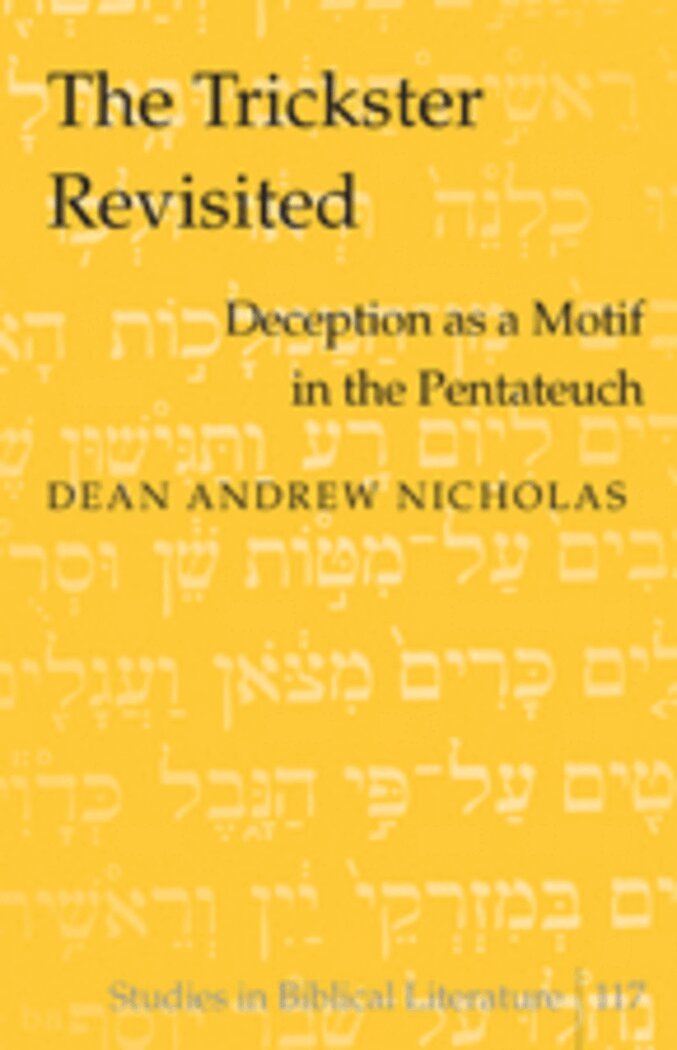
    Trickster Revisited

    Deception as a Motif in the Pentateuch

    AvDean Andrew Nicholas

    Inbunden, Engelska, 2009

    Del 117 i serien Studies in Biblical Literature

    995 kr

    Beställningsvara. Skickas inom 5-8 vardagar. Fri frakt över 249 kr.

    Beskrivning

    The Trickster Revisited: Deception as a Motif in the Pentateuch explores the use of deception in the Pentateuch and uncovers a new understanding of the trickster’s function in the Hebrew Bible. While traditional readings often «whitewash» the biblical characters, exonerating them of any wrongdoing, modern scholars often explain these tales as significant at some earlier point in Israelite tradition. But this study asks the question: what role does the trickster have in the later pentateuchal setting? Considering the work of Victor Turner and the mythic function of the trickster, The Trickster Revisited explores the connections between tricksters, the rite de passage pattern, marginalization, and liminality. Marginalized individuals and communities often find trickster tales significant, therefore trickster stories often follow a similar literary pattern. After tracing this pattern throughout the Pentateuch, specifically the patriarchal narratives and Moses’ interaction with Pharaoh in the Exodus, the book discusses the meaning these stories had for the canonizers of the Pentateuch. The author argues that in the Exile and post-exilic period, as the canon was forming, the trickster was the perfect manifestation of Israel’s self-perception. The cognitive dissonance of prophetic words of hope and grandeur, in light of a meager socio-economic and political reality, caused the nation to identify itself as the trickster. In this way, Israel could explain its lowly state as a temporary (but still significant) «betwixt and between», on the threshold of a rise in status, i.e. the great imminent kingdom predicted by the prophets.

    Produktinformation

    • Utgivningsdatum:2009-03-31
    • Mått:160 x 230 x 14 mm
    • Vikt:420 g
    • Format:Inbunden
    • Språk:Engelska
    • Serie:Studies in Biblical Literature
    • Antal sidor:129
    • Förlag:Peter Lang Publishing Inc
    • ISBN:9781433102264

    Utforska kategorier

    • Referensverk och tvärvetenskap inom Samhälle och politik
    • Sociala och etiska frågor inom Samhälle och politik
    • Religion: allmänt inom Filosofi och religion

    Mer om författaren

    The Author: Dean Andrew Nicholas received his Ph.D. from the Hebrew Union College-Jewish Institute of Religion in Cincinnati, Ohio in the field of Bible and Ancient Near East studies. He teaches Bible, Hebrew, and World Religions at Cincinnati Hills Christian Academy, where he is currently Principal of the Upper School.

    Recensioner i media

    «Dean Nicholas’ creative and original work is a fine interdisciplinary effort, and also a good illustration of the interplay between synchronic and diachronic methods in biblical studies. Instead of treating biblical tricksters as a purely literary phenomenon, Nicholas asks two probing questions: what does cross-cultural study reveal about the social function of the trickster? And what cultural and historical circumstances would induce the Israelites to valorize trickster-heroes? Nicholas has conducted a thorough survey of anthropological literature on tricksters, which he applies to the biblical narratives under consideration. He develops a model derived from Victor Turner’s work on the rite de passage, correlating its tripartite pattern with the mythic function of the trickster. He then examines several biblical narratives to determine whether or not they conform to the pattern. Careful analysis shows that Pentateuchal narratives do, while deuteronomistic narratives do not. This striking conclusion is complemented by Nicholas’s discernment of previously unrecognized trickster motifs in the opening chapters of the book of Exodus. In accounting for the pervasiveness of the Turnerian trickster in Pentateuchal narrative, Nicholas rejects the view of the pattern as a vestige of a bygone era or a manifestation of primitive mentality. Instead, he argues that the redaction of the Pentateuch itself must be associated with a situation in which Israel found itself marginalized, and thus identified with the trickster. During the Exile and in the post-exilic period, as the biblical canon was in formation, the trickster motif was an apt expression of Israel’s self-definition. According to Nicholas, the cognitive dissonance induced by grand prophetic promises contrasted with pathetic reality induced the people to see themselves as tricksters, caught ‘betwixt and between’, always on the threshold of better things that were just out of reach. His arguments merit the attention of all serious students of biblical literature.» (Elaine Ravich, Professor of Jewish Studies and Provost, Jewish Theological Seminary; Professor of Bible, Union Theological Seminary)