• Fri frakt över 249 kr
  • •
  • Snabba leveranser
  • •
  • Billiga böcker
Kundservice

Du är på sajten för privatpersoner.

Företag, bibliotek eller offentlig verksamhet?

Du handlar på classic.bokus.com, där alla dina funktioner finns intakta.
Till classic.bokus.com
Bokus logotyp. Gå till startsidan.
  • Erbjudanden
  • Nyheter
  • Student
  • Topplistor
  • Barn & ungdom
  • Bokus Play
  • E-böcker
  • Pocketböcker
  • Spel & pussel

10% rabatt på allt med kod: NYSTART10 →

Sidfot

Mina sidor

    Hjälp

    • Kundservice
    • Vanliga frågor och svar
    • Frakt och leverans
    • Retur vid ångerrätt
    • Reklamera vara
    • Betalning
    • Köpvillkor
    • Allmänna villkor
    • Information om webbplatsens tillgänglighet

    Om Bokus

    • Om oss
    • Pressrum
    • För studenter
    • För företag
    • För bibliotek och offentlig verksamhet
    • För leverantörer
    • Hållbarhet

    Populärt

    • Aktuella erbjudanden
    • Presentkort
    • Studentlitteratur
    • Nya böcker
    • Topplistor
    • Signerade böcker
    • Engelska böcker

    Inspiration

    • Boktips
    • BookTok
    • Populära bokserier
    • Barnbokskaraktärer
    • Populära författare
    Logotyp för Bokus
    Följ oss på Facebook (extern länk)Följ oss på Instagram (extern länk)Följ oss på YouTube (extern länk)Följ oss på TikTok (extern länk)
    bokus @ CookiesAnpassa cookiesIntegritetspolicyKöpvillkor
    Till Citymail hemsida (extern länk)Till Budbee hemsida (extern länk)Till Postnord hemsida (extern länk)Till Schenker hemsida (extern länk)Till Early Bird hemsida (extern länk)Till Walleys hemsida (extern länk)
    1. Historia och arkeologi
    2. Historia
    3. Europas historia

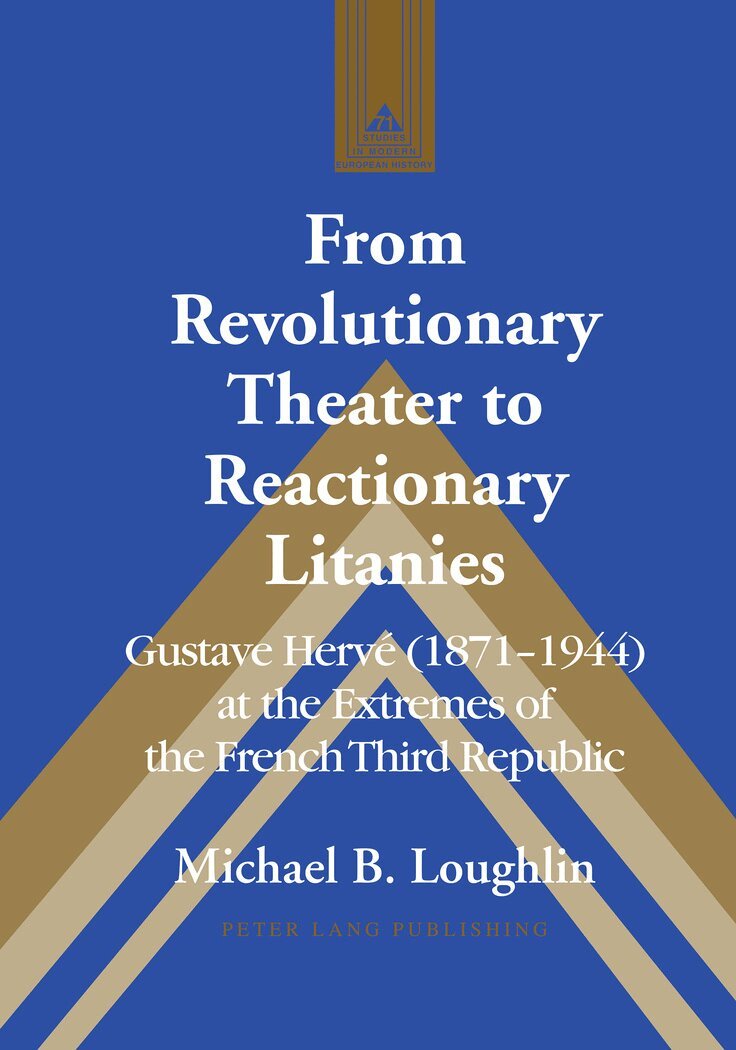
    From Revolutionary Theater to Reactionary Litanies

    Gustave Hervé (1871–1944) at the Extremes of the French Third Republic

    AvMichael B. Loughlin

    Inbunden, Engelska, 2016

    Del 71 i serien Studies in Modern European History

    1 798 kr

    Beställningsvara. Skickas inom 5-8 vardagar. Fri frakt över 249 kr.

    Beskrivning

    Gustave Hervé (1871–1944) seemed to have traditional Breton roots and a typical republican education. As a young socialist journalist and professor, he gained notoriety following a 1901 article which appeared to plant the tricolor in a dung pile. When French socialists unified in 1905, the Hervéistes were an influential minority. The antimilitarist movement called Hervéism gradually emerged as a quixotic crusade to unite revolutionaries against war and for socialism. Hervé soon founded a weekly newspaper, La Guerre Sociale. Over the next six years, press campaigns, trials, prison, demonstrations, strikes, and conspiratorial organizations maintained Hervé’s profile and sold newspapers. Ironically, Hervé advertised conspiracies, which suggests revolutionary theater more than practical politics. Among Hervé’s rivals, such theatrics often generated resentment. While Hervé’s movement succeeded as a media experience, his leftist competitors became jealous and skeptical. As revolutionary theater Hervéism might have been entertaining, but the actors and some of the audience often confused revolutionary art with political reality. By 1911 the ingenuous Hervé felt betrayed. His failure to unite revolutionaries began an evolution toward the nation and its traditional Catholic faith. Besides the international situation, one crucial determinant in Hervé’s evolution toward French national socialism sympathetic to fascism involved ongoing rivalries within the French Left. Hervé’s marginal interwar national socialist parties sought to employ patriotism and religion to solve French problems. By 1935 he attempted to draft Pétain to lead an authoritarian republic. Gradually losing hope in Pétain after the fall of France, the aging Hervé put his faith in Christian socialism.

    Produktinformation

    • Utgivningsdatum:2016-07-04
    • Mått:155 x 230 x 68 mm
    • Vikt:1 890 g
    • Format:Inbunden
    • Språk:Engelska
    • Serie:Studies in Modern European History
    • Antal sidor:880
    • Förlag:Peter Lang Publishing Inc
    • ISBN:9781433131004

    Utforska kategorier

    • Europas historia inom Historia och arkeologi
    • Politiska ideologier och rörelser inom Samhälle och politik
    • Statsskick och politiska processer inom Samhälle och politik

    Mer om författaren

    Michael B. Loughlin has taught history and political science at Ohio Northern University for the past 27 years. At ONU Loughlin represented the university on the World Affairs Council of Greater Cincinnati until 2007 and since 1996 as coordinator for Phi Beta Delta, whose ONU chapter has won several regional and national awards in the past decade. During that time he has continued his research on Gustave Hervé and published several articles in The Journal of Contemporary History, European Review of History/Revue Européenne D’Histoire, the Proceedings of the Western Society for French History, and Beregynia. 777. Owl: The Journal. Loughlin’s research has been constantly expanded since his PhD dissertation «The Political Transformation of Gustave Hervé, 1871–1944», completed at Indiana University in 1987 under the direction of William B. Cohen.

    Recensioner i media

    «Michael B. Loughlin’s work on Hervé demonstrates the nuances of current research on fascism which suggests that fascism derived from multiple sources and was far from monolithic, especially in France. Hervé tried out different ideas that were part of a shifting nexus of fascist ideological tenets and he seems to have shown up at different points on the fascist spectrum depending on the time and the issue. Following Hervé’s meandering demonstrates that the key question may not be whether or not he was fascist, but how inconsistent the influence of fascism could be. At the same time it shows how seductive aspects of it were to intellectuals of the day.» (Samuel Huston GoodfellowWestminster College, Fulton, Missouri)«It was a real eye-opener…to see how deep and intense the internal struggles within what I called the enragé element (the militant, anti-parliamentary left) really were, and how those divisions played out over the course of the Aernoult-Rousset Affair. [Michael B. Loughlin’s] description of the Aernoult funeral obsequies is vivid…and in fact very moving. All in all, I think the chapter [on the Aernoult-Rousset Affair] provides a fine, valuable addition to the literature on the Aernoult-Rousset Affair, and I’m sure your book will provide an equally fine addition to the literature on Hervé himself.» (John J. CerulloUniversity of New Hampshire)

    Innehållsförteckning

    • Contents: «Un Breton de Bretagne Bretonnante» «Le Drapeau dans le Fumier» – «Un Commis Voyageur Du Socialisme» – L’Association Internationale Antimilitariste and L’Affiche Rouge of 1905 – The Foundation of La Guerre Sociale: Activist Journalism or Revolutionary Theater? – Journalists and Prisoners: Hervé and the Staff at La Guerre Sociale – The Midi Crisis, the Socialist Congresses at Nancy and Stuttgart and the First Campaigns – The Draveil-Villeneuve-Saint-Georges Strike and Demonstrations – The Postal Strikes of 1909, the Francisco Ferrer Affair, and the Liabeuf Affair – Le Parti Révolutionnaire and Le Comité Révolutionnaire Antiparlementaire (C.R.A.) – The Railroad Strike of 1910 and the Origins of Le Retournement – The Aernoult-Rousset Affair – Les Jeunes Gardes Révolutionnaires (J.G.R.) and Le Service de Sûreté Révolutionnaire (S.S.R.) – La Rectification du Tir and Le Nouvel Hervéisme – From «La Bataille de la Salle Wagram» Until the July Crisis – La Grande Guerre: Gustave Hervé and the Origins of a French National Socialism – The Postwar Crisis in France – Le Parti Socialiste National of 1919 – De-population and De-Christianization – La Victoire and Its Director During the Interwar: Plus Ça Change Plus Ça La Même Chose – Financial and Circulation Problems at La Victoire – Le Parti de la République Autoritaire – The Reawakened Parti Socialiste National and the Elections of 1928 – The Syndicats Unionistes and the Milice Socialiste National – Interwar Foreign Policy: The Increasingly Turbulent Eye Between Two Storms – Gustave Hervé and Anti-Semitism – The Stavisky Affair and the Events of February 6, 1934 – C’est Pétain qu’il nous faut! – The Popular Front and Hervé’s Return to His Ancestral Faith – Hervé’s Interwar Reactions to Fascism and Nazism – Hervé, World War II, and Vichy.