• Fri frakt över 249 kr
  • •
  • Snabba leveranser
  • •
  • Billiga böcker
Kundservice

Du är på sajten för privatpersoner.

Företag, bibliotek eller offentlig verksamhet?

Du handlar på classic.bokus.com, där alla dina funktioner finns intakta.
Till classic.bokus.com
Bokus logotyp. Gå till startsidan.
  • Erbjudanden
  • Nyheter
  • Student
  • Topplistor
  • Barn & ungdom
  • Bokus Play
  • E-böcker
  • Pocketböcker
  • Spel & pussel

10% rabatt på allt med kod: NYSTART10 →

Sidfot

Mina sidor

    Hjälp

    • Kundservice
    • Vanliga frågor och svar
    • Frakt och leverans
    • Retur vid ångerrätt
    • Reklamera vara
    • Betalning
    • Köpvillkor
    • Allmänna villkor
    • Information om webbplatsens tillgänglighet

    Om Bokus

    • Om oss
    • Pressrum
    • För studenter
    • För företag
    • För bibliotek och offentlig verksamhet
    • För leverantörer
    • Hållbarhet

    Populärt

    • Aktuella erbjudanden
    • Presentkort
    • Studentlitteratur
    • Nya böcker
    • Topplistor
    • Signerade böcker
    • Engelska böcker

    Inspiration

    • Boktips
    • BookTok
    • Populära bokserier
    • Barnbokskaraktärer
    • Populära författare
    Logotyp för Bokus
    Följ oss på Facebook (extern länk)Följ oss på Instagram (extern länk)Följ oss på YouTube (extern länk)Följ oss på TikTok (extern länk)
    bokus @ CookiesAnpassa cookiesIntegritetspolicyKöpvillkor
    Till Citymail hemsida (extern länk)Till Budbee hemsida (extern länk)Till Postnord hemsida (extern länk)Till Schenker hemsida (extern länk)Till Early Bird hemsida (extern länk)Till Walleys hemsida (extern länk)
    1. Naturvetenskap och teknik
    2. Geovetenskap
    3. Miljövetenskap och miljöpolitik

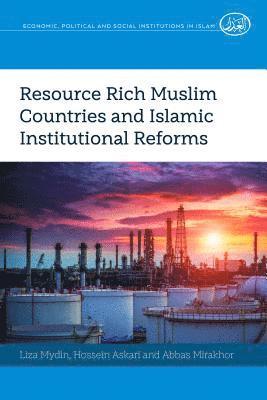
    Resource Rich Muslim Countries and Islamic Institutional Reforms

    AvLiza Mydin,Hossein Askari

    Inbunden, Engelska, 2018

    Del 1 i serien Economic, Political and Social Institutions in Islam

    1 137 kr

    Beställningsvara. Skickas inom 5-8 vardagar. Fri frakt över 249 kr.

    Beskrivning

    Resource Rich Muslim Countries and Islamic Institutional Reforms explores the "resource curse," a condition in which a country’s abundance of natural resources is negatively linked with the country’s development and economic growth, in resource rich Muslim countries. The resource curse puzzle has been studied for over twenty years, with prior researchers looking to prove its existence and explore its causes. Recent studies have begun to indicate institutional failure as a likely cause of the curse, as wealth of resources tends to cause counterproductive behaviors such as rent-seeking, patronage and corruption. The subpar economic performance of resource rich Muslim countries in the Organization of the Islamic Cooperation (OIC) could be attributed to the manifestation of a resource curse. Collectively, the member countries of the OIC contribute over 9% of the world’s total GDP with 22.8% of the world’s population. Saudi Arabia and the United Arab Emirates alone contribute about 17% of world oil production. Resource rich Muslim countries should be at the forefront of economic performance and growth, yet we see the opposite when we compare the performance of these countries to countries that are not resource rich (such as Spain, France, Hong Kong and Japan). Through an analysis of sample countries, the authors have discovered that natural resources exert a drag on the countries’ economic growth, thereby indicating the presence of the resource curse. Their research also found weaknesses in the quality of institutions as the cause of the curse. To counteract the negative effects of the resource curse in resource rich Muslim countries, the authors provide a number of Islamic institutional reforms.

    Produktinformation

    • Utgivningsdatum:2018-03-27
    • Mått:150 x 225 x 18 mm
    • Vikt:355 g
    • Format:Inbunden
    • Språk:Engelska
    • Serie:Economic, Political and Social Institutions in Islam
    • Antal sidor:172
    • Förlag:Peter Lang Publishing Inc
    • ISBN:9781433143519

    Utforska kategorier

    • Miljövetenskap och miljöpolitik inom Naturvetenskap och teknik

    Mer om författaren

    Liza Mydin holds a PhD in Islamic finance from the International Centre for Education in Islamic Finance (INCEIF), Malaysia, and is currently Head of Research and Advisory at Maybank Islamic, Malaysia. Dr. Mydin was previously in the Global Islamic Finance Advisory Unit of PricewaterhouseCoopers and afterwards joined Al Rajhi Bank Malaysia as Vice President of Compliance in 2010. In 2016, she was a visiting scholar at the George Washington University and was involved in conducting post-doctoral research for the Islamicity Index Project.Hossein Askari is Iran Professor of International Business and International Affairs at the George Washington University. He served for two-and-a-half years on the executive board of the International Monetary Fund and was Special Advisor to the Minister of Finance of Saudi Arabia. During the mid-1980s, he was the director of the team that developed the first comprehensive domestic, regional and international energy models and plan for Saudi Arabia.Abbas Mirakhor is a retired Professor of Economics and Finance. He was the first Chair of Islamic Finance at the International Centre for Education in Islamic Finance (INCEIF), Malaysia. Prior to that, he worked at the International Monetary Fund for twenty-four years, where he was a member of the staff, later a member of the executive board and finally Dean of the Executive Board.

    Innehållsförteckning

    • Illustrations – Latifah Merican Cheong: Foreword – Preface – Acknowledgments – Abbreviations – The OIC Countries – The Resource Curse—Theory, Explanations and its Reversal – Resource Curse in OIC Countries: The Role of Institutions – Theories of Institutions – Addressing the Resource Curse through an Ideal Islamic Institutional Framework – Policy Assessment: Saudi Arabia, Malaysia and Qatar – Summary, Conclusions and Looking Ahead – Index.