Dariush Zahedi – författare
Visar alla böcker från författaren Dariush Zahedi. Handla med fri frakt och snabb leverans.
5 produkter
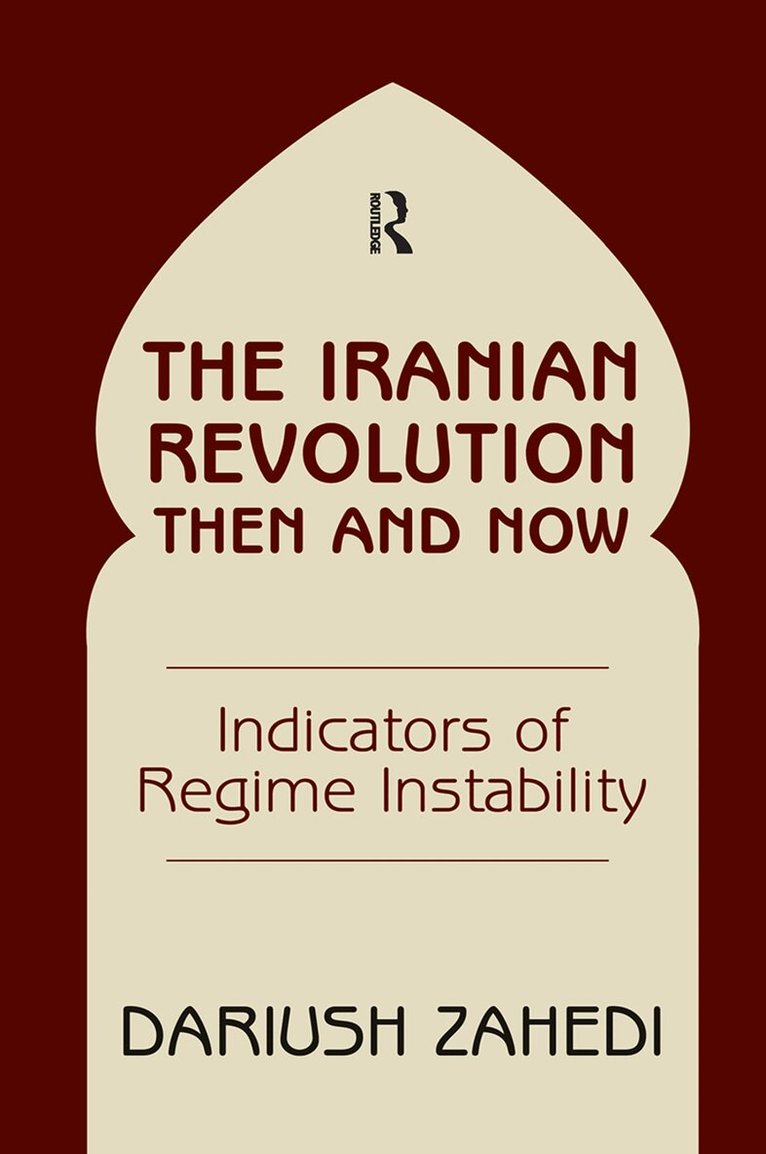
Iranian Revolution Then And Now
Indicators Of Regime Instability
Inbunden, 2019
2504 kr
Lägg i varukorg
In The Iranian Revolution Then and Now, Dariush Zahedi assesses the Islamic Republic's potential for revolution through an in-depth, theoretically informed, comparative analysis of the present with 1979 pre-Revolutionary Iran. Zahedi discusses how the potential for a revolutionary coup is based on …
Iranian Revolution Then And Now
Indicators Of Regime Instability
E-bok, 2018
910 kr
Lägg i varukorg
In The Iranian Revolution Then and Now , Dariush Zahedi assesses the Islamic Republic''s potential for revolution through an in-depth, theoretically informed, comparative analysis of the present with 1979 pre-Revolutionary Iran. Zahedi discusses how the potential for a revolutionary coup is based …
Iranian Revolution Then And Now
Indicators Of Regime Instability
E-bok, 2018
910 kr
Lägg i varukorg
In The Iranian Revolution Then and Now , Dariush Zahedi assesses the Islamic Republic''s potential for revolution through an in-depth, theoretically informed, comparative analysis of the present with 1979 pre-Revolutionary Iran. Zahedi discusses how the potential for a revolutionary coup is based …
Iranian Revolution Then And Now
Indicators Of Regime Instability
Häftad, 2001
770 kr
Lägg i varukorg
In The Iranian Revolution Then and Now, Dariush Zahedi assesses the Islamic Republic's potential for revolution through an in-depth, theoretically informed, comparative analysis of the present with 1979 pre-Revolutionary Iran. Zahedi discusses how the potential for a revolutionary coup is based on …
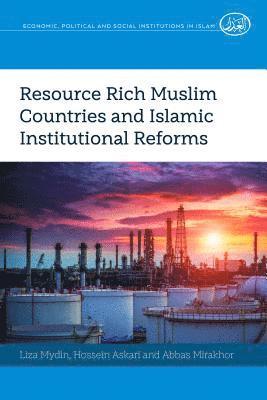
Resource Rich Muslim Countries and Islamic Institutional Reforms
Av Liza Mydin, Hossein Askari m. fl.
Inbunden, 2018
1173 kr
Lägg i varukorg
Resource Rich Muslim Countries and Islamic Institutional Reforms explores the "resource curse," a condition in which a country’s abundance of natural resources is negatively linked with the country’s development and economic growth, in resource rich Muslim countries. The resource curse puzzle has …