• Fri frakt över 249 kr
  • •
  • Snabba leveranser
  • •
  • Billiga böcker
Kundservice

Du är på sajten för privatpersoner.

Företag, bibliotek eller offentlig verksamhet?

Du handlar på classic.bokus.com, där alla dina funktioner finns intakta.
Till classic.bokus.com
Bokus logotyp. Gå till startsidan.
  • Erbjudanden
  • Nyheter
  • Student
  • Topplistor
  • Barn & ungdom
  • Bokus Play
  • E-böcker
  • Pocketböcker
  • Spel & pussel

10% rabatt på allt med kod: NYSTART10 →

Sidfot

Mina sidor

    Hjälp

    • Kundservice
    • Vanliga frågor och svar
    • Frakt och leverans
    • Retur vid ångerrätt
    • Reklamera vara
    • Betalning
    • Köpvillkor
    • Allmänna villkor
    • Information om webbplatsens tillgänglighet

    Om Bokus

    • Om oss
    • Pressrum
    • För studenter
    • För företag
    • För bibliotek och offentlig verksamhet
    • För leverantörer
    • Hållbarhet

    Populärt

    • Aktuella erbjudanden
    • Presentkort
    • Studentlitteratur
    • Nya böcker
    • Topplistor
    • Signerade böcker
    • Engelska böcker

    Inspiration

    • Boktips
    • BookTok
    • Populära bokserier
    • Barnbokskaraktärer
    • Populära författare
    Logotyp för Bokus
    Följ oss på Facebook (extern länk)Följ oss på Instagram (extern länk)Följ oss på YouTube (extern länk)Följ oss på TikTok (extern länk)
    bokus @ CookiesAnpassa cookiesIntegritetspolicyKöpvillkor
    Till Citymail hemsida (extern länk)Till Budbee hemsida (extern länk)Till Postnord hemsida (extern länk)Till Schenker hemsida (extern länk)Till Early Bird hemsida (extern länk)Till Walleys hemsida (extern länk)
    1. Psykologi och pedagogik
    2. Psykologi
    3. Socialpsykologi och gruppsykologi

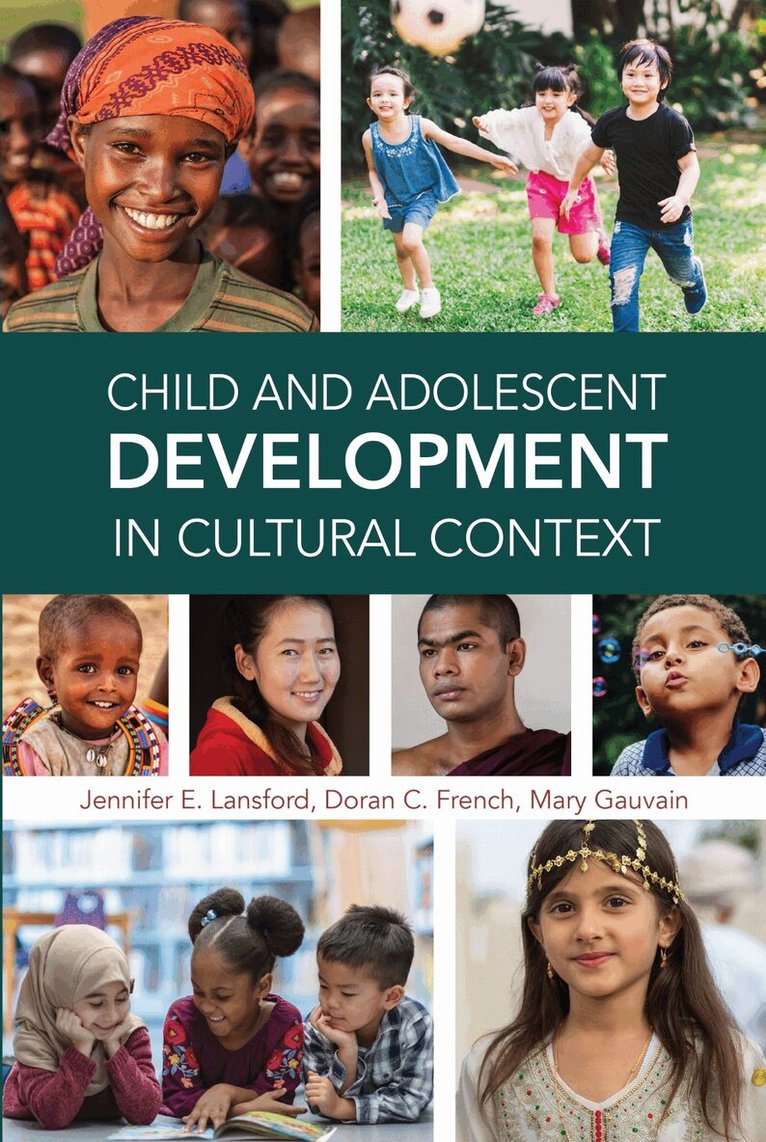
    Child and Adolescent Development in Cultural Context

    AvJennifer E. Lansford,Doran C. French

    Häftad, Engelska, 2021

    832 kr

    Beställningsvara. Skickas inom 5-8 vardagar. Fri frakt över 249 kr.

    Beskrivning

    Human development doesn amp rsquo t occur in a vacuum. Rather, it is deeply rooted in, and affected by, culture.This textbook examines how culture affects several domains of development, including cognition, emotion, sociolinguistics, peer relationships, family relationships, and more. The chapters highlight differences between amp ldquo WEIRD amp rdquo cultures (Western, educated, and from industrialized, rich, and democratic countries) and non-WEIRD cultures, as well as differences with respect to gender, race/ethnicity, socioeconomic status, and other identity markers. Each chapter draws upon a large research base and highlights specific studies to engage students, illustrate key points, and convey the role of empirical research in psychology. As a result, students will learn that the development of behavior, values, social relationships, ways of seeing the world, language, and thought processes cannot be understood separate from culture.

    Produktinformation

    • Utgivningsdatum:2021-03-23
    • Mått:178 x 254 x 24 mm
    • Vikt:758 g
    • Format:Häftad
    • Språk:Engelska
    • Antal sidor:404
    • Förlag:American Psychological Association
    • ISBN:9781433833038

    Utforska kategorier

    • Socialpsykologi och gruppsykologi inom Psykologi och pedagogik
    • Barnpsykologi och utvecklingspsykologi inom Psykologi och pedagogik

    Mer om författaren

    Jennifer E. Lansford is a Research Professor at the Sanford School of Public Policy and Faculty Fellow of the Center for Child and Family Policy at Duke University. She earned her PhD in developmental psychology from the University of Michigan. Dr. Lansford leads the Parenting Across Cultures Project, a longitudinal study of mothers, fathers, and children from China, Colombia, Italy, Jordan, Kenya, Philippines, Sweden, Thailand, and the United States. She has consulted for UNICEF on the evaluation of parenting programs in several low- and middle-income countries and on the development of a set of international standards for parenting programs. Doran C. French is a Professor at the Department of Child Development and Family Studies at Purdue University. He earned his PhD in child psychology from the Institute of Child Development at the University of Minnesota. His research focuses on child and adolescent social competence with an emphasis on peer relationships (social status, popularity, friendship, social networks), conflict, developmental psychology (substance use, aggression, and loneliness), and Islam and child development. His work for the past 2 years has addressed the cultural context of social competence with continuing research in Indonesia and China.   Mary Gauvain is a Distinguished Professor of Psychology at the University of California, Riverside. She received her PhD in developmental psychology from the University of Utah. Dr. Gauvain is a developmental psychologist and her research investigates social and cultural contributions to cognitive development. She has studied children amp rsquo s learning inside and outside of school, children amp rsquo s knowledge of water and food contamination in the United States and Africa, and child development during cultural change. She is a Fellow of the American Association for the Advancement of Science, the American Educational Research Association, the American Psychological Association, and the Association for Psychological Science.

    Innehållsförteckning

    • Preface: A Note to InstructorsChapter . Development and Culture: Theoretical Perspectives Chapter 2. Methods for Studying Development and CultureChapter 3. Culture and Cognitive DevelopmentChapter 4. SociolinguisticsChapter 5. Culture and Emotional DevelopmentChapter . Culture, Child Development, and Family RelationshipsChapter 7. Culture and Peer RelationshipsChapter 8. Culture and Conflict Management During Childhood and AdolescenceChapter 9. Development in Cultural Communities and Physical SpacesChapter . Culture and Time Use: Play, Work, School, and LeisureChapter . Culture and Academic AchievementChapter 2. Culture and Internalizing Symptomology: Shyness, Social Withdrawal, and DepressionChapter 3. Culture and the Development of Aggression, Delinquency, and Substance UseChapter 4. Prosocial Behavior, Morality, and Positive Youth Development in Cultural ContextChapter 5. Culture and the Transition to AdulthoodReferencesAppendix: Resources for Further Researchamp emsp