• Fri frakt över 249 kr
  • •
  • Snabba leveranser
  • •
  • Billiga böcker
Kundservice

Du är på sajten för privatpersoner.

Företag, bibliotek eller offentlig verksamhet?

Du handlar på classic.bokus.com, där alla dina funktioner finns intakta.
Till classic.bokus.com
Bokus logotyp. Gå till startsidan.
  • Erbjudanden
  • Nyheter
  • Student
  • Topplistor
  • Barn & ungdom
  • Bokus Play
  • E-böcker
  • Pocketböcker
  • Spel & pussel

Må bättre, för mindre! Upp till 50% rabatt på hälsoböcker

Sidfot

Mina sidor

    Hjälp

    • Kundservice
    • Vanliga frågor och svar
    • Frakt och leverans
    • Retur vid ångerrätt
    • Reklamera vara
    • Betalning
    • Köpvillkor
    • Allmänna villkor
    • Information om webbplatsens tillgänglighet

    Om Bokus

    • Om oss
    • Pressrum
    • För studenter
    • För företag
    • För bibliotek och offentlig verksamhet
    • För leverantörer
    • Hållbarhet

    Populärt

    • Aktuella erbjudanden
    • Presentkort
    • Studentlitteratur
    • Nya böcker
    • Topplistor
    • Signerade böcker
    • Engelska böcker

    Inspiration

    • Boktips
    • BookTok
    • Populära bokserier
    • Barnbokskaraktärer
    • Populära författare
    Logotyp för Bokus
    Följ oss på Facebook (extern länk)Följ oss på Instagram (extern länk)Följ oss på YouTube (extern länk)Följ oss på TikTok (extern länk)
    bokus @ CookiesAnpassa cookiesIntegritetspolicyKöpvillkor
    Till Citymail hemsida (extern länk)Till Budbee hemsida (extern länk)Till Postnord hemsida (extern länk)Till Schenker hemsida (extern länk)Till Early Bird hemsida (extern länk)Till Walleys hemsida (extern länk)
    1. Historia och arkeologi
    2. Historia
    3. Forntidens historia

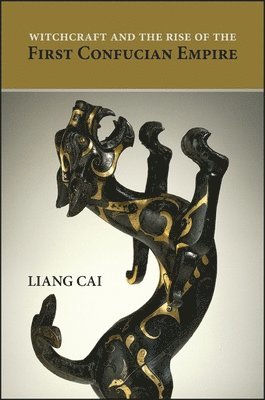
    Witchcraft and the Rise of the First Confucian Empire

    AvLiang Cai

    Inbunden, Engelska, 2014

    Del i serien SUNY series in Chinese Philosophy and Culture

    1 076 kr

    Tillfälligt slut

    Fler format och utgåvor

    Häftad

    Tillf. slut

    Beskrivning

    Contests long-standing claims that Confucianism came to prominence under China's Emperor Wu.Finalist for the 2015 Best First Book in the History of Religions presented by the American Academy of Religion Winner of the 2014 Academic Award for Excellence presented by Chinese Historians in the United States When did Confucianism become the reigning political ideology of imperial China? A pervasive narrative holds it was during the reign of Emperor Wu of the Han dynasty (141–87 BCE). In this book, Liang Cai maintains that such a date would have been too early and provides a new account of this transformation. A hidden narrative in Sima Qian's The Grand Scribe's Records (Shi ji) shows that Confucians were a powerless minority in the political realm of this period. Cai argues that the notorious witchcraft scandal of 91–87 BCE reshuffled the power structure of the Western Han bureaucracy and provided Confucians an opportune moment to seize power, evolve into a new elite class, and set the tenor of political discourse for centuries to come.

    Produktinformation

    • Utgivningsdatum:2014-02-28
    • Mått:152 x 229 x 20 mm
    • Vikt:526 g
    • Format:Inbunden
    • Språk:Engelska
    • Serie:SUNY series in Chinese Philosophy and Culture
    • Antal sidor:288
    • Förlag:State University of New York Press
    • ISBN:9781438448497

    Utforska kategorier

    • Forntidens historia inom Historia och arkeologi
    • Asiens historia inom Historia och arkeologi
    • Östasiatiska religioner inom Filosofi och religion

    Mer om författaren

    Liang Cai is Assistant Professor of History at the University of Arkansas.

    Recensioner i media

    "…presents much food for thought … an important contribution to an ongoing scholarly dialogue on one of the central topics in Western Han history." — Journal of the American Oriental Society"Liang Cai's book represents the very best of the modern iconoclastic trend to see through early and traditional Chinese accounts concerning early Chinese group formations, in this case with exclusive attention to Confucianism. None of her claims argue from logic or absence; rather, they are grounded in solid quantitative and qualitative analyses and stem from a solid historical methodology." — China Review International"…a forcefully argued and methodologically innovative study of Western Han political and intellectual history … Witchcraft and the Rise of the First Confucian Empire is a very welcome contribution to the expanding sophisticated and skeptical historiography concerning the early imperial history in China—the period that laid the foundations for all that came after." — Chinese Historical Review"Liang Cai's book is a valuable resource for those who study the intellectual and political history of the Han dynasty, especially the hundred years from Emperor Wu to Emperor Yuan … this book provides a factual, well-written narrative. Scholars interested in early imperial China will find the quantitative and qualitative approach useful in their own research." — Religious Studies Review"Writing in a clear and accessible way that paints a vivid and comprehensive picture of the state of the early Han political system with its variety of political machinations, Cai has produced a well-structured and well-argued monograph that includes detailed notes and a wide range of references in English, Chinese, and Japanese." — The Pomegranate"Readers interested in the history of the Han Empire will find this book to be an invaluable addition to the current literature on the topic. It is a must-read for all scholars and students of early imperial period China … the overall narrative is strong, convincing, and, dare I say, game changing." — Erica Fox Brindley, American Historical Review"Through a detailed analysis of the surviving textual evidence, Witchcraft and the Rise of the First Confucian Empire provides a powerful image of the destruction of one order in the last years of the reign of Emperor Wu and the creation of a new elite under Huo Guang. Though these events have already been the subject of at least one detailed English-language study … the narrower time-frame and more focused narrative in Liang Cai's study provides an even more powerful picture of the enduring aftermath of Emperor Wu's witchcraft trials." — Journal of the Royal Asiatic Society

    Innehållsförteckning

    • List of Charts and TablesAcknowledgmentsIntroduction1. Minority as the Protagonists: Revisiting Ru儒 (Confucians) and Their Colleagues under Emperor Wu (141–87 BCE) of the HanRu, a Minority GroupSources of the Myth2. A Class Merely on Paper: A Study of "The Collective Biographies of Ru" in The Grand Scribe’s Records (Shi ji 史記)Ru Identity Suppressed by ConflictsTransforming "Ru" into ConfuciansRedefining the Principles of Hierarchy3. An Archeology of Interpretive Schools of the Five Classics in the Western Han DynastyFragmented Scholarly LineagesRevising Sima QianThe Emergence and Proliferation of Interpretive SchoolsContinuity or DisruptionLocating the Turning Point4. A Reshuffle of Power: Witchcraft Scandal and the Birth of a New ClassA Fundamental DisjunctionThe Rise of Ru OfficialsWitchcraft Scandal and the Birth of a New Class5. Begin in the Middle: Who Entrusted Ru with Political Power?Huo Guang’s Dictatorship and Ru DiscourseTechniques of the Classics (jingshu 經術) and Legitimacy of the ThroneRu Officials under Huo Guang and Emperor XuanWho Entrusted Ru with Political Power?ConclusionRu before the Rise of the Ru EmpireRecruitment System of the Han Empire RevisitedAppendix: Major Official Titles of the Western Han DynastyNotesBibliographyIndex