• Fri frakt över 249 kr
  • •
  • Snabba leveranser
  • •
  • Billiga böcker
Kundservice

Du är på sajten för privatpersoner.

Företag, bibliotek eller offentlig verksamhet?

Du handlar på classic.bokus.com, där alla dina funktioner finns intakta.
Till classic.bokus.com
Bokus logotyp. Gå till startsidan.
  • Erbjudanden
  • Nyheter
  • Student
  • Topplistor
  • Barn & ungdom
  • Bokus Play
  • E-böcker
  • Pocketböcker
  • Spel & pussel

10% rabatt på allt med kod: NYSTART10 →

Sidfot

Mina sidor

    Hjälp

    • Kundservice
    • Vanliga frågor och svar
    • Frakt och leverans
    • Retur vid ångerrätt
    • Reklamera vara
    • Betalning
    • Köpvillkor
    • Allmänna villkor
    • Information om webbplatsens tillgänglighet

    Om Bokus

    • Om oss
    • Pressrum
    • För studenter
    • För företag
    • För bibliotek och offentlig verksamhet
    • För leverantörer
    • Hållbarhet

    Populärt

    • Aktuella erbjudanden
    • Presentkort
    • Studentlitteratur
    • Nya böcker
    • Topplistor
    • Signerade böcker
    • Engelska böcker

    Inspiration

    • Boktips
    • BookTok
    • Populära bokserier
    • Barnbokskaraktärer
    • Populära författare
    Logotyp för Bokus
    Följ oss på Facebook (extern länk)Följ oss på Instagram (extern länk)Följ oss på YouTube (extern länk)Följ oss på TikTok (extern länk)
    bokus @ CookiesAnpassa cookiesIntegritetspolicyKöpvillkor
    Till Citymail hemsida (extern länk)Till Budbee hemsida (extern länk)Till Postnord hemsida (extern länk)Till Schenker hemsida (extern länk)Till Early Bird hemsida (extern länk)Till Walleys hemsida (extern länk)
    1. Naturvetenskap och teknik
    2. Matematik och naturvetenskap
    3. Biologi
    4. Biovetenskap

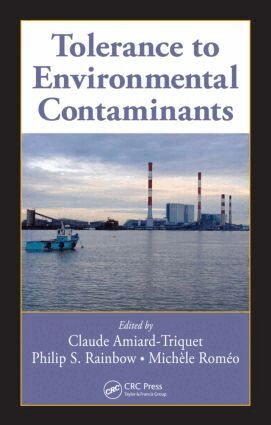
    Tolerance to Environmental Contaminants

    AvClaude Amiard-Triquet,Philip S. Rainbow

    Inbunden, Engelska, 2011

    2 648 kr

    Beställningsvara. Skickas inom 10-15 vardagar. Fri frakt över 249 kr.

    Beskrivning

    Tolerance, the ability of populations to cope with the chemical stress resulting from toxic contaminants, has been described in many organisms from bacteria to fungi, from phytoplankton to terrestrial flowering plants, and from invertebrates such as worms to vertebrates like fish and amphibians. The building of tolerance, be it by physiological acclimation or genetic adaptation, can have great consequences for the local biodiversity, and hence the ecology and ecosystem functioning of many of the world’s habitats. Understanding the frequency of the occurrence of tolerance has tremendous implications for the sustainability of biodiversity and ecosystem functioning.Tolerance to Environmental Contaminants takes a multidisciplinary approach across contaminant types, habitats, organisms, biological levels of organization and scientific disciplines. The book examines the general principles governing the acquisition and biological consequences of tolerance, genetically or physiologically based, at different levels of biological organization, taxonomically from bacteria and archaea to flowering plants and vertebrates, and within organisms from molecular biology and biochemistry through physiology to whole organism, community, and ecosystem levels of organization. Presenting a state-of-the-art synthesis of the many aspects of the phenomenon of tolerance to environmental contaminants, this volume covers mechanisms of defense involved in the acquisition of tolerance, different classes of environmental contaminants, positive and negative ecological consequences of tolerance and the impact of tolerance in bacteria, plants, and insects on society. The reviews presented in this book supply the tools for carrying out more informed and therefore more reliable risk-benefit analyses when assessing the ecotoxicological risks to life in any of the contaminated habitats that now surround us in our industrialized society.

    Produktinformation

    • Utgivningsdatum:2011-01-21
    • Mått:156 x 234 x 32 mm
    • Vikt:771 g
    • Format:Inbunden
    • Språk:Engelska
    • Antal sidor:464
    • Förlag:Taylor & Francis Inc
    • ISBN:9781439817704

    Utforska kategorier

    • Biovetenskap inom Naturvetenskap och teknik
    • Miljövetenskap och miljöpolitik inom Naturvetenskap och teknik
    • Miljöteknik inom Naturvetenskap och teknik

    Mer om författaren

    Claude Amiard-Triquet, Philip S. Rainbow, Michèle Roméo

    Recensioner i media

    The species examined are very diverse ... Consequently, virtually every branch of the natural sciences is represented, making the potential readership considerable. Of very relevant interest is emergence of antibiotic-resistant bacteria, and insecticidal-resistance to DDT. Is resistance a function of DNA changes, changes in individual proteins, other structural changes, or a combination? These are the answers sought. ... it is a very valuable addition to the literature. It defines the multidisciplinary approaches necessary to educate advanced students of toxicology and environmental science by describing the complexities involved, and how to utilise logic to prevent the accidental (and sometimes deliberate) poisoning of the general environment. -K. Jones, in Chromatographia, 74:851 Books such as this serve an important function in showing how far we have progressed in a particular field. For that, we should thank the editors and authors and those who are pursing or considering pursuing research in this field must obtain a copy. Now we must hope that someone will take the next big step of developing a theory of acquired tolerance to environmental contaminants that leads to a useful assessment practice. This book could provide the jumping off point. -Integrated Environmental Assessment and Management, Volume 8, Number 3, 2012 SETAC "Overall, the book is well organised and the various articles (arranged into sections) offer a progression through a multiscale approach to contamination and risks for humans through the use of natural resources. Certainly, this is a state of the art synthesis that will be welcome by specialists but can also be of use to informed managers wishing to carry out risk-benefit analysis. Students will find a wealth of information there, both for preparing and revising exams and write essays." -Jean-Paul Ducrotoy, ECSA Bul lel;in 56 - Winter 1010

    Innehållsförteckning

    • Pollution Tolerance: From Fundamental Biological Mechanisms to Ecological Consequences. Tolerance to Contaminants: Evidence from Chronically-Exposed Populations of Aquatic Organisms. Inter- and Intra-Specific Variability of Tolerance: Implications for Bioassays and Biomonitoring. Microbial Pollution-Induced Community Tolerance. Tolerance to Natural Environmental Change and the Effect of Added Chemical Stress. Mechanisms of Defence and the Acquisition of Tolerance to Chemical Stress. Biodynamic Parameters of the Accumulation of Toxic Metals, Detoxification and the Acquisition of Metal Tolerance. Antioxidant Defences and Acquisition of Tolerance to Chemical Stress. Biotransformation of Organic Contaminants and the Acquisition of Resistance. Stress Proteins and the Acquisition of Tolerance. The Multixenobiotic Transport System: A System Governing Intracellular Contaminant Bioavailability. Ecological and Ecophysiological Aspects of Tolerance. Tolerance and Biodiversity. Cost of Tolerance. Tolerance and the Trophic Transfer of Contaminants. Case Studies. Bacterial Tolerance in Contaminated Soils: Potential of the PICT Approach in Microbial Ecology. Adaptation to Metals in Higher Plants: The Case of Arabidopsis halleri (Brassicaceae). Insects and Pesticides. Conclusions.