Läs direkt i Bokus Reader – eller ladda ned till din enhet (PDF kräver ofta zoom och scroll på små skärmar).
Beskrivning
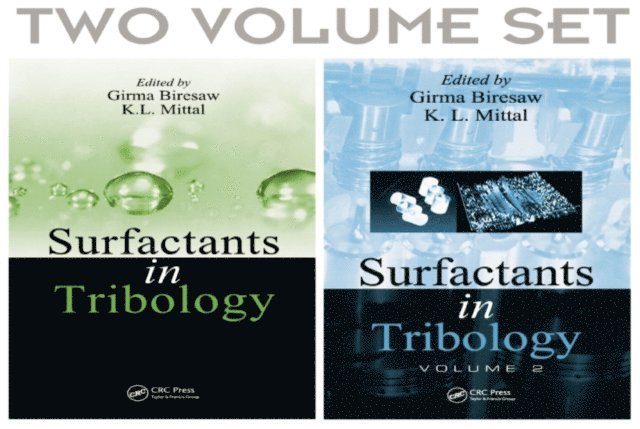
Surfactants play a critical role in tribology as they control friction, wear, and lubricant properties such as emulsification, demulsification, bioresistance, oxidation resistance, rust prevention, and corrosion resistance. The use of surfactants in tribology is a critical topic for scientists and engineers who are developing new materials and devi
Girma Biresaw currently works for the USDA in Peoria, Illinois. Kash Mittal is a researcher in Hopewell Junction, New York.
Innehållsförteckning
Part I: Films, Membranes and Self-assembled Monolayers: Relevance to Tribological Behavior. Tribological Properties of Self-assembled Monolayers. Nano-tribological Properties of Aromatic and Polyaromatic Thiol Self-assembled Monolayers. Friction of Graphite against Silane-functionalized Silicon Wafers. Frictional Properties of Physisorbed Layers of Self-organized Molecules at Solid-Liquid Interface. Temperature Dependence of Molecular Packing in Self-assembled Monolayer Films. Mechanical Properties of Phospholipid-Based Biolubricant Films and Membranes. Part II: Emulsions and Aqueous Systems: Relevance to Tribological Phenomena. Influence of Surfactants on Wetting and Colloidal Processes of Lubricant Emulsions on Metal Surfaces. Surfactant Effects on Bio-based Emulsions Used as Lubrication Fluids. Hydrolyzed Fatty Oil Surfactants as Friction Modifiers at W/O Emulsion Interface. Antiwear and Antiseizure Properties of Aqueous Solutions of Alkyl Polyglucosides. Formulation Effects on the Lubricity of W/O Emulsions Used as Oil Well Drilling Fluids. Part III: Biobased Lubricants. Estolides-Biobased Lubricants. Development and Tribological Behavior of Advanced Bio-based Lubricants. Characterization of Surface Active Materials Derived from Farm Products. Chemically Modified Fatty Acid Methyl Esters: Their Potential Use as Lubrication Fluids and Surfactants. Vaporization and Carbonization Tendency of Vegetable Oils as a Function of Chemical Composition: Morphology of Carbon Deposits on Steel Surfaces at Elevated Temperature. Part IV: General Topics and Applications. Surface Chemistry at the Tribological Interface.The Role of Surface Science in Magnetic Recording Tribology. Improving Organic Anti-wear and Friction Modifier Compounds for Automotive Applications. Antimicrobial-Surface Activity Relationship of Novel Di-schiff Base Cationic Gemini Amphiphiles Bearing Homogeneous Hydrophobes.<