• Fri frakt över 249 kr
  • •
  • Snabba leveranser
  • •
  • Billiga böcker
Kundservice

Du är på sajten för privatpersoner.

Företag, bibliotek eller offentlig verksamhet?

Du handlar på classic.bokus.com, där alla dina funktioner finns intakta.
Till classic.bokus.com
Bokus logotyp. Gå till startsidan.
  • Erbjudanden
  • Nyheter
  • Student
  • Topplistor
  • Barn & ungdom
  • Bokus Play
  • E-böcker
  • Pocketböcker
  • Spel & pussel

10% rabatt på allt med kod: NYSTART10 →

Sidfot

Mina sidor

    Hjälp

    • Kundservice
    • Vanliga frågor och svar
    • Frakt och leverans
    • Retur vid ångerrätt
    • Reklamera vara
    • Betalning
    • Köpvillkor
    • Allmänna villkor
    • Information om webbplatsens tillgänglighet

    Om Bokus

    • Om oss
    • Pressrum
    • För studenter
    • För företag
    • För bibliotek och offentlig verksamhet
    • För leverantörer
    • Hållbarhet

    Populärt

    • Aktuella erbjudanden
    • Presentkort
    • Studentlitteratur
    • Nya böcker
    • Topplistor
    • Signerade böcker
    • Engelska böcker

    Inspiration

    • Boktips
    • BookTok
    • Populära bokserier
    • Barnbokskaraktärer
    • Populära författare
    Logotyp för Bokus
    Följ oss på Facebook (extern länk)Följ oss på Instagram (extern länk)Följ oss på YouTube (extern länk)Följ oss på TikTok (extern länk)
    bokus @ CookiesAnpassa cookiesIntegritetspolicyKöpvillkor
    Till Citymail hemsida (extern länk)Till Budbee hemsida (extern länk)Till Postnord hemsida (extern länk)Till Schenker hemsida (extern länk)Till Early Bird hemsida (extern länk)Till Walleys hemsida (extern länk)
    1. Samhälle och politik
    2. Samhälle och kultur
    3. Kultur och medier
    4. Medievetenskap

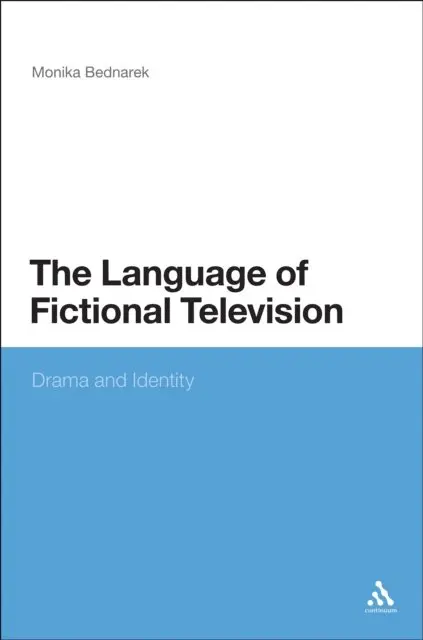
    Language of Fictional Television

    Drama and Identity

    AvMonika Bednarek

    Inbunden, Engelska, 2010

    2 366 kr

    Beställningsvara. Skickas inom 10-15 vardagar. Fri frakt över 249 kr.

    Fler format och utgåvor

    E-bok

    589 kr

    Häftad

    548 kr

    Beskrivning

    In this book, Monika Bednarek addresses the need for a systemic analysis of television discourse and characterization within linguistics and media studies. She presents both corpus stylistics and manual analysis of linguistic and multimodal features of fictional television. The first part focuses on communicative context, multimodality, genre, audience and scripted television dialogue while the second part focuses on televisual characterization, introducing and illustrating the novel concept of expressive character identity. Aside from the study of television dialogue, which informs it throughout, this book is a contribution to studying characterization, to narrative analysis and to corpus stylistics. With its combination of quantitative and qualitative analysis, the book represents a wealth of exploratory, innovative and challenging perspectives, and is a key contribution to the analysis of television dialogue and character identity. The volume will be of interest to researchers and students in linguistics, stylistics and media/television studies, as well as to corpus linguists and communication theorists.The book will be a useful resource for lecturers teaching at both undergraduate and postgraduate levels in media discourse and related areas.

    Produktinformation

    • Utgivningsdatum:2010-11-01
    • Mått:162 x 236 x 22 mm
    • Vikt:608 g
    • Format:Inbunden
    • Språk:Engelska
    • Antal sidor:304
    • Förlag:Continuum Publishing Corporation
    • ISBN:9781441155856

    Utforska kategorier

    • Medievetenskap inom Samhälle och politik
    • Television inom Kultur

    Mer om författaren

    Monika Bednarek is Lecturer of Linguistics at the University of Sydney, Australia.

    Recensioner i media

    ‘Monika Bednarek's careful quantitative eye looks around unusual corners for a corpus linguist. Her book The Language of Fictional Television offers a distinctive, linguistic approach to analyzing popular culture, but draws productively on stylistics, cultural studies, media studies and sociological frameworks. This book provides a model for linguists who want to combine corpus evidence with 'big picture' questions, like how characterisation and identity works, and how ideologies are naturalized - and might be challenged - both in and out of fiction. The material can be adapted for teaching materials in senior undergraduate and postgraduate classes: for example, the chapter on how vegetarians and vegetarian foods are construed, and how this is involved in character development in the 'dramedy' Gilmore Girls, makes an excellent platform for teaching language and ideology.'

    Innehållsförteckning

    • Part I. Analysing Television; 1. Introduction; 2. Analysing Television; 3. The genre of dramedy and its audience; 4. Television dialogue: features and functions; Part II. Fictional Television: Character Identity; 5. Dialogue and Character Identity; 6. Expressive character identity and emotive interjections; 7. The multimodal performance; 8. Expressive character identity and ideology: shared attitudes; 9. Concluding remarks References Appendices.