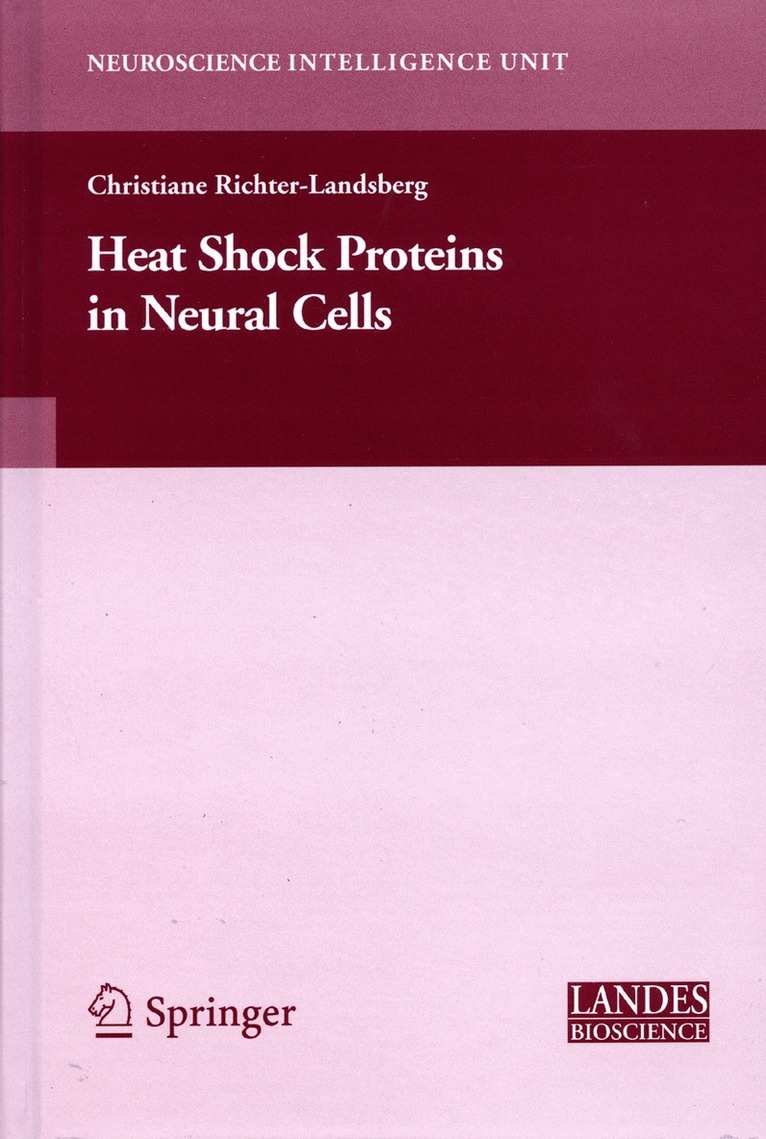
Häftad, Engelska, 2011
Heat Shock Proteins in Neural Cells
Av Christiane Richter-Landsberg
1699 kr
Skickas inom 10-15 vardagar
Beskrivning
eat shock proteins (HSPs), also called stress proteins, are not only induced in response to elevated temperatures, but also as a result of various stress situations, including environmental strains, viral H infection, ischemia, anoxia and oxidative stress. These stress situations trigger cellular defence mechanisms that act as an emergency system capable of combatting the toxic consequences due to the accumulation of misfolded proteins. Heat shock proteins are involved in many physiological processes, including development and differentiation, organisation of the cytoarchi tecture by binding to cytoskeletal elements and regulation of the balance between cell death and survival. Many heat shock proteins work as molecular chaperones. In this role, they contribute to in vivo protein folding and prevent nonproductive interactions with other proteins and cellular c- ponents. In recent years it has been found that the chaperone system and the proteolytic machinery work closely together, and that proteasomal - hibition causes the upregulation of stress proteins.Impairment of the proteasomal machinery and chaperone functions lead to protein damage, which contributes to neurodegenerative disorders and to the aging process.
Produktinformation
- Utgivningsdatum: 2011-09-17
- Mått: 155 x 235 x 8 mm
- Vikt: 207 g
- Format: Häftad
- Språk: Engelska
- Antal sidor: 115
- Förlag: Springer-Verlag New York Inc.
- Serie: Neuroscience Intelligence Unit
- ISBN: 9781441922939
Utforska kategorier
Betyg & recensioner
0 recensioner
Inga recensioner tillgängliga.