• Fri frakt över 249 kr
  • •
  • Snabba leveranser
  • •
  • Billiga böcker
Kundservice

Du är på sajten för privatpersoner.

Företag, bibliotek eller offentlig verksamhet?

Du handlar på classic.bokus.com, där alla dina funktioner finns intakta.
Till classic.bokus.com
Bokus logotyp. Gå till startsidan.
  • Erbjudanden
  • Student
  • Topplistor
  • Barn & ungdom
  • Bokus Play
  • E-böcker
  • Ljudböcker
  • Pocketböcker
  • Spel och pussel

Pocketfynda! Hundratals böcker för 49 kr/st →

Sidfot

Mina sidor

    Hjälp

    • Kundservice
    • Vanliga frågor och svar
    • Frakt och leverans
    • Retur vid ångerrätt
    • Reklamera vara
    • Betalning
    • Köpvillkor
    • Allmänna villkor
    • Information om webbplatsens tillgänglighet

    Om Bokus

    • Om oss
    • Pressrum
    • För studenter
    • För företag
    • För bibliotek och offentlig verksamhet
    • För leverantörer
    • Hållbarhet

    Populärt

    • Aktuella erbjudanden
    • Presentkort
    • Studentlitteratur
    • Nya böcker
    • Topplistor
    • Signerade böcker
    • Engelska böcker

    Inspiration

    • Boktips
    • BookTok
    • Barnbokskaraktärer
    • Populära författare
    Logotyp för Bokus
    Följ oss på Facebook (extern länk)Följ oss på Instagram (extern länk)Följ oss på YouTube (extern länk)Följ oss på TikTok (extern länk)
    bokus @ CookiesAnpassa cookiesIntegritetspolicyKöpvillkor
    Till Citymail hemsida (extern länk)Till Budbee hemsida (extern länk)Till Postnord hemsida (extern länk)Till Schenker hemsida (extern länk)Till Early Bird hemsida (extern länk)Till Walleys hemsida (extern länk)
    1. Historia och arkeologi
    2. Arkeologi
    3. Arkeologi: metod och teknik

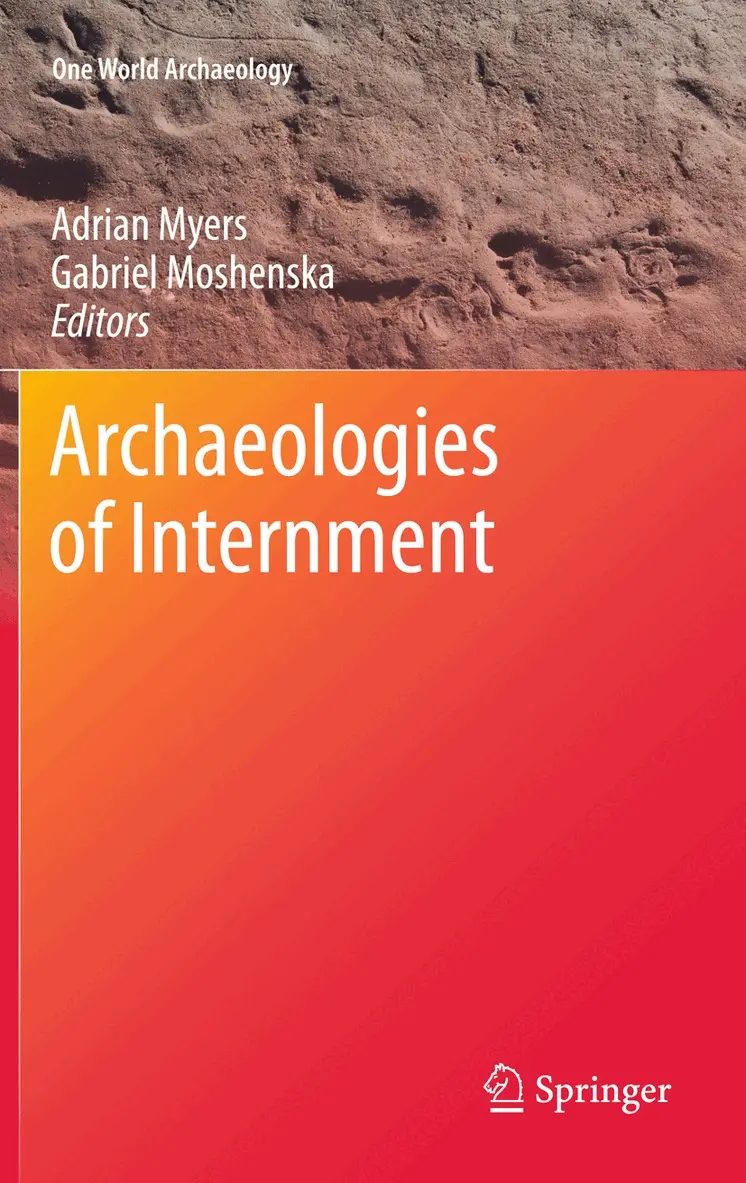
    Archaeologies of Internment

    AvAdrian Myers,Gabriel Moshenska

    Inbunden, Engelska, 2011

    Del i serien One World Archaeology

    559 kr

    Beställningsvara. Skickas inom 10-15 vardagar. Fri frakt över 249 kr.

    Beskrivning

    The internment of civilian and military prisoners became an increasingly common feature of conflicts in the twentieth century and into the twenty-first. Prison camps, though often hastily constructed and just as quickly destroyed, have left their marks in the archaeological record. Due to both their temporary nature and their often sensitive political contexts, places of internment present a unique challenge to archaeologists and heritage managers.  As archaeologists have begun to explore the material remains of internment using a range of methods, these interdisciplinary studies have demonstrated the potential to connect individual memories and historical debates to the fragmentary material remains.  Archaeologies of Internment brings together in one volume a range of methodological and theoretical approaches to this developing field. The contributions are geographically and temporally diverse, ranging from Second World War internment in Europe and the USA to prison islands of the Greek Civil War, South African labor camps, and the secret detention centers of the Argentinean Junta and the East German Stasi.  These studies have powerful social, cultural, political, and emotive implications, particularly in societies in which historical narratives of oppression and genocide have themselves been suppressed. By repopulating the historical narratives with individuals and grounding them in the material remains, it is hoped that they might become, at least in some cases, archaeologies of liberation.

    Produktinformation

    • Utgivningsdatum:2011-06-27
    • Mått:155 x 235 x 26 mm
    • Vikt:634 g
    • Format:Inbunden
    • Språk:Engelska
    • Serie:One World Archaeology
    • Antal sidor:313
    • Upplaga:2011
    • Förlag:Springer-Verlag New York Inc.
    • ISBN:9781441996657

    Utforska kategorier

    • Arkeologi: metod och teknik inom Historia och arkeologi
    • Militärhistoria inom Historia och arkeologi

    Mer om författaren

    Adrian Myers is a PhD Candidate in the Department of Anthropology at Stanford University. For his dissertation research he is running excavations at a Prisoner of War camp that held German Afrika Korps soldiers in a national park in Canada during the Second World War. Gabriel Moshenska is a Leverhulme Trust Early Career Research Fellow at UCL Institute of Archaeology. He works on the history of archaeology, public archaeology, and the archaeology and anthropology of Second World War Britain.

    Recensioner i media

    Modernity has been characterized by the internment of people, as a way of torturing and sometimes destroying them. Those practices aim at controlling, subduing and forcing people to comply with social norms, punishing deviation and descent with seclusion and possibly death. As a ubiquitous feature of modernity, archaeology has been paying a growing attention to the study of the materiality of internment. Archaeologies of Internment gathers contributors from different continents and aims at understanding a wide variety of experiences worldwide and also at fostering a less oppressive sociability in the present. As a result, the reader is both enlightened and enticed to join the contributors in their struggle for a liberating archaeology. A most readable book, Archaeologies of Internment is a convincing invitation to a renewed practice of the discipline. --Pedro Paulo A. Funari, former World Archaeological Congress secretary, is professor of historical archaeology at Campinas University, Brazil.

    Innehållsförteckning

    • Chapter 1. An Introduction to Archaeologies of Internment by Gabriel Moshenska and Adrian Myers.- Chapter 2. Exceptional Space: Concentration Camps and Labor Compounds in Late19th Century South Africa by Lindsay Weiss.- Chapter 3. A Tale of Two Treatments: The Materiality of Internment on the Isle of Man in the World Wars by Harold Mytum.- Chapter 4. The Archaeology of Internment in Francoist Spain (1936-1952) byAlfredo González-Ruibal.- Chapter 5. The Things of Auschwitz by Adrian Myers.- Chapter 6. Gordon Hirabayashi, the Tucsonians and the U.S. Constitution:Negotiating Reconciliation in a Landscape of Exile by Mary Farrell and Jeff Burton.- Chapter 7. Control or Repression: Contrasting a Prisoner of War Camp and a WorkCamp from World War Two by Iain Banks.- Chapter 8. Engraving and Embroidering: The Material Culture of Internment by Gillian Carr.- Chapter 9. Archaeological Investigations of WWII Internment Camps at Fort Hood,Texas by Judith Thomas.- Chapter 10. Forgotten in the Wilderness: WWII German POW Camps in Finnish Lapland by Oula Seitsonen and Vesa-Pekka Herva.- Chaper 11. Materialities and Traumatic Memories of a 20th Century Greek Exile Island by Nota Pantzou.- Chapter 12. The Engineering of Genocide: An Archaeology of Dictatorship in Argentina by Andrés Zarankin and Melisa Salerno.- Chapter 13. A Political Archaeology of Latin America’s Recent Past by Gonzalo Compañy, Gabriela González, Leonardo Ovando and David Rossetto.- Chapter 14. Hohenschönhausen: Visual and Material Representations of a Cold War Prison Landscape by John Schofield and Wayne Cocroft.- Chapter 15. The Last Murals of Long Kesh: Fragments of Political Imprisonment at the Maze Prison, Northern Ireland by Louise Purbrick.- Chapter 16. Lockdown: On the Materiality of Confinement by Eleanor Conlin Casella.