• Fri frakt över 249 kr
  • •
  • Snabba leveranser
  • •
  • Billiga böcker
Kundservice

Du är på sajten för privatpersoner.

Företag, bibliotek eller offentlig verksamhet?

Du handlar på classic.bokus.com, där alla dina funktioner finns intakta.
Till classic.bokus.com
Bokus logotyp. Gå till startsidan.
  • Erbjudanden
  • Nyheter
  • Student
  • Topplistor
  • Barn & ungdom
  • Bokus Play
  • E-böcker
  • Pocketböcker
  • Spel & pussel

10% rabatt på allt med kod: NYSTART10 →

Sidfot

Mina sidor

    Hjälp

    • Kundservice
    • Vanliga frågor och svar
    • Frakt och leverans
    • Retur vid ångerrätt
    • Reklamera vara
    • Betalning
    • Köpvillkor
    • Allmänna villkor
    • Information om webbplatsens tillgänglighet

    Om Bokus

    • Om oss
    • Pressrum
    • För studenter
    • För företag
    • För bibliotek och offentlig verksamhet
    • För leverantörer
    • Hållbarhet

    Populärt

    • Aktuella erbjudanden
    • Presentkort
    • Studentlitteratur
    • Nya böcker
    • Topplistor
    • Signerade böcker
    • Engelska böcker

    Inspiration

    • Boktips
    • BookTok
    • Populära bokserier
    • Barnbokskaraktärer
    • Populära författare
    Logotyp för Bokus
    Följ oss på Facebook (extern länk)Följ oss på Instagram (extern länk)Följ oss på YouTube (extern länk)Följ oss på TikTok (extern länk)
    bokus @ CookiesAnpassa cookiesIntegritetspolicyKöpvillkor
    Till Citymail hemsida (extern länk)Till Budbee hemsida (extern länk)Till Postnord hemsida (extern länk)Till Schenker hemsida (extern länk)Till Early Bird hemsida (extern länk)Till Walleys hemsida (extern länk)
    1. Samhälle och politik
    2. Samhälle och kultur
    3. Kultur och medier
    4. Referensverk och tvärvetenskap

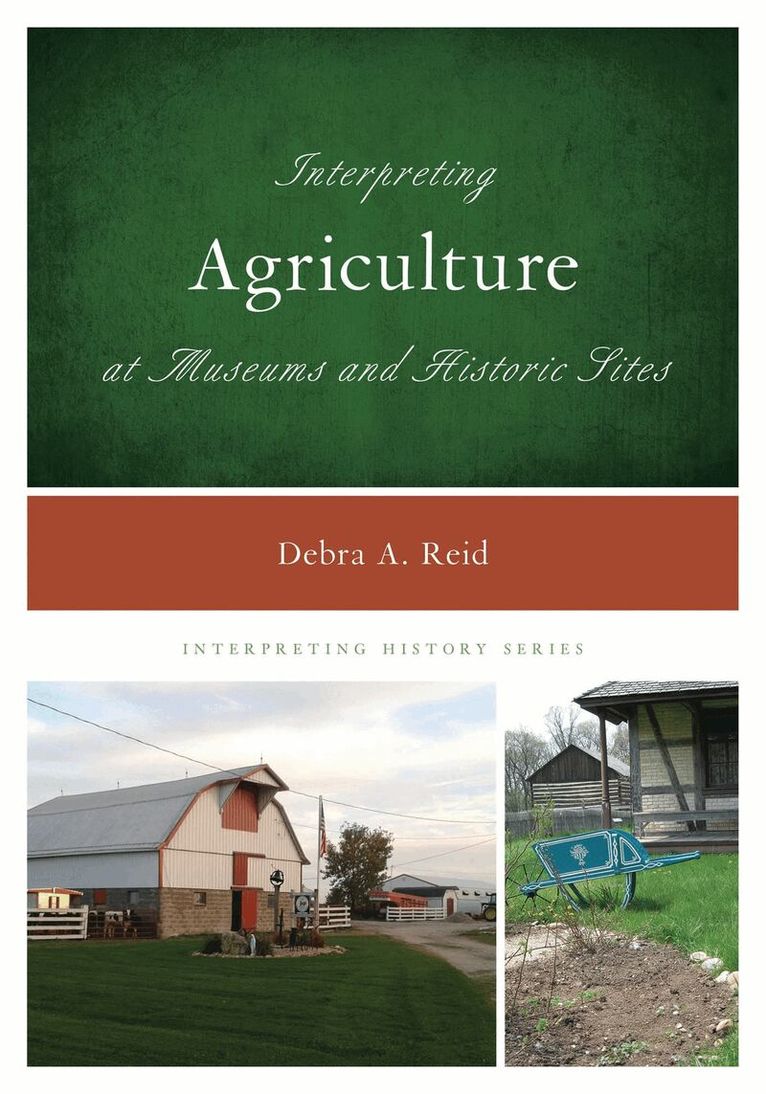
    Interpreting Agriculture at Museums and Historic Sites

    AvDebra A. Reid

    Häftad, Engelska, 2017

    Del 12 i serien Interpreting History

    562 kr

    Beställningsvara. Skickas inom 10-15 vardagar. Fri frakt över 249 kr.

    Fler format och utgåvor

    Inbunden

    1 186 kr

    Beskrivning

    Interpreting Agriculture in Museums and Historic Sites orients readers to major themes in agriculture and techniques in education and interpretation that can help you develop humanities-based public programming that enhance agricultural literacy. Case studies illustrate the ways that local research can help you link your history organization to compelling local, national (even international) stories focused on the multidisciplinary topic. That ordinary plow, pitch fork, and butter paddle can provide the tangible evidence of the story worth telling, even if the farm land has disappeared into subdivisions and agriculture seems as remote as the nineteenth century. Other topics include discussion of alliances between rural tourism and community-supported agriculture, farmland conservation and stewardship, heritage breed and seed preservation efforts, and antique tractor clubs. Any of these can become indispensable partners to history organizations searching for a new interpretive theme to explore and new partners to engage.

    Produktinformation

    • Utgivningsdatum:2017-01-23
    • Mått:179 x 256 x 17 mm
    • Vikt:576 g
    • Format:Häftad
    • Språk:Engelska
    • Serie:Interpreting History
    • Antal sidor:284
    • Förlag:Bloomsbury Publishing Plc
    • ISBN:9781442230118

    Utforska kategorier

    • Referensverk och tvärvetenskap inom Samhälle och politik
    • Agronomi inom Naturvetenskap och teknik

    Mer om författaren

    Debra A. Reid is curator of agriculture and the environment at The Henry Ford, and professor emeritus in the Department of History and Historical Administration Graduate Program at Eastern Illinois University. Since 2006 she has also served as adjunct professor at the University of Illinois in the College of Agricultural, Consumer and Environmental Sciences.

    Recensioner i media

    Humans depend on agriculture as a source of food, fiber, and fuel. However, there has been a dramatic shift in the number of farmers who supply these raw materials. Agricultural museums provide a view of the history of agriculture and present the different aspects of agricultural inventions, products, and progress. This volume attentively describes how museums and historic sites offer a view of agriculture that helps explain the progress that fostered this abundant supply of agricultural materials. Throughout the book, there are descriptions of the changes made in agriculture. Examples include the transition from hand picking to machine harvesting corn; the need to change methods for storage, processing, and management; and how agriculture prompted the need for road improvements and the creation of bridges to deliver products to markets. It is important to note that this work should be regarded not as a how-to guide for museums but as a unique vision of how humans depict and understand agriculture from the viewpoint of individuals who did not grow up on a farm. The insights provided in this effort reveal why it is necessary to tell the story of how agriculture has benefited humanity.Summing Up: Recommended. Upper-division undergraduates and above; faculty and professionals.

    Innehållsförteckning

    • Foreword – Tom KelleherPart 1: Developing Interpretation with an Agricultural PerspectiveChapter 1 Interpreting Agriculture: Introduction to Terms and ThemesChapter 2 Once a Field, now Suburbia: Interpreting Agriculture in Any ContextChapter 3 Agriculture: Developing a Humanist Point of ViewChapter 4 Agriculture and Historical ThinkingPart 2: Agriculture in Time and Place: Research as the Foundation for InterpretationChapter 5 Documenting Agriculture in Two Dimensions: Background ResearchChapter 6 Documenting Agriculture in Three Dimensions: ArtifactsResearch Summaries:Chapter 7 You Can’t Eat Gold: Agriculture in Early Colorado City, 1858-1867, Carol Kennis LopezChapter 8 Changes in Corn-Belt Crop Culture: Iowa, 1945-1972, J.L. AndersonChapter 9 A Curator’s Legacy, William S. PretzerPart 3: Thematic Studies to Inform Localized Agriculture InterpretationChapter 10 Roads and Bridges in Rural Agricultural Interpretation, Cameron L. Saffell and Debra A. ReidChapter 11 Horses, Harness, and Transport: Informing Interdisciplinary Interpretation, Barbara Corson, VMD Chapter 12 Livestock in Agricultural Interpretation, Jonathan D. Kuester and Debra ReidChapter 13 Sex, Drugs, and GMOs: Crops and Agricultural InterpretationPart 4: Developing InterpretationChapter 14 Interpreting Agriculture: A Multi-Step Sequential ProcessChapter 15 Case Study – Interpreting Rural Life in El Paso, Texas, Cameron L. SaffellChapter 16 Case Study: An Exhibit – Reaper: Nettie Fowler McCormick and the Machine that Built Tusculum College, Peter M. NollConclusionAppendix: Links to Useful Information