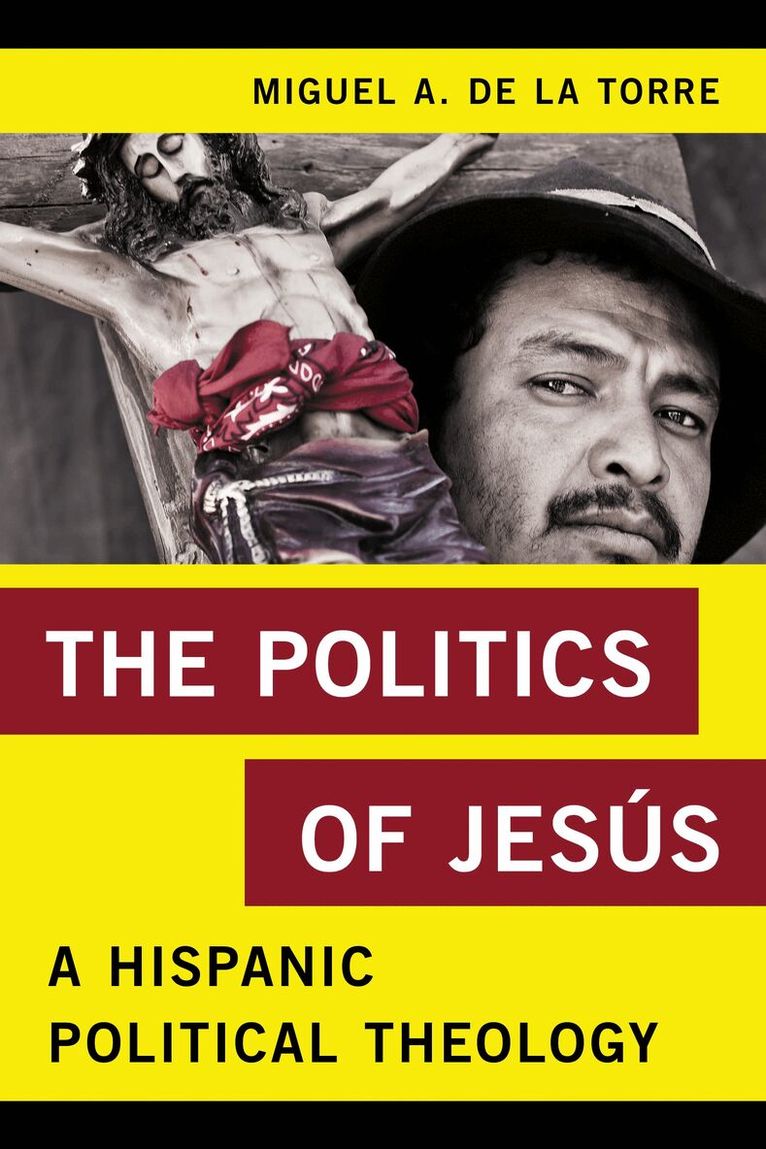
Häftad, Engelska, 2015
Politics of Jesús
A Hispanic Political Theology
376 kr
Beställningsvara. Skickas inom 10-15 vardagar. Fri frakt över 249 kr.
Beskrivning
Produktinformation
- Utgivningsdatum: 2015-06-10
- Mått: 155 x 228 x 14 mm
- Vikt: 308 g
- Format: Häftad
- Språk: Engelska
- Serie: Religion in the Modern World
- Antal sidor: 218
- Förlag: Bloomsbury Publishing Plc
- ISBN: 9781442250369
Utforska kategorier
Mer om författaren
Miguel A. De La Torre is professor of social ethics and Latino/a studies at the Iliff School of Theology. He is the author or editor of numerous books, including Santeria: The Beliefs and Rituals of a Growing Religion in America (ForeWord Magazine Book of the Year finalist), Hispanic American Religious Cultures (CHOICE Outstanding Academic Award), and Reading the Bible from the Margins (Catholic Press Association First Place for Educational Books). He has produced or been featured in a number of documentaries, including Trails of Hope and Terror, based on his book by the same title. He has been interviewed in media ranging from CNN and Al-Jazeera America to Time and The Denver Post. Internationally known for his work on social ethics, he has served as the president of the Society of Christian Ethics, on the editorial board of the Journal of the American Academy of Religion, and executive officer of the Society of Race, Ethnicity, and Religion.
Recensioner i media
Recognizing that cultural constructions of Jesus have been used by Euro-Americans in the oppression of colonized peoples, De La Torre constructs a portrait of Jesus from a Hispanic perspective. Juxtaposing the experiences of Latinas/os with Gospel accounts of Jesus, he constructs a powerful image of Jesus the liberator. He notes that Jesus came from the margins of the empire (i.e., Nazareth), which makes him a despised and suspect alien. Consequently, Jesus is both one of and also lives among the poor. Jesus himself notes, in the Gospels, that ‘the Son of Man has no place to lay his head.’ Highlighting the suffering experienced by colonized and immigrant Hispanics, De La Torre notes that the liberator Jesus is unjustly persecuted and suffers. This suffering, however, is redemptive, and those who would follow him are invited to ‘take up the cross.’ Suffering becomes redemptive and so a ground of hope. De La Torre, in constructing this Hispanic Jesus/Jesús, invites other oppressed peoples to consult their own contexts and construct their own liberating Christologies. He notes, however, that all concerned with replacing the Jesus of colonialism with a liberating Jesus are engaged in a common project. Summing Up: Recommended. Lower-division undergraduates and above; professionals; general readers.
Betyg & recensioner
0 recensioner
Inga recensioner tillgängliga.