Inbunden, Engelska, 2015
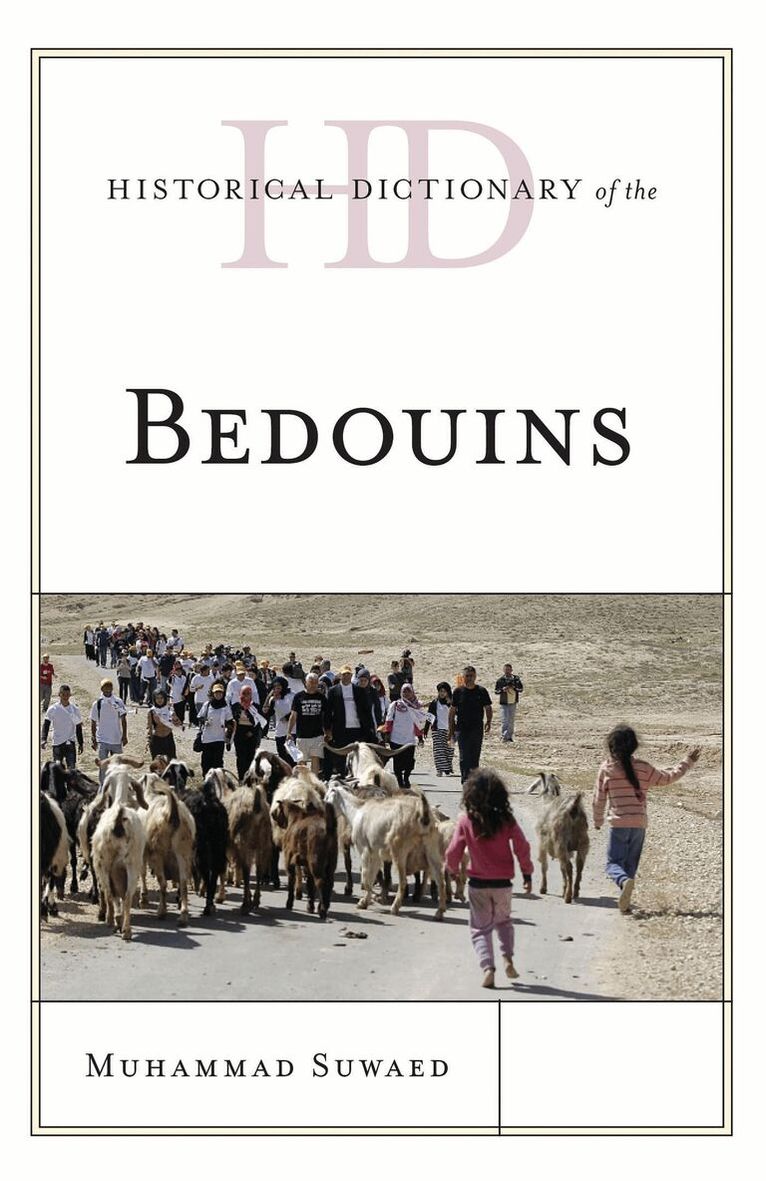
Historical Dictionary of the Bedouins
Del i serien Historical Dictionaries of Peoples and Cultures
1602 kr
Beställningsvara. Skickas inom 10-15 vardagar. Fri frakt över 249 kr.
Beskrivning
Produktinformation
- Utgivningsdatum: 2015-10-30
- Mått: 157 x 239 x 28 mm
- Vikt: 603 g
- Format: Inbunden
- Språk: Engelska
- Serie: Historical Dictionaries of Peoples and Cultures
- Antal sidor: 304
- Förlag: Bloomsbury Publishing Plc
- ISBN: 9781442254503
Utforska kategorier
Mer om författaren
Muhammad Suwaed is a senior lecturer in the Department of Social Sciences in Western Galilee College and Kinneret College in Israel. He won the first prize of the Prime Minister of the State of Israel for his studies on the subject of the Bedouins in 1994. He was a laureate of the Research and Creation Prize of the Ministry of Science and Culture of the State of Israel in 2008.
Recensioner i media
The term Bedouin—in Arabic, badawi (sing.) and bedu (pl.)—refers to Arabic-speaking nomadic and semi-nomadic groups that inhabit the arid and semi-arid regions of North Africa and the Middle East. Historically, the Bedouin were largely confined to the Arabian Peninsula and the adjacent Syrian Desert, where they made their living herding camels, sheep, and goats. Desertification and intertribal warfare forced the Bedouin to migrate in waves; over time, they abandoned their nomadic lifestyle to settle in the villages and cities of the region. Bedouin were, and remain, organized into tribal groups based on descent through the male line. As noted in the introduction to this newly published historical dictionary by Suwaed, tribal identity and tribal loyalty continue to play significant roles in organizing political and social life today. The author provides a chronology and an extensive bibliography along with the A–Z entries, which are generally brief and include some non-Arab nomadic groups living in Turkey, Iran, and North Africa…. Summing Up: Recommended. All levels of students; general readers.
Betyg & recensioner
0 recensioner
Inga recensioner tillgängliga.