• Fri frakt över 249 kr
  • •
  • Snabba leveranser
  • •
  • Billiga böcker
Kundservice

Du är på sajten för privatpersoner.

Företag, bibliotek eller offentlig verksamhet?

Du handlar på classic.bokus.com, där alla dina funktioner finns intakta.
Till classic.bokus.com
Bokus logotyp. Gå till startsidan.
  • Erbjudanden
  • Nyheter
  • Student
  • Topplistor
  • Barn & ungdom
  • Bokus Play
  • E-böcker
  • Pocketböcker
  • Spel & pussel

10% rabatt på allt med kod: NYSTART10 →

Sidfot

Mina sidor

    Hjälp

    • Kundservice
    • Vanliga frågor och svar
    • Frakt och leverans
    • Retur vid ångerrätt
    • Reklamera vara
    • Betalning
    • Köpvillkor
    • Allmänna villkor
    • Information om webbplatsens tillgänglighet

    Om Bokus

    • Om oss
    • Pressrum
    • För studenter
    • För företag
    • För bibliotek och offentlig verksamhet
    • För leverantörer
    • Hållbarhet

    Populärt

    • Aktuella erbjudanden
    • Presentkort
    • Studentlitteratur
    • Nya böcker
    • Topplistor
    • Signerade böcker
    • Engelska böcker

    Inspiration

    • Boktips
    • BookTok
    • Populära bokserier
    • Barnbokskaraktärer
    • Populära författare
    Logotyp för Bokus
    Följ oss på Facebook (extern länk)Följ oss på Instagram (extern länk)Följ oss på YouTube (extern länk)Följ oss på TikTok (extern länk)
    bokus @ CookiesAnpassa cookiesIntegritetspolicyKöpvillkor
    Till Citymail hemsida (extern länk)Till Budbee hemsida (extern länk)Till Postnord hemsida (extern länk)Till Schenker hemsida (extern länk)Till Early Bird hemsida (extern länk)Till Walleys hemsida (extern länk)
    1. Historia och arkeologi
    2. Historia
    3. Asiens historia

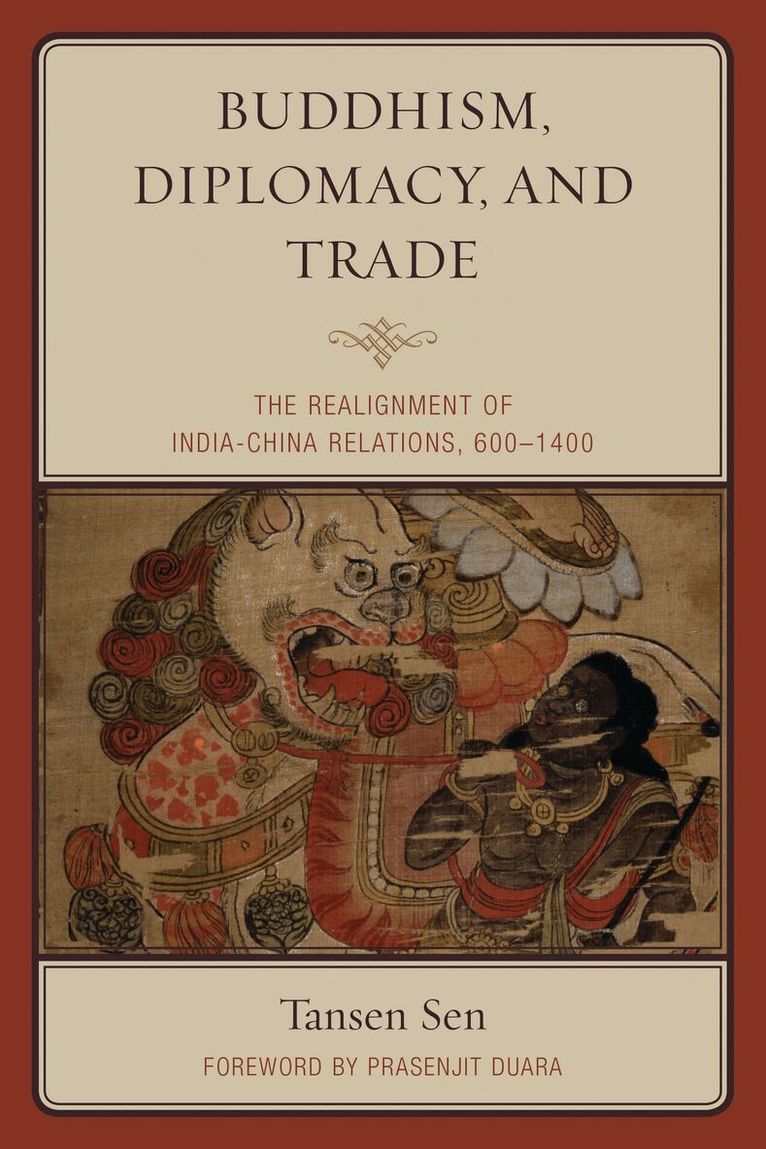
    Buddhism, Diplomacy, and Trade

    The Realignment of India–China Relations, 600–1400

    AvTansen Sen

    Inbunden, Engelska, 2015

    1 325 kr

    Beställningsvara. Skickas inom 10-15 vardagar. Fri frakt över 249 kr.

    Fler format och utgåvor

    Häftad

    590 kr

    E-bok

    634 kr

    Beskrivning

    Relations between China and India underwent a dramatic transformation from Buddhist-dominated to commerce-centered exchanges in the seventh to fifteenth centuries. The unfolding of this transformation, its causes, and wider ramifications are examined in this masterful analysis of the changing patterns of the interaction between the two most important cultural spheres in Asia.Tansen Sen offers a new perspective on Sino-Indian relations during the Tang dynasty (618–907), arguing that the period is notable not only for religious and diplomatic exchanges but also for the process through which China emerged as a center of Buddhist learning, practice, and pilgrimage. Before the seventh century, the Chinese clergy—given the spatial gap between the sacred Buddhist world of India and the peripheral China—suffered from a “borderland complex.” A close look at the evolving practice of relic veneration in China (at Famen Monastery in particular), the exposition of Mount Wutai as an abode of the bodhisattva Mañjusri, and the propagation of the idea of Maitreya’s descent in China, however, reveals that by the eighth century China had overcome its complex and successfully established a Buddhist realm within its borders.The emergence of China as a center of Buddhism had profound implications on religious interactions between the two countries and is cited by Sen as one of the main causes for the weakening of China’s spiritual attraction toward India. At the same time, the growth of indigenous Chinese Buddhist schools and teachings retrenched the need for doctrinal input from India. A detailed examination of the failure of Buddhist translations produced during the Song dynasty (960–1279), demonstrates that these developments were responsible for the unraveling of religious bonds between the two countries and the termination of the Buddhist phase of Sino-Indian relations.Sen proposes that changes in religious interactions were paralleled by changes in commercial exchanges. For most of the first millennium, trading activities between India and China were closely connected with and sustained through the transmission of Buddhist doctrines. The eleventh and twelfth centuries, however, witnessed dramatic changes in the patterns and structure of mercantile activity between the two countries. Secular bulk and luxury goods replaced Buddhist ritual items, maritime channels replaced the overland Silk Road as the most profitable conduits of commercial exchange, and many of the merchants involved were followers of Islam rather than Buddhism. Moreover, policies to encourage foreign trade instituted by the Chinese government and the Indian kingdoms contributed to the intensification of commercial activity between the two countries and transformed the China-India trading circuit into a key segment of cross-continental commerce.

    Produktinformation

    • Utgivningsdatum:2015-09-10
    • Mått:160 x 236 x 28 mm
    • Vikt:608 g
    • Format:Inbunden
    • Språk:Engelska
    • Antal sidor:326
    • Förlag:Bloomsbury Publishing Plc
    • Medarbetare:Prasenjit Duara
    • ISBN:9781442254718

    Utforska kategorier

    • Asiens historia inom Historia och arkeologi
    • Religion: allmänt inom Filosofi och religion
    • Buddhism inom Filosofi och religion

    Mer om författaren

    Tansen Sen is professor in the department of history at Baruch College, CUNY.

    Recensioner i media

    This is a splendid book. It has an overarching theme buttressed by immense detail. It has a central argument, one that defies and challenges a conventional view. Its scholarly appurtenances are superb, including notes, documentation, and index. It is well written and interesting. Indeed, I found it quite difficult to put down, despite its length, weight, and academic content…. It is a real tour de force of religious and diplomatic history and has put forward a new and convincing historical interpretation. It is the most thorough book on the subject of Sino-Indian relations and Buddhism in medieval China and India yet written and will certainly become the standard book on the subject. I suspect it will retain that status for quite a long time. I strongly recommend this book to all those interested in the history of Buddhism, the history of China and India, and the interrelationship among these topics.

    Innehållsförteckning

    • List of IllustrationsForeword by Prasenjit DuaraAcknowledgmentsList of AbbreviationsIntroduction: China’s Encounter and Predicament with the Indic World Chapter One: Military Concerns and Spiritual Underpinnings of Tang-India DiplomacyChapter Two: The Emergence of China as a Central Buddhist RealmChapter Three: The Termination of the Buddhist Phase of India-China InteractionsChapter Four: The Reconfiguration of India-China Trade and its Underlying CausesChapter Five: The Phases and the Wider Implications of the Reconfiguration of India-China TradeConclusion: From Buddhism to Commerce: The Realignment and Its ImplicationsBibliographyIndexAbout the Author