• Fri frakt över 249 kr
  • •
  • Snabba leveranser
  • •
  • Billiga böcker
Kundservice

Du är på sajten för privatpersoner.

Företag, bibliotek eller offentlig verksamhet?

Du handlar på classic.bokus.com, där alla dina funktioner finns intakta.
Till classic.bokus.com
Bokus logotyp. Gå till startsidan.
  • Erbjudanden
  • Nyheter
  • Student
  • Topplistor
  • Barn & ungdom
  • Bokus Play
  • E-böcker
  • Pocketböcker
  • Spel & pussel

10% rabatt på allt med kod NYSTART10 →

Sidfot

Mina sidor

    Hjälp

    • Kundservice
    • Vanliga frågor och svar
    • Frakt och leverans
    • Retur vid ångerrätt
    • Reklamera vara
    • Betalning
    • Köpvillkor
    • Allmänna villkor
    • Information om webbplatsens tillgänglighet

    Om Bokus

    • Om oss
    • Pressrum
    • För studenter
    • För företag
    • För bibliotek och offentlig verksamhet
    • För leverantörer
    • Hållbarhet

    Populärt

    • Aktuella erbjudanden
    • Presentkort
    • Studentlitteratur
    • Nya böcker
    • Topplistor
    • Signerade böcker
    • Engelska böcker

    Inspiration

    • Boktips
    • BookTok
    • Populära bokserier
    • Barnbokskaraktärer
    • Populära författare
    Logotyp för Bokus
    Följ oss på Facebook (extern länk)Följ oss på Instagram (extern länk)Följ oss på YouTube (extern länk)Följ oss på TikTok (extern länk)
    bokus @ CookiesAnpassa cookiesIntegritetspolicyKöpvillkor
    Till Citymail hemsida (extern länk)Till Budbee hemsida (extern länk)Till Postnord hemsida (extern länk)Till Schenker hemsida (extern länk)Till Early Bird hemsida (extern länk)Till Walleys hemsida (extern länk)
    1. Filosofi och religion
    2. Filosofi
    3. Filosofiska discipliner

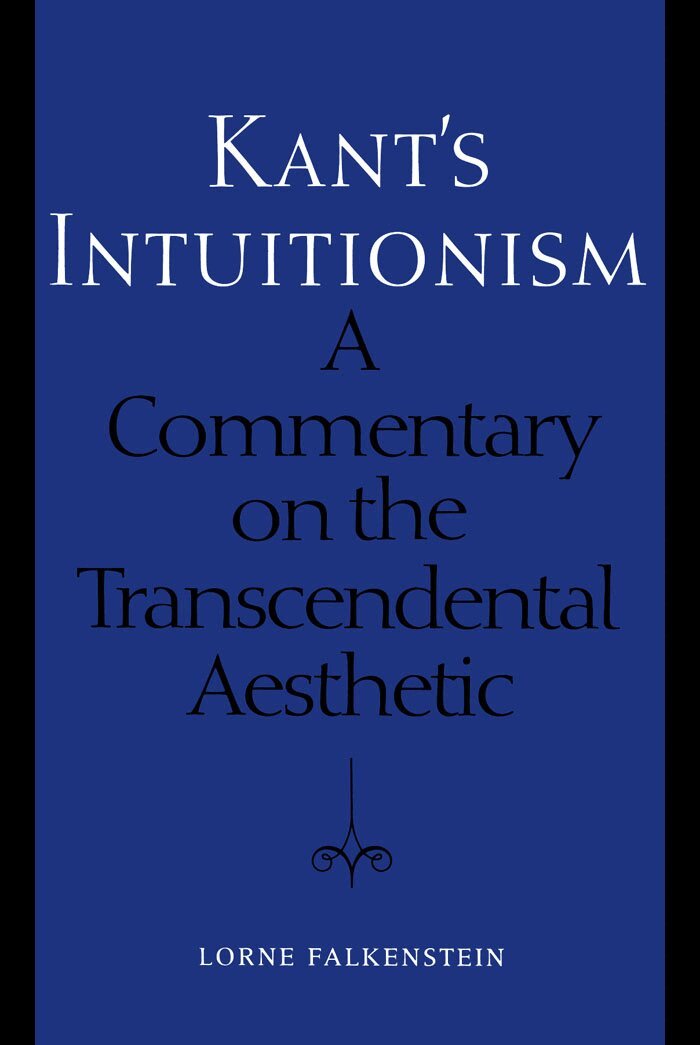
    Kant's Intuitionism

    A Commentary on the Transcendental Aesthetic

    AvLorne Falkenstein

    E-bok
    PDF, Engelska, 2004

    Del i serien Toronto Studies in Philosophy

    742 kr

    Läs direkt i Bokus Reader – eller ladda ned till din enhet (PDF kräver ofta zoom och scroll på små skärmar).

    Beskrivning

    Ever since the publication of his Critique of Pure Reason in 1781, Immanuel Kant has occupied a central position in the philosophical world. In Kant's Intuitionism – the most detailed study of Kant's views on the opening sections of the Critique since Hans Vaihinger's Commentar zur Kants Kritik der reinen Vernunft more than a century ago – Lorne Falkenstein focuses on one aspect of Kant's Transcendental Aesthetic, namely, his position on how we manage to intuit the properties and relations of objects as they exist in space and time.The question of how much structure sensory input has of itself and how much we give it through processing is a major problem not only in philosophy, but in cognitive science in general. How much do our faculties do to structure our knowledge of objects and to give them their spatial and temporal existence? Recent interpretations of Kant's doctrine of intuition have emphasized the constructivist answer to this question, but Falkenstein argues that our knowledge of objects in space and time is not grounded in concepts but in the quasi-physiological constitution of our senses. Kant's Intuitionism examines Kant's account of the human cognitive faculties, his views on space, and his reasons for denying that we have knowledge of things as they are in themselves. It is key to understanding the thinking of the philosopher and revitalizes the debate about the implications of the Transcendental Aesthetic.

    Produktinformation

    • Utgivningsdatum:2004-03-24
    • Språk:Engelska
    • Antal sidor:496
    • Filformat:PDF
    • Kopieringsskydd:LCP
    • ISBN:9781442676480
    • Förlag:University of Toronto Press
    • Serie:Toronto Studies in Philosophy
    • Vikt:1 g

    Utforska kategorier

    • Filosofiska discipliner inom Filosofi och religion

    Mer om författaren

    Lorne Falkenstein is a professor in the Department of Philosophy at the University of Western Ontario.

    Innehållsförteckning

    • 'This is an excellent work on Kant. Falkenstein tries both to determine what it was that Kant was intending to say and then evaluate the plausibility of Kant's arguments. The author is critical, but, at the same time, he goes out of his way to be fair not only to Kant but to rival interpretations of Kant. Anyone interested in Kant will want to read this work.'