• Fri frakt över 249 kr
  • •
  • Snabba leveranser
  • •
  • Billiga böcker
Kundservice

Du är på sajten för privatpersoner.

Företag, bibliotek eller offentlig verksamhet?

Du handlar på classic.bokus.com, där alla dina funktioner finns intakta.
Till classic.bokus.com
Bokus logotyp. Gå till startsidan.
  • Erbjudanden
  • Student
  • Topplistor
  • Barn & ungdom
  • Bokus Play
  • E-böcker
  • Ljudböcker
  • Pocketböcker
  • Spel och pussel

Pocketfynda! Hundratals böcker för 49 kr/st →

Sidfot

Mina sidor

    Hjälp

    • Kundservice
    • Vanliga frågor och svar
    • Frakt och leverans
    • Retur vid ångerrätt
    • Reklamera vara
    • Betalning
    • Köpvillkor
    • Allmänna villkor
    • Information om webbplatsens tillgänglighet

    Om Bokus

    • Om oss
    • Pressrum
    • För studenter
    • För företag
    • För bibliotek och offentlig verksamhet
    • För leverantörer
    • Hållbarhet

    Populärt

    • Aktuella erbjudanden
    • Presentkort
    • Studentlitteratur
    • Nya böcker
    • Topplistor
    • Signerade böcker
    • Engelska böcker

    Inspiration

    • Boktips
    • BookTok
    • Barnbokskaraktärer
    • Populära författare
    Logotyp för Bokus
    Följ oss på Facebook (extern länk)Följ oss på Instagram (extern länk)Följ oss på YouTube (extern länk)Följ oss på TikTok (extern länk)
    bokus @ CookiesAnpassa cookiesIntegritetspolicyKöpvillkor
    Till Citymail hemsida (extern länk)Till Budbee hemsida (extern länk)Till Postnord hemsida (extern länk)Till Schenker hemsida (extern länk)Till Early Bird hemsida (extern länk)Till Walleys hemsida (extern länk)
    1. Psykologi och pedagogik
    2. Pedagogik
    3. Pedagogisk teori och filosofi

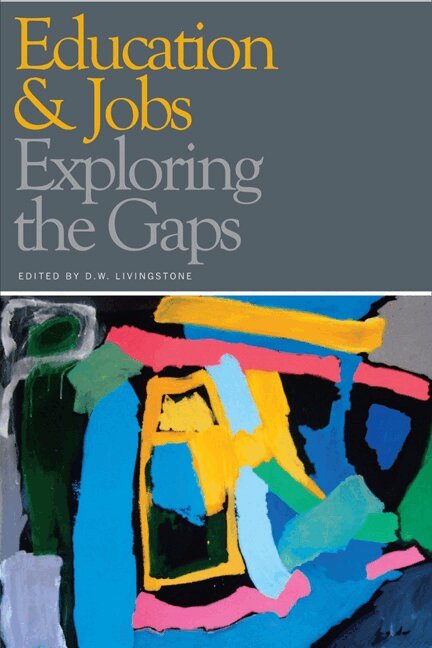
    Education and Jobs

    Exploring the Gaps

    AvD. W. Livingstone

    E-bok
    PDF, Engelska, 2009

    460 kr

    Läs direkt i Bokus Reader – eller ladda ned till din enhet (PDF kräver ofta zoom och scroll på små skärmar).

    Beskrivning

    What are the correlations between the education employees bring to their jobs, the education required to do those jobs, and the skills employees acquire while working on the job? Written as a sequel to the critically acclaimed The Education-Jobs Gap, Livingstone and contributors explore these questions by building on earlier research and presenting new labour force surveys and case studies of different economic classes and specific occupational groups. The survey evidence finds an increasingly overqualified non-managerial labour force (especially service sector and industrial workers, recent immigrants, and visible minorities). The case studies of professional employees (teachers and computer programmers), clerical workers, auto workers, and workers with disabilities explore how workers modify these apparent gaps by continuing to learn and reshape their jobs. The book is the most thorough exploration to date of relations between workers and jobs. The Education-Job Requirement Matching (EJRM) Research Project team, including M. Lordan, S. Officer, K.V. Pankhurst, M. Radsma, M. Raykov, J. Weststar, and O. Wilson, worked closely together for several years conducting and analyzing both survey and case study data. The new paradigm they present aims to help reshape future studies of learning and work.

    Produktinformation

    • Utgivningsdatum:2009-09-01
    • Språk:Engelska
    • Antal sidor:384
    • Filformat:PDF
    • Kopieringsskydd:LCP
    • ISBN:9781442686410
    • Förlag:University of Toronto Press
    • Dimensioner:152 x 229 x 25 mm
    • Vikt:1 g

    Utforska kategorier

    • Pedagogisk teori och filosofi inom Psykologi och pedagogik
    • Företagsekonomi inom Ekonomi och Ledarskap
    • Arbetsmarknaden inom Ekonomi och Ledarskap

    Mer om författaren

    D.W. Livingstone is Canada Research Chair in Lifelong Learning and Work at the University of Toronto, Head of the Centre for the Study of Education and Work at OISE/UT, and Director of the SSHRC national research network on "The Changing Nature of Work and Lifelong Learning."

    Recensioner i media

    This is a book that every adult educator will want on their bookshelf as a useful reference tool and a bullet-proof reminder that (1) Canada's workforce is better prepared than policy-makers would have us believe, and (2) workers themselves are the first to recognize on-the-job learning as crucial to maintaining their employment competency. - Canadian Journal for the Study of Adult Education

    Innehållsförteckning

    • List of Tables and Graphs Acknowledgements Key Acronyms Introduction, D.W. Livingstone Part One: Prior Research Perspectives 1. Prior Concepts and Theories of the Relationship between Workers and Jobs, D.W. Livingstone and K.V. Pankhurst 2. Prior Empirical Research on Education-Jobs Matching, D.W. Livingstone 3. Starting with The Education-Jobs Gap, D.W. LivingstonePart Two: Surveying the Gaps4. Education and Jobs Survey Profile I: National Trends in Employment Conditions, Job Requirements, Workers' Learning and Matching, 1983-2004, D.W. Livingstone and M. Raykov5. Education and Jobs Survey Profile II: Employment Conditions, Job Requirements, Workers' Learning and Matching, by Employee Class and Specific Occupational Group, 2004, D.W. Livingstone and M. RaykovPart Three: Exploring the Gaps: Case Studies6. Elements of an Integrated Theory of Work and Learning, K.V. Pankhurst7. Continual Learning, Autonomy, and Competency among High School Teachers, M. Lordan 8. Staying Current in Computer Programming: The Importance of Informal Learning and Task Discretion in Maintaining Job Competence, J. Weststar9. Clerical Workers: Work and Learning in Fragmenting Workplaces, M. Radsma 10. Auto Workers' Learning in Lean Production, D.W. Livingstone and O. Wilson11. Struggling to Remain Employed: Learning Strategies of Workers with Disabilities and the Education-Job Match, S. OfficerPart Four: Conclusions12. The Relationship between Learning and Work: Empirical Evidence from the Case Studies, K.V. Pankhurst13. Education and Jobs: The Way Ahead, D.W. Livingstone and K.V. Pankhurst Appendix 1: EJRM Case Study Interviewee Profiles Appendix 2: Economic Class and Specific Occupational Group, by Intentional Learning Activities, 2004 Bibliography The Authors Index