• Fri frakt över 249 kr
  • •
  • Snabba leveranser
  • •
  • Billiga böcker
Kundservice

Du är på sajten för privatpersoner.

Företag, bibliotek eller offentlig verksamhet?

Du handlar på classic.bokus.com, där alla dina funktioner finns intakta.
Till classic.bokus.com
Bokus logotyp. Gå till startsidan.
  • Erbjudanden
  • Nyheter
  • Student
  • Topplistor
  • Barn & ungdom
  • Bokus Play
  • E-böcker
  • Pocketböcker
  • Spel & pussel

10% rabatt på allt med kod: NYSTART10 →

Sidfot

Mina sidor

    Hjälp

    • Kundservice
    • Vanliga frågor och svar
    • Frakt och leverans
    • Retur vid ångerrätt
    • Reklamera vara
    • Betalning
    • Köpvillkor
    • Allmänna villkor
    • Information om webbplatsens tillgänglighet

    Om Bokus

    • Om oss
    • Pressrum
    • För studenter
    • För företag
    • För bibliotek och offentlig verksamhet
    • För leverantörer
    • Hållbarhet

    Populärt

    • Aktuella erbjudanden
    • Presentkort
    • Studentlitteratur
    • Nya böcker
    • Topplistor
    • Signerade böcker
    • Engelska böcker

    Inspiration

    • Boktips
    • BookTok
    • Populära bokserier
    • Barnbokskaraktärer
    • Populära författare
    Logotyp för Bokus
    Följ oss på Facebook (extern länk)Följ oss på Instagram (extern länk)Följ oss på YouTube (extern länk)Följ oss på TikTok (extern länk)
    bokus @ CookiesAnpassa cookiesIntegritetspolicyKöpvillkor
    Till Citymail hemsida (extern länk)Till Budbee hemsida (extern länk)Till Postnord hemsida (extern länk)Till Schenker hemsida (extern länk)Till Early Bird hemsida (extern länk)Till Walleys hemsida (extern länk)
    1. Naturvetenskap och teknik
    2. Geovetenskap
    3. Miljövetenskap och miljöpolitik

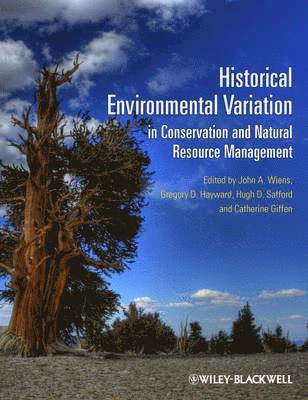
    Historical Environmental Variation in Conservation and Natural Resource Management

    AvJohn A. Wiens,Gregory D. Hayward

    Inbunden, Engelska, 2012

    1 428 kr

    Tillfälligt slut

    Beskrivning

    In North America, concepts of Historical Range of Variability are being employed in land-management planning for properties of private organizations and multiple government agencies. The National Park Service, U.S. Fish & Wildlife Service, Bureau of Land Management, U.S. Forest Service, and The Nature Conservancy all include elements of historical ecology in their planning processes. Similar approaches are part of land management and conservation in Europe and Australia. Each of these user groups must struggle with the added complication of rapid climate change, rapid land-use change, and technical issues in order to employ historical ecology effectively. Historical Environmental Variation in Conservation and Natural Resource Management explores the utility of historical ecology in a management and conservation context and the development of concepts related to understanding future ranges of variability. It provides guidance and insights to all those entrusted with managing and conserving natural resources: land-use planners, ecologists, fire scientists, natural resource policy makers, conservation biologists, refuge and preserve managers, and field practitioners. The book will be particularly timely as science-based management is once again emphasized in United States federal land management and as an understanding of the potential effects of climate change becomes more widespread among resource managers.Additional resources for this book can be found at: www.wiley.com/go/wiens/historicalenvironmentalvariation.

    Produktinformation

    • Utgivningsdatum:2012-08-10
    • Mått:193 x 244 x 20 mm
    • Vikt:953 g
    • Format:Inbunden
    • Språk:Engelska
    • Antal sidor:352
    • Förlag:John Wiley and Sons Ltd
    • ISBN:9781444337921

    Utforska kategorier

    • Miljövetenskap och miljöpolitik inom Naturvetenskap och teknik
    • Biovetenskap inom Naturvetenskap och teknik

    Mer om författaren

    John Wiens is a landscape ecologist and conservation scientist who was on the faculties of several universities in the United States before joining The Nature Conservancy as Chief Scientist in 2002. He has published over 200 scientific papers and six books, and has conducted research in Europe, South America, and Australia as well as the United States. He is currently Chief Conservation Science Officer at PRBO Conservation Science in California and is a visiting faculty member at the University of Western Australia in Perth. He lives in Corvallis, Oregon.Greg Hayward, Regional Wildlife Ecologist with the U.S. Forest Service in Alaska is a population ecologist with a passion for helping resource managers understand the trade-offs associated with difficult land management decisions. As a conservation practitioner Greg brings an academic perspective from faculty positions at the University of Idaho and University of Wyoming. Greg's research extends from boreal owls and flying squirrels to Amur tigers and cutthroat trout with a focus on the consequences of broad scale ecological disturbance on wildlife dynamics.Hugh Safford is Regional Ecologist for the USDA Forest Service Pacific Southwest Region, which includes California, Hawaii, and the Pacific Territories, and a research faculty affiliate with the Department of Environmental Science and Policy, University of California-Davis.Casey Giffen, most recently a biological scientist with the U.S. Forest Service National Office in Washington, DC, specializes in regulatory compliance and land management planning. Prior to working with the National Office she spent time in the eastern and western regions of the country working in forest management and natural resource planning. She has over 15 years of experience working with national, regional, and forest-level land management programs.

    Recensioner i media

    “The book provides a rich summary and critique of such ideas and approaches that will provide material both for under-graduate courses and for ecologists interested in the theory and practice of understanding historical ecological dynamics.”  (Ecological Management & Restoration, 18 May 2015)“But each chapter provides guidance on how historical ecology may be fruitfully applied to specific cases of management giving the reader much hope for the future and for potential course corrections on the landscape.”  (Landscape Ecol, 15 January 2015)"Overall, a very useful reference for advanced students in conservation and ecosystem management as well as researchers and managers developing future adaptation plans.  Summing Up: Highly recommended.  Upper-division undergraduates and above.”   (Choice, 1 March 2013)

    Innehållsförteckning

    • Contributors, vii Foreword, xPreface, xiiAcknowledgments, xivSECTION 1 BACKGROUND AND HISTORY, 1JOHN A. WIENS1 Setting the stage: theoretical and conceptual background of historical range of variation, 3WILLIAM H. ROMME, JOHN A. WIENS, AND HUGH D. SAFFORD2 Development of historical ecology concepts and their application to resource management and conservation, 19WAYNE PADGETT, BARBARA SCHRADER, MARY MANNING, AND TIMOTHY TEARSECTION 2 ISSUES AND CHALLENGES, 29HUGH D. SAFFORD3 Challenges in the application of historical range of variation to conservation and land management, 32GREGORY D. HAYWARD, THOMAS T. VEBLEN, LOWELL H. SURING, AND BOB DAVIS4 Historical ecology, climate change, and resource management: can the past still inform the future? 46HUGH D. SAFFORD, GREGORY D. HAYWARD, NICOLE E. HELLER, AND JOHN A. WIENS5 What is the scope of "history" in historical ecology? Issues of scale in management and conservation, 63JOHN A. WIENS, HUGH D. SAFFORD, KEVIN MCGARIGAL, WILLIAM H. ROMME, AND MARY MANNING6 Native Americans, ecosystem development, and historical range of variation, 76GREGORY J. NOWACKI, DOUGLAS W. MACCLEERY, AND FRANK K. LAKE7 Conservation and resource management in a changing world: extending historical range of variation beyond the baseline, 92STEPHEN T. JACKSONSECTION 3 MODELING HISTORIC VARIATION AND ITS APPLICATION FOR UNDERSTANDING FUTURE VARIABILITY, 111ROBERT E. KEANE8 Creating historical range of variation (HRV) time series using landscape modeling: overview and issues, 113ROBERT E. KEANE9 Modeling historical range of variability at a range of scales: an example application, 128KEVIN MCGARIGAL AND WILLIAM H. ROMMESECTION 4 CASE STUDIES OF APPLICATIONS, 147GREGORY D. HAYWARD10 Regional application of historical ecology at ecologically defi ned scales: forest ecosystems in the Colorado Front Range, 149THOMAS T. VEBLEN, WILLIAM H. ROMME, AND CLAUDIA REGAN11 Incorporating concepts of historical range of variation in ecosystem-based management of British Columbia's coastal temperate rainforest, 166ANDY MACKINNON AND SARI C. SAUNDERS12 Incorporating HRV in Minnesota national forest land and resource management plans: a practitioner's story, 176MARY SHEDD, JIM GALLAGHER, MICHAEL JIMÉNEZ, AND DUANE LULA13 Applying historical fire-regime concepts to forest management in the western United States: three case studies, 194THOMAS E. DEMEO, FREDERICK J. SWANSON, EDWARD B. SMITH, STEVEN C. BUTTRICK, JANE KERTIS, JEANNE RICE, CHRISTOPHER D. RINGO, AMY WALTZ, CHRIS ZANGER, CHERYL A. FRIESEN, AND JOHN H. CISSEL14 Using historical ecology to inform wildlife conservation, restoration, and management, 205BETH A. HAHN AND JOHN L. CURNUTT15 River floodplain restoration experiments offer a window into the past, 218RAMONA O. SWENSON, RICHARD J. REINER, MARK REYNOLDS, AND JAYMEE MARTY16 Streams past and future: fluvial responses to rapid environmental change in the context of historical variation, 232DANIEL A. AUERBACH, N. LEROY POFF, RYAN R. MCSHANE, DAVID M. MERRITT, MATTHEW I. PYNE, AND THOMAS K. WILDING17 A framework for applying the historical range of variation concept to ecosystem management, 246WILLIAM H. ROMME, GREGORY D. HAYWARD, AND CLAUDIA REGANSECTION 5 GLOBAL PERSPECTIVES, 263JOHN A. WIENS18 Ecological history guides the future of conservation: lessons from Africa, 265A.R.E. SINCLAIR19 Ecological history has present and future ecological consequences – case studies from Australia, 273DAVID LINDENMAYER20 A view from the past to the future, 281KEITH J. KIRBY21 Is the historical range of variation relevant to rangeland management? 289BRANDON T. BESTELMEYER22 Knowing the Fennoscandian taiga: ecohistorical lessons, 297YRJÖ HAILASECTION 6 CHALLENGES FOR THE FUTURE, 30523 Reflections on the relevance of history in a nonstationary world, 307JULIO L. BETANCOURT24 The growing importance of the past in managing ecosystems of the future, 319HUGH D. SAFFORD, JOHN A. WIENS, AND GREGORY D. HAYWARDIndex, 329Colour plate pages fall between pp. 162 and 163