• Fri frakt över 249 kr
  • •
  • Snabba leveranser
  • •
  • Billiga böcker
Kundservice

Du är på sajten för privatpersoner.

Företag, bibliotek eller offentlig verksamhet?

Du handlar på classic.bokus.com, där alla dina funktioner finns intakta.
Till classic.bokus.com
Bokus logotyp. Gå till startsidan.
  • Erbjudanden
  • Nyheter
  • Student
  • Topplistor
  • Barn & ungdom
  • Bokus Play
  • E-böcker
  • Pocketböcker
  • Spel & pussel

10% rabatt på allt med kod NYSTART10 →

Sidfot

Mina sidor

    Hjälp

    • Kundservice
    • Vanliga frågor och svar
    • Frakt och leverans
    • Retur vid ångerrätt
    • Reklamera vara
    • Betalning
    • Köpvillkor
    • Allmänna villkor
    • Information om webbplatsens tillgänglighet

    Om Bokus

    • Om oss
    • Pressrum
    • För studenter
    • För företag
    • För bibliotek och offentlig verksamhet
    • För leverantörer
    • Hållbarhet

    Populärt

    • Aktuella erbjudanden
    • Presentkort
    • Studentlitteratur
    • Nya böcker
    • Topplistor
    • Signerade böcker
    • Engelska böcker

    Inspiration

    • Boktips
    • BookTok
    • Populära bokserier
    • Barnbokskaraktärer
    • Populära författare
    Logotyp för Bokus
    Följ oss på Facebook (extern länk)Följ oss på Instagram (extern länk)Följ oss på YouTube (extern länk)Följ oss på TikTok (extern länk)
    bokus @ CookiesAnpassa cookiesIntegritetspolicyKöpvillkor
    Till Citymail hemsida (extern länk)Till Budbee hemsida (extern länk)Till Postnord hemsida (extern länk)Till Schenker hemsida (extern länk)Till Early Bird hemsida (extern länk)Till Walleys hemsida (extern länk)
    1. Ekonomi och Ledarskap
    2. Nationalekonomi
    3. Mikroekonomi

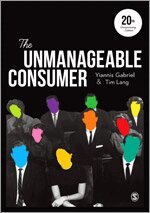
    The Unmanageable Consumer

    AvYiannis Gabriel,Tim Lang

    Häftad, Engelska, 2015

    1 777 kr

    Beställningsvara. Skickas inom 3-6 vardagar. Fri frakt över 249 kr.

    Fler format och utgåvor

    Inbunden

    2 736 kr

    Beskrivning

    ‘The Unmanageable Consumer has long been one of my favorite books in the sociology of consumption. This long overdue third edition has updated and revised the basic argument in many ways. Most importantly, it now offers a new chapter on the consumer as worker or, more generally, the prosumer. Assign it to your classes (I have…and will again) and read it for your edification.’ - George Ritzer, Distinguished University Professor, University of Maryland, USA

    Western-style consumerism is often presented as unstoppable, yet its costs mount and its grip on consumer reality weakens. In this 20th Anniversary edition, Gabriel and Lang restate their thesis that consumerism is more fragile and unmanageable than is assumed by its proponents.

    Consumerism has been both stretched and undermined by globalization, the internet, social media and other cultural changes. Major environmental threats, debt, squeezed incomes and social inequalities now temper Western consumers' appetite for spending. The 20th century Deal, first championed by Henry Ford, of more consumption from higher waged work looks tattered. 
     
    This edition of The Unmanageable Consumer continues to explore 10 different consumer models, and encourages analysis of contemporary consumerism. It looks at the spread of consumerism to developing countries like India and China and considers the effects of demographic changes and migration, and points to new features such as consumers taking on unwaged work.

    New to this edition:

    • Coverage of new phenomenon such as social media and emerging markets
    • Explores contemporary topics including the occupy movement and horsemeat scandal
    • A new chapter on the consumer as worker.


    'This is a remarkable and important book. The new edition updates consumer cultural studies to take into account austerity politics and the economic crisis, and the impact these have had on how we think about and experience everyday practices of shopping and consuming. The authors also build on and maintain the lively and challenging argument from the previous volumes which sees the consumer as an unstable space for a multiplicity of often contradictory responses which can unsettle the various strategies on the part of contemporary capitalism to have us buy more.' - Angela McRobbie, Goldsmiths, University of London

    ‘The book exemplifies how social science should be: engaged, insightful, imaginative, scholarly and highly socially and politically relevant. Strongly recommended to students, academics as well as all people interested in understanding our time and themselves in an age of consumerism and false promises.’ - Mats Alvesson, Professor of Business Administration, Lund University, Sweden

    Produktinformation

    • Utgivningsdatum:2015-10-05
    • Mått:163 x 236 x 18 mm
    • Vikt:477 g
    • Format:Häftad
    • Språk:Engelska
    • Antal sidor:280
    • Upplaga:3
    • Förlag:SAGE Publications
    • ISBN:9781446298527

    Utforska kategorier

    • Mikroekonomi inom Ekonomi och Ledarskap
    • Kulturvetenskap inom Samhälle och politik

    Mer om författaren

    Yiannis Gabriel is Professor of Organizational Theory at Bath University. Yiannis has a degree in Mechanical Engineering from Imperial College London and a PhD in Sociology from the University of California, Berkeley.  Yiannis is well known for his work into organizational storytelling and narratives, leadership, management learning and the culture and politics of contemporary consumption. He has used stories as a way of studying numerous social and organizational phenomena including leader-follower relations, group dynamics and fantasies, nostalgia, insults and apologies. He has also carried out extensive research on the psychoanalysis of organizations.  Yiannis is founder and coordinator of the Organizational Storytelling Seminar series, now in its fourteenth year (See http://www.organizational-storytelling.org.uk/), the author of nine books and numerous articles. He is elected to the board of EGOS and is currently Senior Editor of Organization Studies. His enduring fascination as a researcher lies in what he describes as the unmanageable qualities of life in and out of organizations.Tim Lang has been Professor of Food Policy at City University′s Centre for Food Policy since 2002. With a PhD in Social Psychology from Leeds University he became a hill farmer in Lancashire, North of England, in the 1970s. Over the last four decades he has engaged in public and academic research and debate about food policy: what sort of food system do we want? What do we mean by progress? He has written and co-written 10 books and many reports and papers on the trends, problems and policy frameworks in the food system. A constant theme is how public health, environment, social justice and consumer rights do and don’t connect. Besides his academic work, he has been an advisor to many bodies including the World Health Organisation, the EU Environment Commissioner, the Mayor of London and many civil society organisations. He was the UK Government’s Sustainable Development Commissioner for food and land use in 2006-11. All this enquiry and engagement spawned and retains his keen interest in the issues analysed in The Unmanageable Consumer.

    Recensioner i media

    The Unmanageable Consumer has long been one of my favorite books in the sociology of consumption. This long overdue third edition has updated and revised the basic argument in many ways. Most importantly, it now offers a new chapter on the consumer as worker or, more generally, the prosumer. It also takes into account the fact that consumption, better hyper-consumption, is not only still with us, but if anything it is accelerating. The continued increase in hyper-consumption and the rapidly changing nature of consumption/prosumption, as well as their relationship to one another, make this edition more relevant than ever. Assign it to your classes (I have… and will again) and read it for your edification.

    Innehållsförteckning

    • The Emergence Of Contemporary ConsumerismThe Consumer As ChooserThe Consumer As CommunicatorThe Consumer As ExplorerThe Consumer As Identity-SeekerThe Consumer As HedonistThe Consumer As VictimThe Consumer As RebelThe Consumer As ActivistThe Consumer As CitizenThe Consumer As WorkerThe Unmanageable Consumer