• Fri frakt över 249 kr
  • •
  • Snabba leveranser
  • •
  • Billiga böcker
Kundservice

Du är på sajten för privatpersoner.

Företag, bibliotek eller offentlig verksamhet?

Du handlar på classic.bokus.com, där alla dina funktioner finns intakta.
Till classic.bokus.com
Bokus logotyp. Gå till startsidan.
  • Erbjudanden
  • Nyheter
  • Student
  • Topplistor
  • Barn & ungdom
  • Bokus Play
  • E-böcker
  • Pocketböcker
  • Spel & pussel

10% rabatt på allt med kod: NYSTART10 →

Sidfot

Mina sidor

    Hjälp

    • Kundservice
    • Vanliga frågor och svar
    • Frakt och leverans
    • Retur vid ångerrätt
    • Reklamera vara
    • Betalning
    • Köpvillkor
    • Allmänna villkor
    • Information om webbplatsens tillgänglighet

    Om Bokus

    • Om oss
    • Pressrum
    • För studenter
    • För företag
    • För bibliotek och offentlig verksamhet
    • För leverantörer
    • Hållbarhet

    Populärt

    • Aktuella erbjudanden
    • Presentkort
    • Studentlitteratur
    • Nya böcker
    • Topplistor
    • Signerade böcker
    • Engelska böcker

    Inspiration

    • Boktips
    • BookTok
    • Populära bokserier
    • Barnbokskaraktärer
    • Populära författare
    Logotyp för Bokus
    Följ oss på Facebook (extern länk)Följ oss på Instagram (extern länk)Följ oss på YouTube (extern länk)Följ oss på TikTok (extern länk)
    bokus @ CookiesAnpassa cookiesIntegritetspolicyKöpvillkor
    Till Citymail hemsida (extern länk)Till Budbee hemsida (extern länk)Till Postnord hemsida (extern länk)Till Schenker hemsida (extern länk)Till Early Bird hemsida (extern länk)Till Walleys hemsida (extern länk)
    1. Medicin
    2. Andra medicinska specialiteter
    3. Farmakologi

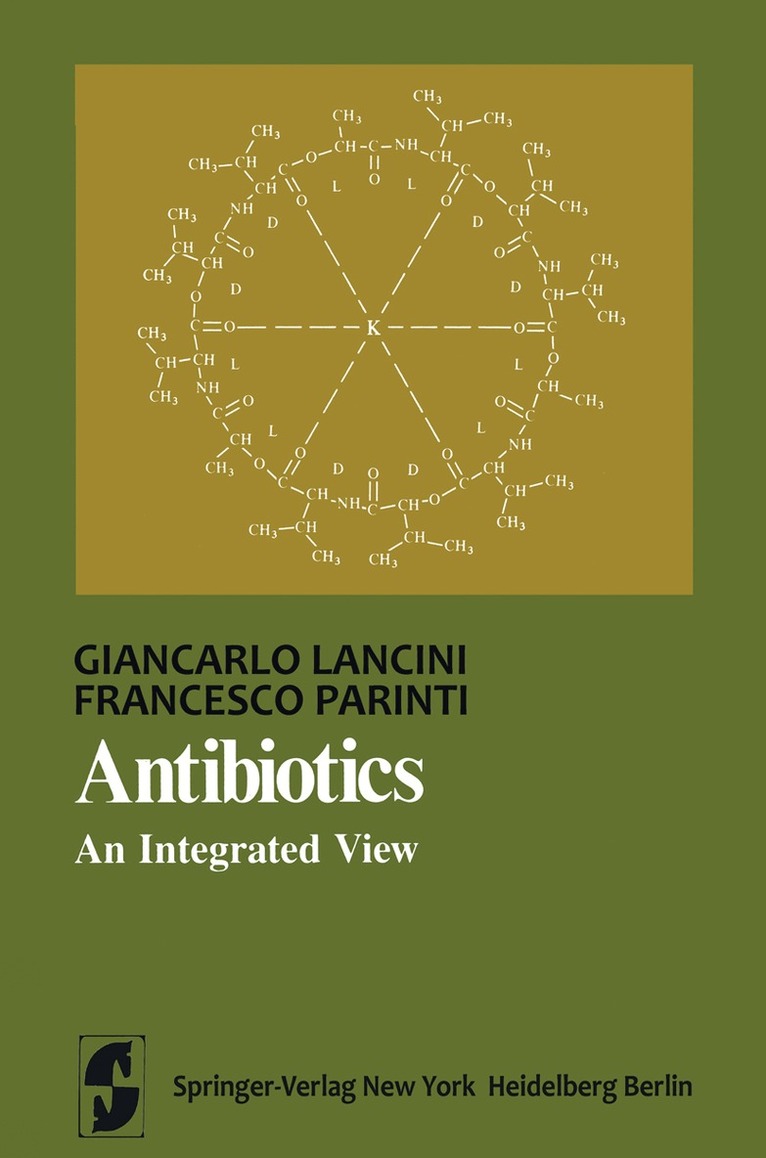
    Antibiotics

    An Integrated View

    AvGiancarlo Lancini,Francesco Parenti

    Häftad, Engelska, 2011

    Del i serien Springer Series in Microbiology

    563 kr

    Beställningsvara. Skickas inom 10-15 vardagar. Fri frakt över 249 kr.

    Beskrivning

    Antibiotics are among the most widely prescribed drugs in both human and veterinary medicine. Furthermore, they are used to protect plants against bacterial and fungal diseases, to decontaminate the shells of eggs, and to improve weight gain and feed conversion in a variety of food animals. Many antibiotics, in addition, have been esseptial tools in the elucidation of specific cellular functions. Genetic engineering, for example, would not be what it is today without the use of antibiotics in the selection of easily determined genetic markers. Production of antibiotics involves a diverse group of professionals: the fermentation technologist, the bioengineer, the extraction chemist. To im­ prove productivity, an understanding of the biosynthetic pathway and the mechanisms of its control is often useful. After the more than 40 years since the discovery of penicillin, the biol­ ogist is still unable to answer basic questions: Why are antibiotics produced by only a small number of microbial groups? What is the function of anti­ biotics in nature? When we started to teach our course on the science of antibiotics at the University of Pavia and the University of Milan, we realized that there was no book that presented the basic facts and concepts on all aspects of this diverse science. This book therefore arose out of our teaching need. Our experience in the discovery, development, and production of antibiotics has certainly imparted a practical nuance to this book.

    Produktinformation

    • Utgivningsdatum:2011-11-09
    • Mått:155 x 235 x 15 mm
    • Vikt:417 g
    • Format:Häftad
    • Språk:Engelska
    • Serie:Springer Series in Microbiology
    • Antal sidor:253
    • Förlag:Springer-Verlag New York Inc.
    • ISBN:9781461256762
    • Översättare:Betty Rubin

    Utforska kategorier

    • Farmakologi inom Medicin
    • Biovetenskap inom Naturvetenskap och teknik

    Innehållsförteckning

    • 1 The Antibiotics: An Overview.- I. Definition.- II. Chemical Nature.- III. Producing Microorganisms.- IV. Biosynthesis.- V. Activity and Resistance.- VI. Mechanism of Action.- VII. Chemotherapy.- VIII. Chemical Modifications.- IX. Principal Classes of Antibiotics.- 2 Activity of the Antibiotics.- I. Definition.- II. Determination of the Minimal Inhibitory Concentration in Liquid Medium.- III. Determination of the Minimal Inhibitory Concentration in Solid Medium.- IV. Determination of Antibiotic Activity by the Agar Diffusion Test.- V. Factors Affecting the Determination of Antibiotic Activity.- VI. Determination of the Minimal Bactericidal Concentration.- VII. The Antibiogram (Bacterial Sensitivity Test).- VIII. Spectrum of Antibiotic Activity.- IX. Interaction of Antibiotics.- X. Recent Microbiological Techniques: Miniaturization and Automation.- 3 Mechanism of Action of the Antibiotics.- I. Relationship Between the Mechanism of Action and the Selectivity of the Antibiotics.- II. Methods for Study of the Mechanism of Action of Antibiotics.- III. Inhibitors of Cell Wall Synthesis.- IV. Inhibitors of Transcription and Replication of Genetic Material.- V. Inhibitors of Protein Synthesis.- VI. Inhibitors of Cell Membrane Functions.- VII. The Antimetabolites.- 4 Resistance of Microorganisms to Antibiotics.- I. General Aspects.- II. Biochemical Bases of Resistance.- III. Genetic Aspects.- 5 Activities of the Antibiotics in Relation to Their Structures.- I. Introduction.- II. ?-Lactam Antibiotics.- III. Tetracyclines.- TV. Aminoglycosides.- V. Macrolides.- VI. Ansamycins.- VII. Peptide Antibiotics.- VIII. Miscellaneous Antibiotics.- 6 Biosynthesis of Antibiotics.- I. Primary and Secondary Metabolites.- II. Methods of Study.- III. Antibiotics Derived from a Single PrimaryMetabolite.- IV. Antibiotics Derived by Condensation of Several Metabolites.- V. Antibiotics Derived by Oligomer or Polymer Formation.- 7 Search for and Development of New Antibiotics.- I. Search for New Antibiotics.- II. Development of an Antibiotic from the Laboratory to the Clinic.- III. Development: From the Laboratory to the Manufacturing Process.- 8 The Use of Antibiotics.- I. Chemotherapy of Infectious Diseases.- II. Uses Other than Human Pharmacology.- III. Antibiotics as Research Tools.- 9 Antibiotics and Producer Organisms.- I. Classes of Antibiotics and Taxonomic Positions of Producing Organisms.- II. Paradox: How to Avoid Suicide.- III. Hypotheses about the Function(s) of Antibiotics in Producing Organisms.- Further Readings.