E-bok, Engelska, 2012
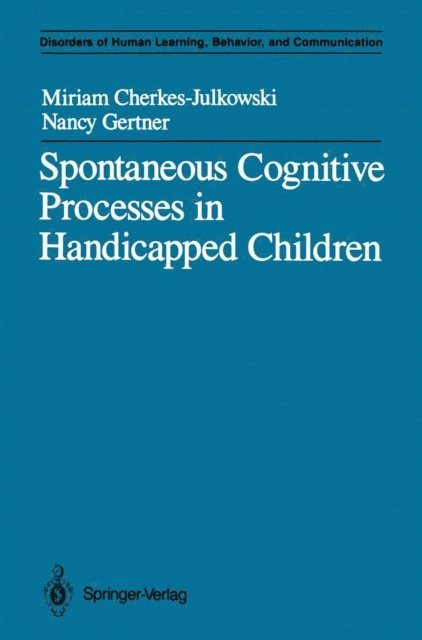
Spontaneous Cognitive Processes in Handicapped Children
Av Nancy Gertner, Miriam Cherkes-Julkowski
755 kr
Läs direkt i Bokus Reader – eller ladda ned till din enhet (PDF kräver ofta zoom och scroll på små skärmar).
Beskrivning
The thinking that began this book arose out of some dissatisfaction with the rela tively simplified, unidimensional model of development, which seems to have come to dominate the fields that address the needs of atypically developing chil dren. It seemed impossible to us that developmental differences could explain the range of learning and coping styles we have seen and read about in children iden tified as mentally retarded, slow learning, learning disabled, nonhandicapped, and gifted. If a typical model of development did not account for what children with handicaps to learning could do, when they would do it, and how they would accomplish it, such a model was not likely to imply anything important about how to intervene with and help them. Unfortunately, when we first began to examine this problem, turning away from a developmental model for interpreting atypical behavior meant turning toward a behaviorist one. This was not very satisfying either. Again the assumptions were bothersome. We were expected to accept that all children, this time at all ages as well as with all kinds of diagnoses, learned in essentially the same way with perhaps some variation in rate, reac tivity, reinforcement preferences, and, according to more liberal applications, expectancy. In our search for a more satisfying view of the atypical learner, we were lucky to be lost at the moment when cognitive psychology and systems theory were being found.
Produktinformation
- Utgivningsdatum: 2012-12-06
- Språk: Engelska
- Filformat: PDF
- Kopieringsskydd: LCP
- ISBN: 9781461388043
- Förlag: Springer New York
Utforska kategorier
Betyg & recensioner
0 recensioner
Inga recensioner tillgängliga.