• Fri frakt över 249 kr
  • •
  • Snabba leveranser
  • •
  • Billiga böcker
Kundservice

Du är på sajten för privatpersoner.

Företag, bibliotek eller offentlig verksamhet?

Du handlar på classic.bokus.com, där alla dina funktioner finns intakta.
Till classic.bokus.com
Bokus logotyp. Gå till startsidan.
  • Erbjudanden
  • Nyheter
  • Student
  • Topplistor
  • Barn & ungdom
  • Bokus Play
  • E-böcker
  • Pocketböcker
  • Spel & pussel

10% rabatt på allt med kod NYSTART10 →

Sidfot

Mina sidor

    Hjälp

    • Kundservice
    • Vanliga frågor och svar
    • Frakt och leverans
    • Retur vid ångerrätt
    • Reklamera vara
    • Betalning
    • Köpvillkor
    • Allmänna villkor
    • Information om webbplatsens tillgänglighet

    Om Bokus

    • Om oss
    • Pressrum
    • För studenter
    • För företag
    • För bibliotek och offentlig verksamhet
    • För leverantörer
    • Hållbarhet

    Populärt

    • Aktuella erbjudanden
    • Presentkort
    • Studentlitteratur
    • Nya böcker
    • Topplistor
    • Signerade böcker
    • Engelska böcker

    Inspiration

    • Boktips
    • BookTok
    • Populära bokserier
    • Barnbokskaraktärer
    • Populära författare
    Logotyp för Bokus
    Följ oss på Facebook (extern länk)Följ oss på Instagram (extern länk)Följ oss på YouTube (extern länk)Följ oss på TikTok (extern länk)
    bokus @ CookiesAnpassa cookiesIntegritetspolicyKöpvillkor
    Till Citymail hemsida (extern länk)Till Budbee hemsida (extern länk)Till Postnord hemsida (extern länk)Till Schenker hemsida (extern länk)Till Early Bird hemsida (extern länk)Till Walleys hemsida (extern länk)
    1. Psykologi och pedagogik
    2. Pedagogik
    3. Högskola och universitet

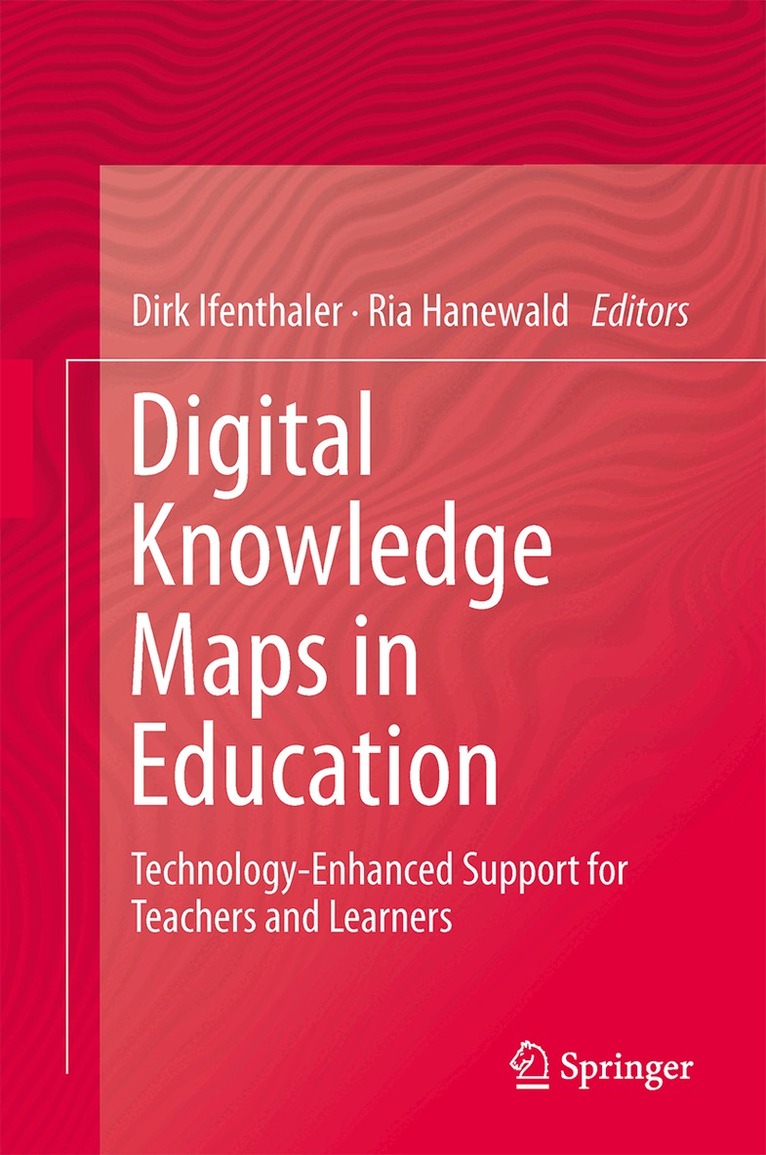
    Digital Knowledge Maps in Education

    Technology-Enhanced Support for Teachers and Learners

    AvDirk Ifenthaler,Ria Hanewald

    Inbunden, Engelska, 2013

    1 054 kr

    Beställningsvara. Skickas inom 10-15 vardagar. Fri frakt över 249 kr.

    Beskrivning

    Digital knowledge maps are ‘at a glance’ visual representations that enable enriching, imaginative and transformative ways for teaching and learning, with the potential to enhance positive educational outcomes. The use of such maps has generated much attention and interest among tertiary education practitioners and researchers over the last few years as higher education institutions around the world begin to invest heavily into new technologies designed to provide online spaces within which to build resources and conduct activities. The key elements of this edited volume will comprise original and innovative contributions to existing scholarship in this field, with examples of pedagogical possibilities as they are currently practiced across a range of contexts. It will contain chapters that address, theory, research and practical issues related to the use of digital knowledge maps in all aspects of tertiary education and draws predominantly on international perspectives with a diverse group of invited contributors. Reports on empirical studies as well as theoretical/conceptual chapters that engage deeply with pertinent questions and issues raised from a pedagogical, social, cultural, philosophical, and/or ethical standpoint are included. Systematic literature reviews dealing with digital knowledge mapping in education are also an integral part of the volume.

    Produktinformation

    • Utgivningsdatum:2013-11-02
    • Mått:155 x 235 x 29 mm
    • Vikt:811 g
    • Format:Inbunden
    • Språk:Engelska
    • Antal sidor:405
    • Upplaga:2014
    • Förlag:Springer-Verlag New York Inc.
    • ISBN:9781461431770

    Utforska kategorier

    • Högskola och universitet inom Psykologi och pedagogik
    • Material och digital teknik i undervisningen inom Psykologi och pedagogik
    • Pedagogisk metodik inom Psykologi och pedagogik

    Mer om författaren

    Dr. Ifenthaler's research interests focus on the learning-dependent progression of mental models, problem solving, decision making, situational awareness, game-based learning, and emotions. He developed an automated and computer-based methodology for the assessment and analysis of graphical and natural language representations (SMD Technology, HIMATT, AKOVIA). Additionally, he developed components of course management software and an educational simulation games (DIVOSA, SEsim). He is also interested in the development of educational software and learning management systems (LMS). Dr. Hanewald has worked on funded research projects investigating 'Pedagogical Agents for Modelling On-Line and Computer-Interactive Learning' (PEDANT) and 'Reusable Learning Objects' (RELO). She has also conducted research into the use of ICT in education, including online and mobile technologies with several grants for projects in these areas. Her contribution to the wider community includes being co-editor for the ICT in Education Journal (2007-2010), serving as a state council committee member of the Computer in Education Group of Victoria (2006-2010), a Consulting Editor for the Australian Journal of Teacher Education (2007-present)and an Editorial Advisory Board Member for the Handbook on Collaborative Learning usingConcept Mapping (2010).

    Innehållsförteckning

    • PART I- Digital Knowledge Maps in Open, Distance, and Flexible Learning Contexts.- Chapter 1 – Digital Knowledge Mapping In Educational Contexts.- Chapter 2 - Making Sense Of Knowledge Integration Maps.- Chapter 3 - Concept Maps For Comprehension And Navigation Of Hypertexts.- Chapter 4 - Using Digital Knowledge Maps For Supporting Tutors Giving Effective Explanations.- Chapter 5 - Investigating Through Concept Mapping Pre-Service Teachers’ Thinking Progression About ‘Elearning’ And Its Integration Into Teaching.- Chapter 6 – Concept Mapping In Graduate Education.- PART II – Digital Knowledge Maps in Collaborative Learning Contexts.- Chapter 7 - Collaborative Work With Digital Knowledge Maps On Improving Esl Learners’ Reading Skills.- Chapter 8 - Researching Individual And Collaborative Pair Learning In Primary School Students Using Digital Knowledge Maps For Science Education.- Chapter 9 - Towards A Cultural-Historical Theory Of Knowledge Mapping: Collaboration And Activity In The Zone Of Proximal Development.- Chapter 10 - Developing Australian Undergraduate Students’science Communication Skills Through Collaboratively Created Digital Knowledge Maps.- Chapter 11 - Using Novakian Concept Maps To Foster Peer Collaboration In Higher Education.- PART III – Advances in Assessment Using Digital Knowledge Maps.-Chapter 12 - Assessment For Learning Using Digital Knowledge Maps.- Chapter 13 - Sequentially Analyzing And Modeling Causal Mapping Processes That Support Causal Understanding And Systems Thinking.- Chapter 14 - Gainfully Guided Misconception - How Automatically Generated Knowledge Maps can Help Companies Within and Across Their Projects.- Chapter 15 - Digital Concept Mapping for Formative Assessment.- Chapter 16 - Digital Knowledge Maps: The Foundation For Learning Analytics Through Instructional Games.- PART IV – Case Studies Investigating Digital Knowledge Maps.- Chapter 17 - Digital Knowledge Mapping AsAn Instructional Strategy To Enhance Knowledge Convergence – A Case Study.- Chapter 18 - Shared Cognitions In A Field Of Informal Education - Knowledge Maps Towards Money Management Of Young Adults.- Chapter 19 - Predispositions To Concept Mapping: Case Studies Of Four Disciplines In Higher Education.