• Fri frakt över 249 kr
  • •
  • Snabba leveranser
  • •
  • Billiga böcker
Kundservice

Du är på sajten för privatpersoner.

Företag, bibliotek eller offentlig verksamhet?

Du handlar på classic.bokus.com, där alla dina funktioner finns intakta.
Till classic.bokus.com
Bokus logotyp. Gå till startsidan.
  • Erbjudanden
  • Nyheter
  • Student
  • Topplistor
  • Barn & ungdom
  • Bokus Play
  • E-böcker
  • Pocketböcker
  • Spel & pussel

10% rabatt på allt med kod: NYSTART10 →

Sidfot

Mina sidor

    Hjälp

    • Kundservice
    • Vanliga frågor och svar
    • Frakt och leverans
    • Retur vid ångerrätt
    • Reklamera vara
    • Betalning
    • Köpvillkor
    • Allmänna villkor
    • Information om webbplatsens tillgänglighet

    Om Bokus

    • Om oss
    • Pressrum
    • För studenter
    • För företag
    • För bibliotek och offentlig verksamhet
    • För leverantörer
    • Hållbarhet

    Populärt

    • Aktuella erbjudanden
    • Presentkort
    • Studentlitteratur
    • Nya böcker
    • Topplistor
    • Signerade böcker
    • Engelska böcker

    Inspiration

    • Boktips
    • BookTok
    • Populära bokserier
    • Barnbokskaraktärer
    • Populära författare
    Logotyp för Bokus
    Följ oss på Facebook (extern länk)Följ oss på Instagram (extern länk)Följ oss på YouTube (extern länk)Följ oss på TikTok (extern länk)
    bokus @ CookiesAnpassa cookiesIntegritetspolicyKöpvillkor
    Till Citymail hemsida (extern länk)Till Budbee hemsida (extern länk)Till Postnord hemsida (extern länk)Till Schenker hemsida (extern länk)Till Early Bird hemsida (extern länk)Till Walleys hemsida (extern länk)
    1. Psykologi och pedagogik
    2. Pedagogik
    3. Högskola och universitet

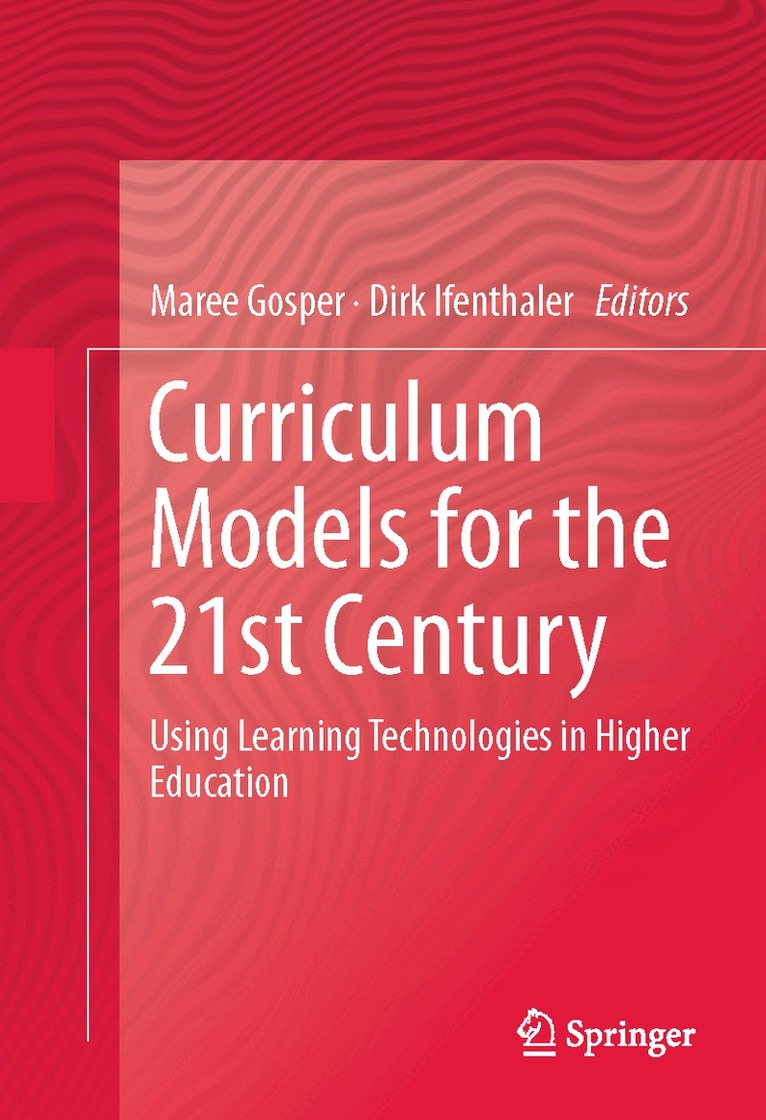
    Curriculum Models for the 21st Century

    Using Learning Technologies in Higher Education

    AvMaree Gosper,Dirk Ifenthaler

    Inbunden, Engelska, 2013

    1 579 kr

    Beställningsvara. Skickas inom 10-15 vardagar. Fri frakt över 249 kr.

    Beskrivning

    Changing student profiles and the increasing availability of mainstream and specialized learning technologies are stretching the traditional face-to-face models of teaching and learning in higher education. Institutions, too, are facing far-reaching systemic changes which are placing strains on existing resources and physical infrastructure and calling into question traditional ways of teaching through lectures and tutorials. And, with an ever-increasing scrutiny on teaching and teachers’ accountability for positive educational outcomes, the call for closer attention to learning, teaching and, most especially, to the design and delivery of the curriculum is given increasing relevance and importance.  Research provides strong evidence of the potential for technologies to facilitate not only cognition and learning but also to become integral components in the redesign of current curriculum models. Some Universities and individual academics have moved along this pathway, developing new and innovative curriculum, blending pedagogies and technologies to suit their circumstances. Yet, there are others, unsure of the possibilities, the opportunities and constraints in these changing times. Curriculum Models for the 21st Century gives insights into how teaching and learning can be done differently. The focus is on a whole of curriculum approach, looking at theoretical models and examples of practice which capitalize on the potential of technologies to deliver variations and alternatives to the more traditional lecture-based model of University teaching.​

    Produktinformation

    • Utgivningsdatum:2013-08-29
    • Mått:155 x 235 x 30 mm
    • Vikt:869 g
    • Format:Inbunden
    • Språk:Engelska
    • Antal sidor:444
    • Upplaga:2014
    • Förlag:Springer-Verlag New York Inc.
    • ISBN:9781461473657

    Utforska kategorier

    • Högskola och universitet inom Psykologi och pedagogik
    • Material och digital teknik i undervisningen inom Psykologi och pedagogik
    • Läroplaner och kursplaner inom Psykologi och pedagogik

    Mer om författaren

    Dr. Gosper is a teacher and researcher working in the area of professional and organisational development in universities. Her research interests encompass the development of expertise, integration of technologies into the curriculum, matching cognitive processes with the affordances of technologies, and the development of effective and sustainable learning environments. She developed the MAPLET Framework, for matching aims, processes, learner expertise and technologies which can be used as both a curriculum diagnostic and development tool. She was also led the development of the CICTO Framework for selecting software solutions for quality learning and sustainable practice based on interrelationships between the curriculum, information and communication technologies and the organizational environment. Dr. Ifenthaler’s research interests focus on the learning-dependent progression of mental models, problem solving, decision making, situational awareness, game-based learning, and emotions. He developed an automated and computer-based methodology for the assessmentand analysis of graphical and natural language representations (SMD Technology, HIMAT, AKOVIA). Additionally, he developed components of course management software and an educational simulation games (DIVOSA, SEsim). He is also interested in the development of educational software and learning management systems (LMS).

    Recensioner i media

    From the book reviews: "The main purpose of the book is to offer a variety of examples of how to incorporate learning technologies into the curricula of an array of disciplines. ... given the innovative and successful ways that instructors have used these technologies in the courses that are presented in the book, current and future educators would be wise to thoughtfully consider how to use learning technologies for their own classes. ... appropriate for educators and students of education and educational psychology." (Ngoc H. Bui, PsycCRITIQUES, Vol. 59 (28), July, 2014)

    Innehållsförteckning

    • Theoretical Considerations of Curriculum Mapping for the 21st Century.- Case Studies: moving beyond traditional practice, theoretical underpinnings fro change, issues and implications arising from experience, future development and directions.- Technological and pedagogical innovations influencing curriculum renewal: emerging concepts and examples of best practice.- Sustainable educational practice in technology-rich environments.- Transforming new ideas and practices into curriculum models.- Finding and developing resources for curriculum transformation.- Integrating innovation into mainstream practices.- Analysis of important challenges to accomplishing sustainable curriculum change.